Streams

Alex Goldmark

Alex Goldmark appears in the following:

How Are Houston's HOT Lanes Working? It Depends.

Wednesday, July 11, 2012

Houston is one of the bigger test cases for the traffic reduction powers of High Occupancy Toll lanes where drivers can pay for access to an express lane, or carpool for free access.  Nearly five months after opening, Houston's HOT lanes are an "under-utilized asset according to reporting by KUHF.

Gail Delaughter of KUHF reports 450 drivers a day are willing to pay those tolls, that's way under capacity because many drivers don't know they can access what used to be HOV lanes for a fee.

Delaughter speaks with Metro CEO on projections for growth and new road signage to help.

Listen to or read the full story at KUHF.

Read More

Comment

Want to Be on an NYC MTA Survey Panel?

Wednesday, July 11, 2012

How does moonlight feel on a baby's skin? What pangs the heartstrings of a dictator's mother? These are questions for poets. The New York MTA is concerned with other inquiries, like "what do you think of the latest round of subway service improvements?" And so, the agency is seeking riders for survey panels. It could be you, knack for metered verse not required.

New York City Transit hears a lot of complaints, but they like it. Or at least they want more of it, along with your compliments, service requests and feedback of all stripes. So they're offering a chance to win free subway rides for people who fill out this online survey. It's the first step for them in putting together survey panels they'll use for informing decisions on how to make, or hold off on, service improvements or changes.

As they put it in a release:

“We appreciate and review all forms of communications we receive from our customers, whether it is through our web-based email service, or phone calls to 511, or traditional letters,” said Paul J. Fleuranges, MTA Senior Director of Corporate and Internal Communications. “These surveys constitute another tool in our toolbox for understanding customer input. In fact, responses to our surveys are particularly valuable to us because they come in a structured way that is easy to analyze and study. We encourage any customers who want their voices to be heard to help us improve our service to sign up to participate in this program.”

Survey here.

Read More

Comments [1]

Newark Gets Its Very First Bike Lane

Wednesday, July 11, 2012

(Photo via Newark Department of Engineering)

Newark, New Jersey now boasts 277,000 residents and one bike lane. Six more green textured bike paths are set to open by the end of 2012.

The inaugural lane runs eight proud blocks through downtown, roughly half a mile along Washington Street. The official city statement explains: "The route runs by Rutgers-Newark, the Newark Museum, the Newark Public Library, and Washington Park."

Rutgers, the state university of New Jersey, paid for the design work and the city covered the construction costs of $100,000.

Mayor Cory Booker issued an car-metaphor as encouragement to cyclists. "I commend the Department of Engineering and Rutgers-Newark on this partnership, and urge residents to put the pedal to the metal on Washington Street." We assume he means bike pedal.

Newark has invested in other traffic and public spaces redevelopment recently, but not many bike additions. Park expansion has received over $40 million  in the past several years, and Newark just launched a $27 million plan for streetscaping, road re-surfacing, traffic calming, and traffic signal installations.

As we've reported previously, pedestrian deaths are correlated with lower income neighborhoods, making Newark is particularly dangerous for pedestrians. Lack of safety-conscious shared street design is part of the reason. So are lack of non-car transport options.

Cycling will, hopefully, get a little safer with these new lanes.

If you live in Newark, here's where the new lanes are coming next:

  • Mt. Prospect Avenue between City Line and Heller Parkway
  • Irvine Turner Boulevard between Clinton Avenue and Springfield Avenue
  • Jones Street between Springfield Avenue and South Orange Avenue
  • Norfolk Street between South Orange Avenue and West Market Street
  • Clifton Avenue between Orange Street and Victoria Avenue
  • First Street between West Market Street and Sussex Avenue
Read More

Comments [7]

Digest: Amtrak Updates High-Speed Rail Vision, What's Changed

Monday, July 09, 2012

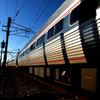
Amtrak Acela Express High-Speed Train running on existing Northeast corridor tracks in Bristol, Penn. (photo by Gary Pancavage, Amtrak)

By 2017, the fastest train in America will zip through Central New Jersey at 160 m.p.h. Upgrades to make that happen will be paid for, in part, by money returned by Florida when Gov. Rick Scott rejected that state's high-speed rail. Those and other tidbits--combined with loads of futuristic renderings--paint a hopeful vision for high-speed rail in the Northeast as laid out in a new report by Amtrak (PDF).

In two decades: New York to Philadelphia in 37 minutes. To D.C. or Boston in 94 minutes.

Amtrak released an update to a 2010 "vision" for building high-speed rail from Boston to Washington, D.C. that scales back the total cost, drops planned stations, and devotes much more attention to realistic, phased implementation. What this vision lacks in grandiosity, it makes up for in marketing savvy with flashy renderings and optimistic fiscal projections.

“It does seem to be more cognizant of the environment in which it is presented,” said Robert Puentes Senior Fellow at the Brookings Institution's Metropolitan Policy Program. It is "perhaps less aspirational than the 2010 version and more rational in terms of roll out and execution." The document lays out a "stepped" approach to investments, starting small with things like more Acela rail cars.

Puentes called the approach, "iterative," a strategy en vogue in design circles -- just the type who clamor for a 220 m.p.h. transit option they can tote their bike on.

Compared to the 2010 document, this report has far more images, graphics and charts, and futuristic renderings of stations along with the spaceship-like new trains. The document talks a lot more about including stakeholders in decision making. New terminology is stressed. The new trains aren't just high-speed rail rolling stock, they are "NextGen HSR" trains. The roll out of the plan isn't just rolling out, or dropping from they sky, it's a "stair-step" approach, showing how Amtrak will procure what is needed when it's needed and deliver results along the way, not just in 2040 when everything is built.

Starting small makes practical sense in selling the idea. For instance, according to Amtrak spokesman Steve Kulm, adding those extra cars on Acela trains will increase seating capacity by 40 percent. That will be done by 2015. The purchases are already in the works. Early, visible results will help sell the project.

So will cutting costs.

This updated vision is just as fast (220 m.p.h.) but it's cheaper: $151 billion, down from $169 billion. “A lot of it is pushing off some of the station development," explains Kulm. "We realized that some of the items we wanted to do, we should put off for the future."

This vision integrates two previous plans by the rail agency, the Master Plan and the high-speed rail Vision. “What we’ve done with this report today is combine the two, and integrate the two, and through the process find some cost savings."

Commuter rail is integrated far more significantly, and in the process, shifts some station construction costs and decision-making to local municipalities.

Likewise, the document takes into account the unlikelihood that states along the route will spend big to speed the process. Call that the legacy of N.J. Gov. Chris Christie's killing of the ARC tunnel.

The Gateway Tunnel (ARC's replacement), however, plays a big role in this new vision. One way Amtrak expects to lift top speeds from the current 130 m.p.h (let alone average speeds!) to 220 m.p.h. is by relieving congestion of commuter and freight trains that block the way.

There will be dedicated right-of-way added north of New York City, but to the south the bulk of the liberated corridor space will be from making New Jersey Transit commuter service more efficient through the Gateway program, which adds two tunnels under the Hudson River and four tracks between Newark, N.J. and an expanded New York Penn Station that will be connected to a new Moynihan Station (see slick rendering pics here).

N.J. Senator Frank Lautenberg issued a statement praising the inclusion of the Gateway Tunnel in this report, saying: "Amtrak will continue to have my full support as we move forward to revolutionize passenger rail travel in the Northeast." Amtrak funding reauthorization is looming in Congress and Lautenberg will be writing the legislation in the Senate. Expect generous funding proposals for infrastructure upgrades.

Amtrak's fiscal projections are more optimistic than in 2010, but it's not clear what formula was used to develop the new numbers. Amtrak has had record ridership in recent years, so that bodes well for a bolstered bottom line for future service.

All of it is aspirational anyway. There isn't a $151 billion pot of money to make this happen. The document is an argument for why there should be and it is a detailed plan for how it could come to be -- a transportation straw horse for political times hostile to megaprojects. But this is the megaproject of megaprojects -- with a mega reason to be completed according to Kulm, "This region is the economic powerhouse of the country, it’s where the political capital is, the financial capital is… we can’t afford to come to  standstill," he said.

"The transportation network, roads, air, even the rails, are operating at or near capacity," he said. "Simply building and rebuilding what is there today is not going to be enough." Speed on the tracks means more people moving each day, each hour. So, he argues, the solution is: go faster.

Read More

Comments [2]

PICS: Renderings of Amtrak's Future NYC Moynihan Station

Monday, July 09, 2012

Amtrak released an updated "vision" report for the Northeast corridor high-speed rail plan on Monday. Compared to the last vision report in 2010, capital cost projections are lower, ridership projections are higher and the highlight remains fast travel times: by 2040 2030, you'll be able to go from NYC to Philadelphia in 37 minutes and to Washington, D.C. in 94 minutes. We'll have more on all that soon, including why the cost projections changed (hint: it has to do with more rail ridership).

In the meantime, here's what the eventual NYC Amtrak hub, Moynihan Station, will look like.

From the report:

"The new Moynihan intercity passenger rail station will extend the present terminal across 8th Avenue into the historic Farley Post Office Building to create a new signature station in New York. The Moyhnihan/Penn Station complex will create a consolidated Amtrak operation on Manhattan's west side and the high level of service and connectivity required for NextGen HSR."


Read More

Comments [9]

President Obama Signs Transportation Bill (TRANSCRIPT)

Friday, July 06, 2012

U.S. President Barack Obama participates in a bill signing ceremony July 6, 2012 at the East Room of the White House in Washington, DC. President Obama signed HR 4348, the transportation and student loans bill, into law during the ceremony. (Getty Images)

After a day of campaigning around the midwest, President Barack Obama returned to the East Room of the White House to sign the much-debated highway funding bill flanked by construction workers, college students and lawmakers.

The two-year, $100 billion Moving Ahead for Progress in the 21st Century Act (MAP-21) combines student loan interest rate caps with road transportation funding. The president's signature is the final stroke that ends over 100 days of political wrangling over transportation funding, something that until recently was a bi-partisan legislative cake walk (albeit pork-filled cake).

Here's a summary of what's in the final bill.

And here's President Obama's statement as he signed it:

Hello, everybody.  (Applause.)  Thank you very much.  Thank you.  Everybody, please have a seat.  I apologize for keeping you waiting a little bit, and I hope everybody is staying hydrated -- (laughter) -- because it is hot.

Welcome to the White House.  We wouldn’t normally keep you this late on a Friday afternoon unless we had a good reason -- and the bill that I’m about to sign is a pretty good reason.

I want to very much thank the members of Congress who are here.  We got a number in the front row, but, in particular, I want to recognize Senator Boxer and Congressman Mica, whose leadership made this bill a reality.  And although Barbara couldn’t make it, we want to make sure that everybody acknowledges the hard work that John did on this on bill.  (Applause.)

Now, we’re doing this late on Friday afternoon because I just got back from spending the past two days talking with folks in Ohio and Pennsylvania about how our challenge as a country isn’t just to reclaim all the jobs that were lost to the recession -- although obviously that's job number one.  It’s also to reclaim the economic security that so many Americans have lost over the past decade.

And I believe with every fiber of my being that a strong economy comes not from the top down but from a strong middle class.  That means having a good job that pays a good wage; a home to call your own; health care, retirement savings that are there when you need them; a good education for your kids so that they can do even better than you did.

And that’s why -- for months -- I’ve been calling on Congress to pass several common-sense ideas that will have an immediate impact on the economic security of American families.  I’m pleased that they’ve finally acted.  And the bill I’m about to sign will accomplish two ideas that are very important for the American people.

First of all, this bill will keep thousands of construction workers on the job rebuilding our nation’s infrastructure.  Second, this bill will keep interest rates on federal student loans from doubling this year -- which would have hit nearly 7.5 million students with an average of a thousand dollars more on their loan payments.

These steps will make a real difference in the lives of millions of Americans -- some of whom are standing with us here today.  But make no mistake -- we’ve got a lot more to do.  The construction industry, for example, was hit brutally hard when the housing bubble burst.  So it’s not enough just to keep construction workers on the job doing projects that were already underway.  We've got Mayor Villaraigosa and Governor O'Malley here as representatives of organizations of mayors and governors who know how desperate we need to do some of this work.

And for months, I’ve been calling on Congress to take half the money we’re no longer spending on war and use it to do some nation-building here at home.  There’s work to be done building roads and bridges and wireless networks.  There are hundreds of thousands of construction workers that are ready to do it.

The same thing is true for our students.  The bill I’m about to sign is vital for millions of students and their families.  But it’s not enough just to keep interest rates from doubling.

I've asked Congress to reform and expand the financial aid that’s offered to students.  And I’ve been asking them to help us give 2 million Americans the opportunity to learn the skills that businesses in their areas are looking for right now through partnerships between community colleges and employers.

In today’s economy, a higher education is the surest path to finding a good job and earning a good salary, and making it into the middle class.  So it can't be a luxury reserved for just a privileged few.  It’s an economic necessity that every American family should be able to afford.

So this is an outstanding piece of business.  And I'm very appreciative of the hard work that Congress has done on it.  My hope is, is that this bipartisan spirit spills over into the next phase, that we can start putting more construction workers back to work -- not just those that were already on existing projects who were threatened to be laid off, but also getting some new projects done that are vitally important to communities all across the nation and that will improve our economy, as well as making sure that now that we've prevented a doubling of student loan rates, we actually start doing more to reduce the debt burden that our young people are experiencing.

I want to thank all the Americans -- the young or the young at heart -- who took the time to sit down and write a letter or type out an email or make a phone call or send a tweet, hoping that your voice would be heard on these issues.  I promise you, your voices have been heard.  Any of you who believed your voice could make a difference -- I want to reaffirm your belief.  You made this happen.

So I’m very pleased that Congress got this done.  I’m grateful to members of both parties who came together and put the interests of the American people first.  And my message to Congress is what I've been saying for months now -- let's keep going.  Let's keep moving forward.  Let's keep finding ways to work together to grow the economy and to help put more folks back to work.  There is no excuse for inaction when there are so many Americans still trying to get back on their feet.

With that, let me sign this bill.  And let's make sure that we are keeping folks on the job and we're keeping our students in school.

Thank you very much, everybody.  (Applause.)


Read More

Comments [1]

UPDATE: Calif. High-Speed Rail Barely Survives Do or Die Vote -- A Primer

Friday, July 06, 2012

A rendering of a California bullet train (image courtesy of the California High-Speed Rail Authority)

UPDATE: 7/6/2012 4:05 p.m. PT

By a narrow margin the California State Senate authorizes funding for the nation's biggest high-speed rail plan. The vote was mostly along party lines, with Democrats supporting the plan and Republicans opposing, but several powerful Democrats crossed the aisle, including the chair of the transportation committee, Mark DeSaulinier.

Republicans began the session with several procedural motions to avoid the vote all together, but even Democrats who eventually voted no, opposed that conclusion so after lengthy floor speeches about fiscal responsibility and investing in our future Democrats got the 21 votes they needed, and not one more. The final tally was 21-16.

The Democrats who voted against the plan are: Mark DeSaulnier, Joe Simitian, Alan Lowenthal and Fran Pavley.

We'll have a full analysis on Monday from KALW's Julie Caine. For now, here's our original post explaining how the west coast bullet train came within one vote of demise.


ORIGINAL POST: Today's the day of reckoning for America's most ambitious high-speed rail plan. While we wait for the verdict, here's a recap of the rocky road to laying rails from Los Angeles to San Francisco.

Let's start with the news: Last night the California State Assembly approved Governor Jerry Brown's $8 Billion proposal for a California high-speed rail plan. Today, the State Senate has to approve that plan or the project will almost certainly fade away into failure, if reports from the Sacramento Bee are accurate.

That's more common than success with high-speed rail plans in the U.S.A. Wisconsin and Florida already scrapped their HSR plans at the behest of Republican governors. Ohio too rejected federal money after crafting a plan. California's proposal -- more ambitious and expensive than any other -- has been rescued from declining public support and rising costs by a supportive Democratic governor. But today's vote is out of his hands.

Dan Richard, chairman of the California High-Speed Rail Authority board, hand picked by Gov. Brown after an embarrassing high-profile resignation of the previous board chair, told The Sacramento Bee and other outlets Thursday, "If the Legislature doesn't move forward with the project this week, then the secretary of transportation has made it very clear that they need to look at withdrawing the money from California and putting it some place else." In other words, if it loses political support, he'd scrap the whole thing.

So here's what the legislature is considering: As KQED reports, "The plan the Assembly passed provides for construction of a 130-mile bullet-train segment in the San Joaquin Valley and devotes about $1.5 billion to passenger-rail improvements in Southern California and the Bay Area." Some money also goes to converting commuter rail lines to be ready to merge with CAHSR. The Assembly vote was a clear sign of support: 51-27, but Democrats have a slimmer majority in the Senate, and as Reuters explains, Republicans are opposing the plan as fiscally irresponsible for these lean times.

KCRA's Mike Laurey is reporting on Twitter that some Democrats in the State Senate are feeling pressured to vote yes, but have decided against releasing state bond money for the project, including the chair of the Transportation Committee, Mark DeSaulnier.

Voters approved over $9 billion in bond money for the project in 2008 by a wide margin, but almost certainly wouldn't do so again according t0 recent polling that shows only the slimmest of majority support remains, and not among likely voters.

And if the funding is approved today, we want to know how it will be dispersed. The original plan has construction starting in the relatively less populous Central Valley and spreading out in both directions to San Francisco and Los Angeles. That means construction jobs start away from the population centers and the first beneficiaries will be on the middle of the state ... probably not that interested in taking a bullet train within their region. That will likely stay the same, but which rail agencies and which parts of the project get first funding for sticking shovels in the dirt may make the difference to legislators on the fence.

Part of the opposition has come from increasing costs. After several budget revisions and much debate, the most recent estimate for the 800 mile rail link is $68.4 billion with completion set for 2028. Initial estimates were around $45 billion. Popularity has been dropping so steadily that  last month, in hopes of drumming up support, the California High Speed Rail Authority released a web video, an attempt to get rail boosterism going viral. Today we find out how well that worked.


Read More

Comments [2]

U.S. Freight Rail Has Biggest June Ever

Friday, July 06, 2012

The Association for American Railroads released their weekly data-packed report on the rail freight industry and their numbers say, business is bouncing back big time.

It was the biggest June on record, and third biggest month ever for what they call intermodal rail traffic: the number of shipping containers or truckloads that move by rail, but start or end on a truck or ship. (It doesn't count "carloads" of raw materials like coal). For you business junkies out there, intermodal rail traffic is more interesting because it reveals economic trends: companies only ship things they are buying or selling, so it is a leading economic indicator often predicting economic growth in the months to come. Those containers are filled with materials and goods businesses will start selling soon.

A bit more from AAR:

"Through June, year-to-date 2012 U.S. intermodal originations were slightly ahead of 2006, setting up the very real possibility that 2012 will be the highest-volume intermodal year ever for U.S. railroads.  The recovery since 2009 has been remarkable.  In the first six months of 2009, average weekly intermodal loadings were 185,075 containers and trailers.  In the first six months of 2012, the average was up to 232,682 containers and trailers, a 25.7% increase. "

Via Business Insider

Read More

Comment

Subway Mosaic, Best Public Art in America?

Monday, July 02, 2012

"Brooklyn Seeds" by Jason Middlebrook Depicts Floral Themed Mosaic

Deep into Brooklyn, NY just before Neck Road, an artistic treasure sits hidden from the New Yorkers zipping past on the Q train to Coney Island. The 2011 addition to the Avenue U Station, a giant glass and ceramic tile mosaic climbing up the station wall called "Brooklyn Seeds," has been crowned one of the best public art projects in America, according to this announcement from the NY MTA.

Each year the Americans for the Arts Conference conveys the recognition outstanding works in a variety of media. Subway tiles are getting their due this year with Jason Middlebrook's "Seeds" represent the resilient flora of the concrete jungle.

NY MTA: "The plants are based on wildflowers that grow in unlikely places in urban neighborhoods, through cracks in the sidewalks, and in alleys and along walls. The artwork expresses the beauty where nature and city intersect."

Here are a few more pics. Send us pics of your favorite transit art, especially if you think you're city has something worthy of "best" status.


All photos courtesy of the MTA. More here.

Read More

Comments [1]

Apple Drops Transit from Maps App, Drawing Ire

Monday, June 18, 2012

WNYC

Early adopting gadget lovers tend to love transit, but for once, they're feeling left behind by Apple.

Comments [5]

Apple Keeps Mum on Dropping Transit Directions from Maps

Friday, June 15, 2012

Transit directions as they currently appear, screen capture via trilliumtransit.com

As we reported earlier in the week, Apple launched a fancy new Maps application for iPhone and iPad with all kinds of new features, like 3D aerial imaging, and voice activated Siri-powered turn-by- turn driving directions.

But Apple's developers  also dropped transit directions, something the old Maps application included because it was powered in part by Google Maps.

We've reached out to Apple multiple times this week by phone and email to find out when and if they'll add transit back to Maps.

Mum. No response. Nada.

Meanwhile the social media petition started by WalkScore generated some attention in the transit blogosphere, but the because company is asking people to tweet and post to Facebook about this, they don't have an exact number of supporters, just that "thousands" have expressed support so far. (See them all here.)

Seeking clarity on what's to come, a few of the Apple monitoring tech blogs have begun to parse Apple's wording more closely around bus and subway map integration. Apple Insider points out that the release notes for the operating system say third party apps "can now register as a routing app" if they offer turn-by-turn directions, and that will permit those apps to open up the official Apple map more easily.

Phillip Bump at Grist used his access as an official Apple developer to test out the new Maps and returned with an optimistic assessment (and lengthier excerpts of Apple release notes) of how third party apps like HopStop might be easily integrated

Yet, but Bump also cities the blog InformationDiet with a thoughtful post that concludes the exact opposite: that outsourcing transit routing to third party apps could lead to a balkanized, second tier set of routing apps different for each city.

Either way, that means iPhone users won't have transit directions come standard on their phones.

Instead, they'll need to take action to get them, like downloading Google Maps.


Read More

Comments [2]

Apple Draws Protest For Dropping Transit Directions in New Software

Wednesday, June 13, 2012

UPDATE 6/15/2012: We've been trying to get comment from Apple to no avail. Latest details here.

ORIGINAL POST: Early adopting gadget lovers tend to love transit, but for once, they feel left behind by Apple.

The tech giant rolled out a slew of new products and features on Monday including a new operating system for iPhones and iPads. As part of that upgrade, a new Maps feature is being hailed as the centerpiece. The NY Times technology critic David Pogue called Maps "the gem of iOS6," the new operating system.

But when Apple revamped the mapping application from the ground up it left  transit directions on the side of the road.

That has sparked cries from transit advocates and a petition campaign by WalkScore, the website that rates neighborhoods on how friendly they are to life without a car. WalkScore is calling for a social media campaign to  pressure Apple to restore transit directions.

"We believe that having transit directions on your phone helps public transit work better for everyone, so we’re asking you to join us in requesting this feature from Apple," the WalkScore website reads.

Tech bloggers took note as well. TheNextWeb praised the upgrade, but still focused a post on missing transit routing, lamenting how inconvenient it will be to ride to San Francisco without timetables integrated into a smartphone app: "This could mean that Apple will leave this functionality to third-party apps, but if that’s the case, we’re not sure when that will happen."

There's a new voice activated Siri-centered driving directions feature and walking directions are still there.

Subway and bus mapping became collateral damage in the fierce business competition between Apple and Google. Until this version of Apple's operating system, its products relied on licensing agreements with Google and other map providers. Now, as part of a broader effort to shed Google apps from iPhones and iPads, the Apple Maps app has been rebuilt, and it seems, transit directions weren't the top priority to include in this beta launch.

That move seems out of step with the Apple ethos. Long ago when the company was rebuilding its brand as the hip cool computer for the next generation it heavily courted teens and college students, banking on winning over lifetime customers while they were young and still forming consumption habits. Considering how young people are driving less and taking transit more, launching the new Maps without this feature is a rare moment when Apple's magic touch is slipping from the pulse of the cool kids. Some millennials even cited a preference for transit over driving so that they have more time to use smartphones!.

Apple didn't return calls for comment, so we don't know when or if transit will be added to Maps. The best we have to go on is speculation in from Apple watchers based on hints in the product announcement: PC World says transit directions may have to be third-party apps, not integrated into the Maps app itself. Gizmodo called that solution a "cop out."

Then again, when Google maps launched it didn't have transit mapping either. Google only added them in February of last year, and upgraded to real time directions a few months later.

So when will transit directions come back to Apple products, it's cliche but true: we'll have to wait and see.

Read More

Comments [7]

MAP: Most Abandoned Bikes Won't Be Removed

Monday, June 11, 2012

Click around the map above to see the photos of the bikes and the latest updates on their status. You can update the map yourself, so please let us know if one of these gets removed, or tagged.

Listen to the radio version of this story:

WNYC listeners submitted over 500 pictures of abandoned bicycles in New York. But most of them will not be removed by the city. Here's what happened when we tried to bring the issue to the city's attention with what we thought were all the modern tools necessary: a stack of pictures, a spreadsheet of geocodes, and a veritable army of crowd-contributors.

The life cycle of a bike left to rot on NYC streets is long, and intentionally so.  The complaint process is as clunky as the cast off bikes themselves and the criteria for removal is stiffer than the U-lock holding this pilfered cruiser to a bike rack on Bleecker Street.

The first obstacle is that what you consider an abandoned nuisance taking up your prime bike parking is property to someone else. Most bikes reported to the city as abandoned aren't abandoned enough to be removed (see definition below).

Before we started collecting abandoned bike photos, the City received 429 official complaints since July, the start of the fiscal year. Of those, just 60 bikes were removed, less than 15 percent.

That's because a bike has to be more than abandoned to be claimed by the city. It has to also be officially derelict, as Henry Ehrhardt, director of customer relations at the NY Sanitation Department patiently explained to me while I showed him my stack of hundreds of bikes in various states of decay.

“I think it’s important to remember that the Department of Sanitation’s job is to, essentially, remove junk and garbage from the city’s streets,” he told me.

Like these two, which were tagged and removed after we submitted them.

After a bike complaint is called into 311, a sanitation inspector heads out to the scene to determine if the bike is junked enough.  Most bikes just don't make the cut.

There are many obstacles that prevent the Sanitation Dept from removing a seemingly abandoned bike. First the regulations:

The bike must be affixed to public property (not your front gate or a privately-owned bike rack).

To be derelict a bike must meet three of the following five criteria:

  • The appearance is crushed or not usable;
  • Have parts missing from bicycle other than seat and front wheel;
  • Have flat tires or missing both tires;
  • Handlebars and pedals are damaged, or the fork, frame or rims are bent;
  • 75 percent of bicycle is rusted.

These bikes, while seemingly derelict were not removed -- possibly because the Sanitation Department inspected a different nearby bike instead.


And of course, many people call in bikes that just aren't abandoned or derelict at all.

“When we’re taking it we’re essentially recycling it, it’s going to be taken away and put in the recycling truck and processed as scrap metal,” Ehrhardt said.

That's a shame to some bike advocates who argue the city should be more proactive in claiming abandoned bikes for recycling or sale. A nonprofit, Bike Rescue Project, has proposed claiming the bikes while still salvageable to repair and sell for charity, but by the time they fall under the jurisdiction of the Sanitation Department, it's already too late. The city of Hoboken does a yearly sweep and collects about 50 bikes a year that get put up for sale at auction. That city's DOT tells Transportation Nation it gets no complaints about wrongfully removed bikes.

Vito Turso, a deputy commissioner at DSNY, says the criteria are strict to make sure no bike gets removed that is still someone's property. Changing that would mean changing the law. “That sounds to me like something a person who is interested in having these removed might want to bring to the attention of their local elected official and then have that local elected official take it the next step.”

He doesn't want to run the risk of claiming property. He deals in junk.

The green mountain bike below, for example, isn't derelict by the criteria. Though partially rusted, it’s in usable condition and the only parts missing are the seat and front wheel, possibly removed by the owner for security.

This green mountain bike didn’t meet the derelict criteria at 97th and Riverside.

However, this is an example of the tricky business of reporting abandoned bikes. Our submission was not intended to be this bike, but rather this insectile black former-road bike across the street and a bit into Riverside park. At this intersection there are actually two streets named Riverside Drive (see map) so an address and intersection weren't enough, and wasted a trip by a Sanitation worker, he wouldn't have seen a copy of a photo, just a written description because there is no official online or digital submissions process.

That's the other obstacle to action, and the main hurdle we encountered. Calling in a complaint takes about 14 minutes and involves speaking with two operators. 311 handles all the intake then forwards the information to the Sanitation Department.

That means a bulk submission of 500 bikes had nowhere to go. Neither agency had the staff to take a spreadsheet and enter it into the correct databases for action. 311 agreed to take two spreadsheets -- after Transportation Nation agreed to filter out the non-derelict looking bikes.

After two batches totaling 150 bikes (or bits of bike parts), 100 of them are being investigated this week. From the first batch of 50 bikes, 24 could not be found on location. Several weren't derelict despite my best vetting efforts, and in the end, 19 were tagged and removed, either by owners or the DSNY.

Of the 350 remaining bikes in our database, they have to be called in.

If you do so, please update the map above. Here's the full gallery of photo submissions.


Read More

Comments [5]

NYPD Fails to Fully Investigate Some Traffic Deaths: Suit

Monday, June 11, 2012

The NYPD fails to thoroughly investigate when pedestrians and cyclists are struck by cars, according to a lawsuit filed in federal court in Brooklyn Monday.

Read More

Comment

Lawsuit: NYPD Fails to Fully Investigate Cases in Traffic Deaths (PDF)

Monday, June 11, 2012

The New York Police Department fails to thoroughly investigate when pedestrians and cyclists are struck by cars, according to a lawsuit filed in federal court in Brooklyn today.

As previously reported by Transportation Nation, the Police Department has just 19 detectives assigned to crash investigations and it's Accident Investigation Squad only responds when a crash victim is killed on the scene or officially declared "likely to die" by a medical professional. Often paramedics or emergency room doctors do not realize their designation will mean the difference between a full criminal investigation and a cursory police write up.

At issue in the lawsuit is the death of Clara Heyworth, who was struck last July while crossing a Fort Greene, Brooklyn street. The driver may have been drunk.  Because no doctor declared Heyworth likely to die that night, police called off the investigation while she was in the hospital. She died the next day.

"Unless they get that statement from the doctor, NYPD walks away and the evidence is not preserved, it's lost, the video tape, the tire tracks on the ground, witness statements, all of that is lost and that's what happened here," said Steve Vaccaro, who is representing Heyworth's husband Jacob Stevens.

The lawsuit argues state law requires police to investigate all serious injury crashes, not just near fatalities.

NYPD did not return a request for comment, but has said in the past its a question of priorities.

For a full explanation of this issue, listen to our previous investigative radio report aired on WNYC.

Stevens v NYPD Clara Heyworth Case_June 2012

Read More

Comments [1]

PIC: Korean Subway Ad Makes Train Look Like Beach

Saturday, June 09, 2012

(Photo by Stephen Nessen)

Friend of TN, Stephen Nessen sent us this pic from a subway car in Seoul.

When the New York subway system coats a car in advertising, or plasters an entire station with one ad campaign, they call it "full wrapping" and "station domination." Aggressive terms.

This trompe l'oeil Korean interior ad campaign struck us as less dominating than destabilizing, as fitting for a flood warning as for a beach vacation daydream. Why shouldn't your commute feel like a walk on the beach crossed with a disaster movie.

If you have fun subway (or any transpo) pics, send them to us at transponation at gmail.

Read More

Comments [1]

CHART: Top Ten Biggest Subway Systems

Friday, June 08, 2012

Some data for your weekend: Here are the ridership numbers for the the ten biggest subway systems in the world. Click the chart to see the tallies. Data via NY MTA.

1. Tokyo: 3.151 billion (2010)
2. Moscow: 2.389 billion (2011)
3. Beijing: 2.180 billion (2011)
4. Shanghai: 1.884 billion (2010)
5. Seoul: 1.769 billion (2010)
6. Guangzhou: 1.640 billion (2011)
7. New York: City 1.640 billion (2011)
8. Paris: 1.506 billion (2010)
9. Mexico City: 1.410 billion (2010)
10. Hong Kong: 1.378 billion (2011)

Read More

Comment

Park Score Rankings: San Francisco Best City for Parks, See How Your City Fares

Wednesday, May 30, 2012

Taking a page from the addictive WalkScore rankings, we now have ParkScore. The Trust for Public Land has ranked big cities in America by access to, and investment in parks. It's similar to WalkScore. Except the rankings are by city, and the winner is: San Francisco.

Unlike WalkScore, which lets you enter any address in the country, ParkScore lets you glean information by looking at a map.

Top Ten Cities for Parks:

  • 1) San Francisco
  • 2) Sacramento
  • 3) Boston
  • 3) New York
  • 5) Washington
  • 6) Portland
  • 7) Virginia Beach
  • 8) San Diego
  • 9) Seattle
  • 10) Philadelphia

Full list here.

The Trust for Public Land ranks cities on a scale of 1 to 100 that is meant to represent how well a city is meeting residents' needs for parks.

You can zoom to see what neighborhoods are "serviced by parks" and which aren't. More interestingly, you can overlay that with demographic data, land use categories and low income neighborhoods. Not surprisingly, there is significant overlap between "need for park" and poorer residents.

The formula calculates park acreage, spending, number of playgrounds and number of residents living within a ten minute walk to parks.

Play around with the stats, see charts and find your city's ParkScore here.

Read More

Comment

Your Top 12 Abandoned Bike Photos: Saran Wrapped, Crumpled, Stacked Six High and Sad Sad Sad

Wednesday, May 16, 2012

The most conspicuous collection of forgotten bikes in one photo comes from the well-to-do Upper East Side at Lexington Ave and 67th st.

We've received more the 400 photos of bike blight around New York City in our mapping project. That's about 10 times the total number of abandoned bikes the city has removed in the past 18 months.

Tomorrow we submit them all to the city for inspection and potential removal. We'll ask you to you check back and see how many of these rusted frames (or saran wrapped beach cruisers) are eventually removed. For now, have a gander below at our favorite busted bikes chosen for photographic merit, level of "abandonedness," fun factor, and just because we liked them.

Pick your own favorites from the full gallery here. See the map, and read all about derelict bikes, the laws and stats here.

THE "MOST ABANDONED" BIKES:

Some parts remain, mild street trash tumbleweed factor. Park Slope, Brooklyn.


Bent frame, creeping rust, sun bleached belly. Pretty abandoned in Prospect Heights, Brooklyn.


BEST PILE OF KIDS BIKES:

We've found many piles of bikes -- which we fear tell sordid (or at least hoarding) stories. This was the most flagrant from Central Park North.


UNIQUE CASTOFFS:

Part art project, part bulletin board, this Williamsburg fixture hosts flyers, string, saran wrap and a teddy bear. Does that make it less abandoned or more?


That's a twofer. Photographer comment:  "I mean? This also has been here for over 6 years." From 9th Street and Ave C, Lower East Side.


More wheels does not always mean less abandoned. 10th street and 6th Ave, Brooklyn.


How long does it take to grow a few feet of vines? Tribeca.


 BEST PHOTOGRAPHY:

Deceptively unrideable in Midtown.


We call this one: arsty arcs. Downtown Brooklyn.


BEST COMMENT:

Though far less abandoned than other bikes, this one comes with a standout caption. "If NYC can also remove the dudes selling crack at this location, that would be great, too!" 167th Street, Manhattan


If the Department of Sanitation of NY finds a bike to be abandoned, it is tagged for seven days, then removed.


Read More

Comments [1]

DOT Selects Four More Cities to Get Nonstop Service from D.C.'s Reagan National Airport

Monday, May 14, 2012

Reagan National Airport just outside Washington, D.C. is one of the most convenient "big city" airports in the world: accessible by subway, less than 20 minutes from downtown. So it's something of a pain to D.C. residents -- along with lobbyists, lawmakers and government jet setters -- that a so-called "perimeter rule" from the Department of Transportation has prevented airlines from running direct flights from DCA to many major airports. Most passengers wanting to fly farther than 1,250 miles need to do so out of Baltimore or Dulles International Airports each at least 30-60 minutes from downtown D.C.

As the Economist points out, exceptions were granted in 2000 and 2011 allowing "one flight a day to Los Angeles, Las Vegas and Salt Lake City, with two flights to Seattle, four to Denver and three to Phoenix." In total, since Congress first created slot exemptions in 2000, the DOT has approved 20 round-trip flights beyond 1,250 miles, the DOT said.

Today we learn of the next four exceptions.

According to a DOT statement:

The U.S. Department of Transportation selected Alaska Airlines for service to Portland, Ore.; JetBlue Airways for San Juan, Puerto Rico; Southwest Airlines for Austin, Texas; and Virgin America for San Francisco. This is Virgin America’s first service at Reagan National. The other carriers currently have only limited service at the airport. Each city will receive one new nonstop roundtrip per day.

The FAA Modernization and Reform Act of 2012, signed by President Obama on Feb. 14, allowed four more daily round trips to receive exemptions to the perimeter rule.

Read More

Comments [1]