The Hansberry Interviews
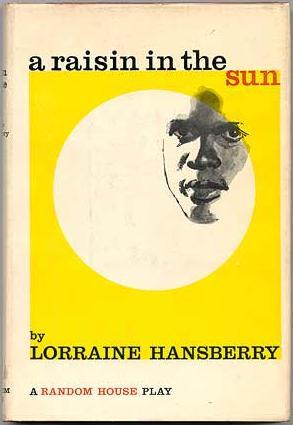
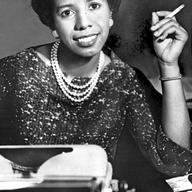
Lorraine Hansberry’s career, spanning from the debut of A Raisin in the Sun on Broadway in 1959 to her early death from cancer in January of 1965, was as brief as it was transformative. Raisin not only won awards and broke barriers, but it quickly became one of the defining works of art of the period, ushering in a new era of Black representation on the stage and screen. Within a few years of her play’s Broadway debut, Hansberry had become one of the best-known Black writers in the United States and one of the nation’s most outspoken public intellectuals. Her letters-to-the-editor, essays, and interviews were published in a wide range of publications, and she appeared as a guest on numerous radio and television programs. Even as illness began to overtake her, she threw her full weight behind the civil rights movement, taking part in speaking and fundraising activities for the Student Nonviolent Coordinating Committee (SNCC), and joining the historic 1963 meeting between Bobby Kennedy and civil rights activists.[1]
Coinciding with the release of the film version of A Raisin in the Sun in 1961, Hansberry sat down for two interviews for public radio, one with Patricia Marx, who hosted an interview series for WNYC from 1961-69, and one with Eleanor Fischer, who served as a foreign correspondent for the Canadian Broadcasting Corporation throughout the 1960s before founding National Public Radio’s New York office in the early 1970s.
A heavily edited version of the Marx interview aired on WEVD-AM on August 4, 1961. The Fischer interview was also edited for broadcast but appears never to have aired at all. Up until now, these interviews have been known to researchers primarily through the versions that are preserved in the Lorraine Hansberry Papers, a collection assembled by Hansberry’s ex-husband after her death.[2]
However, recent research has uncovered alternate recordings of both interviews in the WNYC Archives, including audio of the full unedited Marx interview (above) and audio of the material that was cut from the Fisher interview (below). The unedited portions of these interviews open a new window into Hansberry’s work. Whereas the edited versions focus primarily on A Raisin in the Sun’s domestic concerns, the unedited versions reveal a lesser-known side of Hansberry’s politics, namely the consistency with which she connected the African American struggle for civil rights to the Pan-African struggle for decolonization.
As was true of most mainstream accounts of Hansberry’s play, the edited versions of both the Marx and Fischer interviews begin by exploring the play’s relationship to and critique of the American Dream. In both, Hansberry explains that A Raisin in the Sun is not a play about embracing the material trappings of the American Dream but rather about that materialism’s corrosiveness, and that the play is not about “accepting American values in their totality,” as she put it in her interview with Marx, but about asserting Black dignity. Whereas the Marx interview goes on to focus on the relationship between the two female characters in Hansberry’s play, the Fischer interview goes on to ask Hansberry to comment on the common critical refrain that “one of the great things” about Raisin was that “it was not a play about race problems.” [3] As she would in countless other interviews and editorials, Hansberry dismantles this question with characteristic patience and pointedness, insisting that her characters’ Blackness is as inseparable from their experience as Willy Loman’s whiteness is inseparable from his. Refusing the racist association of “universality” with whiteness, Hansberry forcefully concludes that there isn’t “anything more universal in the world than man’s oppression of man.”[4]
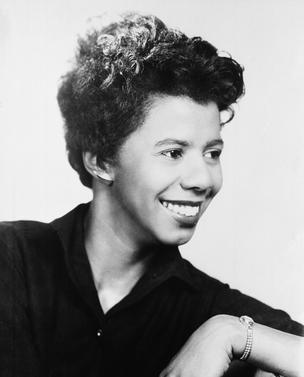
Just as striking as these powerful but familiar words, however, are the words that were edited out of the recordings intended for public broadcast, as well as the consistency regarding what was selected for removal. In both interviews, Hansberry’s extended discussion of the play’s Nigerian character was edited out, despite the fact that Hansberry describes this character—to Fischer at least—as the play’s most “sophisticated figure.”[5] In these extended discussions, in which Hansberry explains the emotional kinship between African Americans and Africans and discusses the long history of white supremacist efforts to erode that kinship, Hansberry articulates a clear Pan-African, decolonial, and radical sensibility. These unedited interviews reveal that, for Hansberry, A Raisin in the Sun’s critique of the American Dream was deeply connected to the global Black struggle against white supremacy and colonialism. No doubt, such omissions in the public framing of Hansberry’s work contributed to Amiri Baraka flawed dismissal of A Raisin in the Sun as representative of the Black middle class’s “assimilationist” enthrallment with integration, or Harold Cruse’s later view of the play as the “culmination of the efforts of the Harlem leftwing literary and cultural in-group to achieve integration of the Negro in the arts.”[6] Recovered and restored to Hansberry’s legacy, these unedited interviews help to open a small window into the full power, complexity, and perceptiveness of Hansberry’s artistic and political vision.[7]
______________________________________________________
Mollie Godfrey, Associate Professor of English at James Madison University, is the editor of the newly released book, Conversations with Lorraine Hansberry (University Press of Mississippi, December 2020).
[1] James Baldwin describes the meeting with Bobby Kennedy in “Lorraine Hansberry at the Summit” Freedomways: A Quarterly Review of the Freedom Movement 19.7 (1979), 269–72. Hansberry also discusses the meeting at length in her interview with Diane Fisher, collected in Conversations with Lorraine Hansberry (Jackson, MS: University Press of Mississippi, 2020), 171-75.
[2] Lorraine Hansberry Papers in the Moving Image & Recorded Sound Division of the Schomburg Center for Research in Black Culture, New York Public Library.
[3] See, for example, Hansberry’s response to Nan Robertson’s “Dramatist Against Odds.” New York Times, 8 March 1959: X3, which is discussed at length in Robert Nemiroff’s “Cautionary Note on Resources” in “A Lorraine Hansberry Bibliography,” with Ernest Kaiser, Freedomways 19.4 (1979), 285–304.
[4] The full transcript of Hansberry’s interview with Eleanor Fischer as well as similar conversations with Mike Wallace, Studs Terkel, and Nat Hentoff, are available in Conversations with Lorraine Hansberry (Jackson, MS: University Press of Mississippi, 2020), 162-70; see also 63-72; 73-91; 107-134.
[5] The character was also considered by both Hansberry and the FBI to be Raisin’s most radical. Cheryl Higadisha, Black Internationalist Feminism: Women Writers of the Black Left, 1945–1995 (Urbana: University of Illinois Press, 2011), 62–63.
[6] Amiri Baraka, “A Wiser Play than Some of Us Knew,” Los Angeles Times (22 March 1987); Harold Cruse, The Crisis of the Negro Intellectual (1967; New York: New York Review Books, 2005), 278-79.
[7] Recent critical efforts to reexamine Hansberry’s legacy include Sighted Eyes, Feeling Heart (American Masters Pictures, PBS), dir. Tracey Heather Strain (San Francisco: California Newsreel, 2017) and Imani Perry, Looking for Lorraine: The Radiant and Radical Life of Lorraine Hansberry (Boston: Beacon Press, 2018).

WNYC is funded by sponsors and member donations