
Crime Rates Plunge in New Jersey, And Bail Reform Advocates Are Gloating
Crime in New Jersey has plummeted over the past two years. Violent offences like homicide and robbery are down more than thirty percent through September, compared to state data from 2016, and the numbers have advocates of bail reform cheering.
"These numbers are staggering," said Alexander Shalom, senior supervising attorney at the ACLU-NJ.
Shalom said critics of the Criminal Justice Reform Act, which mostly did away with cash bail, warned there'd be a spike in crime. A month after it was implemented in January 2017, police union president Pat Colligan told NJ 101.5 that "some real bad guys are getting out on the street."
But since bail reform has been implemented, the numbers are down across the board.
"All the people who predicted that there would be, you know, this purge, where crime rates would simply spike, they've been demonstrably proven wrong," he said.
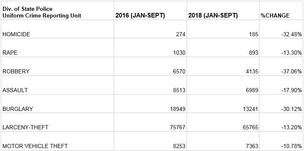
But there's no way of knowing if the reduction in crime had anything to do with bail reform.
"These are very difficult connections to make in a scientifically reliable fashion," said Martin Horn, distinguished lecturer in corrections at John Jay College.
While getting rid of bail doesn't necessarily impact crime, it does have an effect on the number of people who end up with criminal records, Horn said, since innocent people who can't afford bail have been known to take a plea just to get out of jail.
"It has the greatest impact upon the innocent who get caught up in it. They're the most disadvantaged," Horn said.
But there could one aspect of bail reform that's driving down crime. Elie Honig, a former prosecutor who worked on Jersey's bail reform, said the new rules also gave judges the power to keep violent offenders in jail without bail.
Honig said 8,043 offenders were kept without bail pending trial in 2017 — about 18 percent of total defendants.
"Now under a new system, the most dangerous offenders cannot get out regardless of how wealthy they are or how much money that can post through a bail bondsmen," Honig said. "Those are the highest risk individuals and that has to have contributed to a decline in violent crimes."

WNYC is funded by sponsors and member donations