The City's New Office of Worker Power
Transcript
[music]
Brian Lehrer: Brian Lehrer on WNYC. We turn now to a new New York City office that Mayor Mamdani just created in time for Labor Day, called the Office of Worker Power. Have you heard about this yet? Its goal is to support labor organizing and strengthen worker protections, specifically in the private-sector, kind of like the rental-ripoff hearings, if you remember those. The administration is selling it as a one-stop shop for workers who have issues with their employers or who are thinking about forming a union. The office also plans to do some outreach into sectors where they see a lot of labor violations.
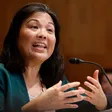
That's the premise of the office, and they're announcing it at an interesting time. The Mamdani administration is still trying to curry favor with some prominent business leaders. That's been in the news. They might not be too thrilled about the initiative. The administration is also about to start contract negotiations with several public-sector unions. The vocally pro-labor mayor is actually on the management side of those conversations. He's the boss. The new office is going to be led by Tony Perlstein, a longtime union organizer who used to be a longshoreman in Bayonne. It's going to be overseen by our next guest, the Deputy Mayor for Economic Justice, Julie Su.
We'll talk with the Deputy Mayor mostly about this new Office for Worker Power, and hopefully, if we have time, touch on a few other things that the Deputy Mayor has been working on. Some of you may remember she was the acting United States Secretary of Labor under President Joe Biden. Deputy Mayor, thanks so much for joining us. Great to have you on the show again.
Julie Su: Hi, Brian. I'm so glad to be here.
Brian Lehrer: Did I get my description right just now, more or less, or do you want to give your own summary of what this Office of Worker Power is going to do?
Julie Su: I'm excited to be here to talk to you about it because you are right that we created an office, the first of its kind in the nation, to make sure that basically working people will have the ability to organize when they want to, to have a greater say in their jobs. I think you got it right. We've talked about this a lot. The mayor has. This administration is committed to it. You talk about it a lot, too, which is that we have an economy right now where working people keep on working harder, but keep on falling farther behind. In order to address that, we have to not just think about business as usual.
We have to think about what needs to be done to shift the balance of power so that working people can get a little bit more of what they make and live a little bit more with security in the city.
Brian Lehrer: The city already has a Department of Consumer and Worker Protection that's supposed to be responsible for enforcing workplace laws. How is this different from that?
Julie Su: This office will not do enforcement. You are right that we already have a few agencies that do enforcement, the Department of Consumer and Worker Protection. We have the strongest human rights laws of any city that is enforced through our human rights commission. We have a Taxi and Limousine Commission that also looks out for our for-hire drivers. This office, though, recognizes that we are not going to enforce our way to a fundamentally fair economy. What that's going to take is working people actually, before they experience a violation, before their rights are violated, before they need an investigation of their workplace, to be able to come together to say that we deserve decent working conditions.
You know this, but when workers can bargain in their workplace, they can get things that's even higher than what the law requires, not just minimum wage, but a true living wage, health benefits, paid vacations, things that are not required by law. This is a way for workers to get more of what they really deserve through having their own voice on the job.
Brian Lehrer: Listeners, your calls and texts are welcome about this new Office of Worker Power in the city of New York. Does it sound like something that might be helpful to you or anyone you know? 212-433-WNYC. Do you have any questions for Deputy Mayor Julie Su about how it's going to work? Maybe you're a business owner and have questions about how this is going to work on your end. You are welcome, 212-433-WNYC call or text. Maybe you're a worker who has maybe wanted to organize your shop but have so far hit insurmountable obstruction or other obstacles. Maybe Deputy Mayor Su can give you some advice as the Deputy Mayor for Economic Justice.
Give us a call or send us a text. 212-433-WNYC, 212-433-9692, you're welcome in. To your last answer, how much is this office going to be focused on general education about workers' rights and things that workers might fight for, versus providing hands-on assistance?
Julie Su: It will do both. General education is certainly really important. You can't exercise rights that you don't know you have, so making sure that working people know that they have rights, especially in a moment where I think working people are feeling more vulnerable than ever. Some of it is what's happening with the federal administration, the attacks on immigrants. All of these things make working people feel like they can't speak up, and we want to be sure that they know that they can and that when they do, the city's got their back. One thing you were saying earlier, Brian, about working people want to be able to organize but often cannot do so.
That's a really important point. When I was in the Biden administration, I found that there were some 70 million workers across the country who want to be in a union but don't know where to begin or are afraid of the consequences, the retaliation, the intimidation that will happen if they do. Part of the purpose of this office is to make sure that New York City workers know that when they want to come together and exercise their rights, that they're not alone in doing so.
Brian Lehrer: What's the office's relationship with existing unions and union leaders going to be like? As in what does it mean for people who are already organized or who are already engaged as their jobs and trying to organize more workplaces?
Julie Su: Yes, that's right. For workers who are already organized, one of the things that we want to see is that, for example, working people who want a union get to a first contract quickly. For workers who want to organize but don't know where to begin, we want to be able to connect them to resources, to labor unions who I believe will be good partners to us in this work, to other worker organizations that can support them. For workers who really just have questions, we will be doing hearings all across the city to allow workers to be heard.
One of the things I've seen throughout my career is that oftentimes when working people get to exercise their voice for the first time or get to feel the thrill of being in solidarity with someone else who is struggling through the same challenges, that there's something really transformative about that ability to be heard. We want to create spaces for that in the city. You also earlier mentioned employers. I've met with employers, thousands of them throughout my career, where they're also trying to figure out what's the best workplace that I can create. How do I retain my employees? How do I think about creating a place where the people who work for me can truly thrive?
I think workers' organizing is a big part of that, too. We look forward to working with the employers of the city to also think about what this office can do and how we build an economy that works for everybody.
Brian Lehrer: How would you characterize their response? Even some nonprofits that we consider progressive organizations have been in the news recently for their reluctance to let their workers organize and their opposition to that. I know you and the mayor have discussed how you don't see workers' goals and business goals at odds in the broader vision for economic justice or economic success, but there's probably a lot of skeptical bosses out there thinking, "Wait, the city government is getting involved in my labor negotiations with my workers." Tell those skeptical bosses how you think this is in their interest.
Julie Su: Yes. To be clear, workers are the ones who have the right to organize and will choose whether they want to do so. Collective bargaining works because it is handled directly between workers and those bosses. I think what I would say to that is that there are ways to recognize your workers' rights, including the right to organize at the front end, so that any organizing drive does not have to be incredibly contentious. Any bargaining doesn't have to drag on for years and years. There's ways to do that, and we look forward to helping employers who want to do that also feel supported.
I think the other thing I would say is that we are in a moment where this mayor has been very clear that we can build an economy that works for everybody. I talk to employers all the time. They're in New York City, in large part because the talent of New Yorkers is what draws them here. That talent pool needs to be able to live in the city, afford this city, thrive in the city. A big part of that is them feeling like there's dignity and respect on the job. There's a win-win for that when that happens in a whole bunch of ways. We are looking forward to helping the city's employers realize more of that.
Brian Lehrer: Lucy in Brooklyn, you're on WNYC with Deputy Mayor for Economic Justice, Julie Su. Hi, Lucy.
Lucy Sexton: Hi. Thanks so much for taking my call. I'm Lucy Sexton. I lead New Yorkers for Culture and Arts, and I'm also a working artist in New York City for over 40 years. I want to thank you, Deputy Mayor Su, for all of your work and for your leadership, along with the mayor's, in creating this workers' office. I'm wondering how it might support artists and culture workers who are so often gig workers that go from gig-to-gig. As you know, I'm sure the gig economy is just exploding, and more and more of our workers here in New York City, including artists, are working gig-to-gig. Is there any ways that the office can help support those workers?
Julie Su: Thank you, Lucy, so much for that. As you may know, the mayor's vision for creating my job, the Deputy Mayor for Economic Justice, was to include arts and culture in our definition of what it means to have a just city and a just economy. You are absolutely right that for so many artists in the city who are part of what makes New York City, New York City, struggle just to get by, and we need to do better. I think trying to address affordability more broadly is a part of that, but also recognizing that what you said is really a challenge, that so much work is increasingly gig-to-gig. It's increasingly insecure and precarious jobs.
Now, one of the things that arts, culture, entertainment has really demonstrated is that even gig workers can have the ability to organize in the right circumstances. Those workers then end up with, even if you're doing several different jobs, you can still have benefits, you can still have job security. It really points to how organizing and having a union makes a really big difference. Part of this office will be to throw open our doors to all the artists and cultural workers across the city, so that you know that the city also has your back, and we can listen to you about the struggles that you have and find ways to create a more livable city for you, too.
Lucy Sexton: Thank you so much.
Brian Lehrer: Sound helpful, Lucy? I guess so. Thank you very much. Yes, we had a similar text. I guess it's on a similar theme. A listener writes, "I used to work at a major New York City museum whose staff just unionized." I guess not the same as gig workers, but also in the cultural sector. The listener writes, "Yay, I saw this forming many years ago, their unionization effort, but witnessed so much fear that led to retaliation and firings of early organizers. What can this office do to support people who maybe lost their jobs in retaliation for trying to unionize?" I guess, Deputy Mayor, I would throw into that or prevent retaliation before it happens.
Julie Su: Right. Thank you for that question, too. This is exactly what I'm referring to when I say that there are so many workers in this city, in the state, and across the nation who say they would love to be in a union. They would love to be organized. They would love to have the kinds of benefits that come from being able to determine some of the conditions of your own work, but are afraid to do so precisely because of this kind of retaliation, intimidation, captive-audience meetings are part of that when employers force their workers to come into a room and hear about all the reasons why a union is bad for them.
In the face of federal rollback of enforcement against those kinds of actions, the enforcement for that really falls under the federal government, under the National Labor Relations Board; it's become even more difficult. At the same time, what this person said is true. We are seeing workers continue to organize in the face of all that, which really just tells you how important it is for working people to be able to have that voice. We're seeing it across sectors where maybe it's relatively new organizing in cultural organizations, in universities, institutions of higher learning, in retail stores, where the first unionized Barnes & Noble exists right here in this city.
I think your point about, Brian, like how do we prevent these things from happening in the first place, is really important because working people know that oftentimes, even if you can assert your rights afterwards, that process is long. It's really challenging, and a lot of people move on because they have to continue to make a living. What we can do is indicate that in this city, we support workers' rights to organize, we educate folks about their rights, and we bring workers together. The point here is that there is solidarity, there's power in numbers, and oftentimes, workers struggle each day just to get by. There is no time to be able to get together. It's the "time tax" I talk a lot about.
Working people are paying a time tax because their workplaces are not fair and just for them. We want to create the space, meet workers where they are in their communities, in their languages, to make sure that they are heard and to bring them together so they can feel that sense of solidarity across their workplaces, across industries, across the five boroughs.
Brian Lehrer: We continue to talk about the new office that Mayor Mamdani just created last week, in time for Labor Day, called the Office of Worker Power. We're talking with the deputy mayor who's going to supervise that, the Deputy Mayor for Economic Justice, Julie Su. Let me take two calls here back to back, who I think might be a contrast to each other. Let's see. Peter in Midwood, you're on WNYC. Hi, Peter. Thanks for calling in.
Peter: Hey, Brian, can you guys hear me?
Brian Lehrer: Yes.
Peter: Excellent. Yes. I just want to weigh in here and back up the Deputy Mayor and say that what Mayor Mamdani is doing with the founding of this agency is just the beginning of a necessary corrective to an extremely tilted legal landscape. I'm a labor sociologist, and we can track through American history from the founding of the National Labor Relations Act in 1935, which was meant to make it easier for workers to organize and really did for the first 10, 15 years, but it's been whittled away by case law and subsequent legislation to make the ability for workers to organize in private-sector workplaces extremely difficult.
They have to go through three stages. They have to do a petition, then they have to have an election that's supervised by the NLRB, and then they have to negotiate a first contract. That can be stretched out for years by employers and through legal delay tactics and all the methods that the deputy mayor already laid out. I'm not sure if it'll be sufficient, but it's certainly a necessary corrective to a very uneven, unfair landscape in the private-sector for worker organizing.
Brian Lehrer: Peter, thank you for that call. Before we even go on to that other caller, Deputy Mayor, you were acting US Labor Secretary for a while under President Biden. In response to Peter, do you think that what you're trying to do is address at a one-city municipal level erosions in the ability of workers to organize nationally that have taken place in recent decades?
Julie Su: I think Peter is 100% correct. Peter, thank you for that historical perspective as well. Even here in New York City, the union density for private-sector workers was much higher some 40 or 50 years ago. We have seen that erosion. Some of that is a result of really dramatic efforts on the part of large corporations, often backed by government, to cut back on the rights of workers to organize, and some of that is just our economy evolving to more and more precarious jobs. Some jobs that used to be good middle-class jobs that you could raise a family on, build a life on, like delivery driving has become really precarious and low-wage, and where the right to organize is constantly in contention.
I think Peter is absolutely right. Here in New York City, we are not going to just take what the federal government is doing and accept it. We are going to do everything in our power to make sure that workers' rights are respected and that we work on creating a much more fair and equal economy where working people can get ahead.
Brian Lehrer: Roland in Tampa, you're on WNYC. Hello, Roland.
Roland: Good morning. How are you? Congratulations on the appointment. I think the agency, on paper, is a great idea, but there's a redundancy that bothers me a little bit. In the city that gave us Lillian Roberts, Victor Gotbaum, and a number of other labor leaders, we don't need another agency to get involved. We need to make people do the things that they have to do. I grew up in a family in Baltimore. My father owns two dry cleaning stores. Every time the Dry Cleaners Union talked about organizing our employees, my father said, "What would the union contract give you? I'll give it to you."
That was the end of that because he didn't want to strike. I don't think we need another agency. What we need is Congress and the state legislatures to do the things that Lillian Roberts, Samuel Gompers would have wanted them to do. Another agency, we got to create the agency. We got to hire a general counsel. We've got to hire commissioners. We've got to do staffing. Just one more group of people to join DC 37, but you're right back where you started from because the commitment on the part of management is still not there. With respect to the private-sector, laws have to be addressed. Labor's got to be very strong.
It's got to be consistently strong to make the forces of industry and service delivery. The economy has changed dramatically. The gig economy, a lot of great jobs disappear, but workers will always be needed because I don't think we'll ever get to an economy where a robot takes care of your kids or teaches them or delivers your packages. I don't think we need another agency. We need the agencies that exist to work harder to make the people who pass laws and regulations governing workplace to do what they have to do. Thank you.
Brian Lehrer: Interesting. Roland, thank you very much. Deputy Mayor?
Julie Su: Yes, Roland, thank you. This reminds me of something the mayor talks about a lot, which is "public excellence," the idea that we do need government agencies to do what they're supposed to do and to do it well. It shouldn't be such a big deal that we filled 100,000 potholes in the first 100 days. It shouldn't be such a big deal that we are making childcare possible for New York families on the way to universal childcare. The fact of the matter is that we live in a time where there is a really low level of support for government generally.
Part of that is because, as I mentioned earlier, and I think Roland, you know this too, because you alluded to, labor standards have to stay strong. Under this federal administration, the right to organize is being eroded on a regular basis. This administration has gone after unions and gone after federal employees, their own employees, with vigor. I was talking about the federal administration, so public excellence matters. I will say this office is a very small office. We've hired one director, Tony Perlstein. Our goal here is not to increase the size of government so much as it is to show working people that City Hall is on their side and to lift up the power of workers themselves to have a say in their workplace.
Bringing workers into City Hall so that we hear what their struggles, their issues are. A lot of these changes in the economy that you were talking about, that we've been talking about, they're not inevitable. The decline of middle-class jobs, the loss of basic labor protections, because jobs that used to be secure full-time-- one job is enough, careers have now turned into gig jobs, where people have to get multiple ones just to survive. None of that is inevitable. In this city, we're going to push back on those kinds of phenomena, and we're going to do that side by side with working people who have the best ideas, really, about what kind of workplace they want and need.
Brian Lehrer: By the way, the caller referenced DC 37 and other public-sector things. Another backdrop of this announcement is that the administration is about to start contract negotiations, as you know, with public-sector workers, and those might be tense given the projected $6.4 billion deficit for next fiscal year. In this context, your management, you're the boss. How can the administration walk that line between what might be seen as the taxpayer's interest or at least the law requiring a balanced budget every year, and your desire to give more workers more wages and more benefits?
Julie Su: Yes. We have tremendous city employees all across New York City, and they provide the services that New Yorkers rely on. When I say, "we filled potholes," they're the ones whose hands are doing that work. When I say that we are delivering through excellence, those are the employees who get up every single day and sometimes stay up all night doing that work. We value them, and we value them both at the bargaining table and beyond. I think the thing I'll say about this, Brian, is something I really believe deeply, which is that investing in workers is a really good investment.
When we talk about "We have to build an economy that works for people, that's affordable for working people," that includes our own employees. That's the lens that I bring. That's the lens this mayor brings. Sure, sometimes negotiations are contentious. I've seen that up close, too, but when you get to the other side, and you know that you have a contract that not only values your workers but allows them to go forward and participate in the economy in a way that's good for the broader economy, this is why we say that workers' rights are not just good for workers; they're good for everybody.
Brian Lehrer: All right. You gave some of those union leaders on the other side of the table some talking points just there, I think—last question, an off-topic question. I just want to ask you briefly about the $400 million economic development deal at Hunts Point that fell apart recently. That project, for those who don't know, is intended to transform the Hunts Point Produce Market into a state-of-the-art, all-electric distribution center, but from what I understand, the talks for what that project would look like have stalled. Do you think the city can resuscitate the deal, and what happens to the federal and state grants earmarked for that project if not?
Julie Su: Yes. The Hunts Point Produce Market, as I think all the New Yorkers listening know, is part of a broader distribution center that's part of our food ecosystem across the city and truly a treasure. I've been up there, and it's hundreds of merchants that make up a cooperative and thousands of working people, the vast majority of them union workers living in the city, and helping to make sure that people have the food that they need to survive. Your question, Brian, goes to a specific idea that was really pushed through at the last minute of the last administration, without the buy-in of the people who were going to be most directly affected at the produce market.
That really goes to something that we're bringing to the city, which is this idea that the economic development should not be something that drops on the heads of New Yorkers. It should not be something that gets built despite their interests, their desires, and their needs. Economic development is something that communities should be a part of designing and of building. When that happens, you can get great projects that are funded that actually make life better for people all across the city. We look forward to continue to work with everybody at Hunts Point to do the electrification that is necessary for the climate in the area.
It's something that the mayor has talked about a lot, that in the Bronx, the air quality is something that nobody should have to live with. We need to address that and also addresses the long-term viability of the produce market. We are very committed to that. I've been in conversations with produce market leaders and the union about that, and we will not give up until we come up with something that will work for everybody in the produce market, but also in the neighborhood in the Bronx.
Brian Lehrer: New York City's Deputy Mayor for Economic Justice and former acting United States Labor Secretary, Julie Su. We always appreciate it when you come on the show. Let's keep talking. Thank you for today.
Julie Su: Thank you, Brian.
Copyright © 2026 New York Public Radio. All rights reserved. Visit our website terms of use at www.wnyc.org for further information.
New York Public Radio transcripts are created on a rush deadline, often by contractors. This text may not be in its final form and may be updated or revised in the future. Accuracy and availability may vary. The authoritative record of New York Public Radio’s programming is the audio record.
