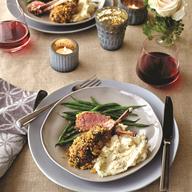
3 medium scallions, white and 1 inch of the green parts, thinly sliced (about ¼ cup)
¾ cup fresh breadcrumbs (made by pulsing 1 large slice homemade-style white bread in a food processor or blender)
Using a very sharp paring or boning knife, trim the meat and french the bones following the photos starting on page 278. Heat 1½ tablespoons of the oil over medium-high heat in a medium ovenproof skillet. Add the pepper flakes, if using, and garlic and cook, stirring, 30 seconds. Stir in the scallions and rosemary and cook, stirring, until the scallions are slightly softened, about 30 seconds. Stir in the breadcrumbs and remove from the heat. Add salt and pepper to taste and transfer to a bowl. Wipe out the skillet.
Preheat the oven to 300°F. Heat the remaining 1 tablespoon oil in the skillet over medium-high heat. Season the lamb with salt and pepper and add to the skillet, meat side down. Sear until well browned on the meat side and the ends, about 5 minutes. Remove the skillet with the lamb from the heat and pour off the fat. Combine the mayonnaise and the mustard in a small bowl. Spread the mixture evenly over the meat side of the lamb and press the rosemary crumbs on top. Transfer the skillet to the middle shelf of the oven and roast until a meat thermometer reads 120°F for medium-rare, 10 to 12 minutes. Let the meat rest on a cutting board for 10 minutes before slicing into the chops. Arrange decoratively on two plates, overlapping the rib bones and serve. (If some of the crumbs fall off, just sprinkle them over the plated chops.)
START TO FINISH: 55 MINUTES / HANDS-ON TIME: 30 MINUTES / SERVINGS: 2
1½ cups whole milk
1½ cups heavy cream
1 teaspoon chopped fresh thyme
1 Turkish bay leaf
2 garlic cloves, smashed and peeled
1½ teaspoons kosher salt
½ teaspoons freshly ground black pepper
3 pounds russet potatoes
3 ounces freshly grated Parmigiano-Reggiano
Preheat the oven to 375°F and adjust the oven rack to the middle position. Combine the milk, cream, thyme, bay leaf, garlic, salt, and pepper in a medium saucepan and bring the mixture to a boil. Remove from the heat, cover, and let steep while you prepare the potatoes.
Peel the potatoes and using a mandolin (see Note) or the slicing disk of a food processor, slice them crosswise 1/8 inch thick. Remove and discard the bay leaf and garlic cloves from the milk mixture and pour one-fourth of the mixture into a 9-x 13-inch baking dish. Add the potatoes and the remaining milk mixture to the baking dish. Stir the potatoes to make sure they are separated, and then press them down to distribute them evenly. Bake the potatoes on the middle shelf of the oven until the liquid has thickened and the top is golden, about 40 minutes. Sprinkle the cheese evenly over the top of the potatoes, return the pan to the oven, and bake until the top is browned, about 10 minutes.
Cool for 5 minutes before serving. Note: When using a mandolin, be sure to use the guard and proceed carefully when slicing.
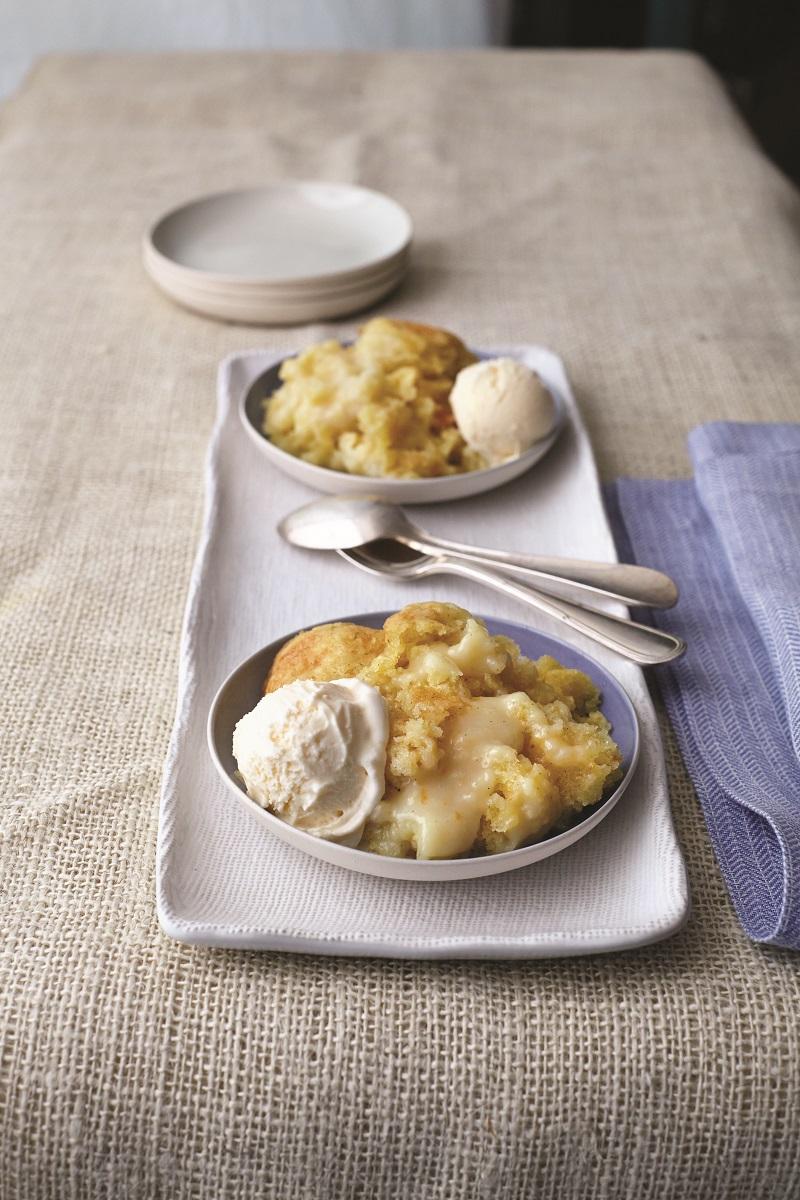
Sara Moulton's Creamsicle Pudding Cake.
(Sara Moulton’s Home Cooking 101: How to Make Everything Taste Better by Sara Moulton. Copyright © 2016 Sara Moulton. Reprinted with permission from Oxmoor House, an imprint of Time Inc. Books. )
START TO FINISH: 60 MINUTES / HANDS-ON TIME: 35 MINUTES / SERVINGS: 6
1 cup fresh orange juice
2 tablespoons freshly grated orange zest
1/2 cup heavy cream
4 tablespoons unsalted butter, melted, plus more for greasing the baking dish
1 tablespoon fresh lemon juice
Seeds from 1 1/2 vanilla beans or 1 1/2 tablespoons vanilla bean paste (see Sources, page 351)
120 grams (about 1 cup) unbleached all-purpose flour
1/2 cup sugar
2 teaspoons baking powder
1/4 teaspoon table salt
Vanilla ice cream as an accompaniment
Preheat the oven to 350°F. Lightly grease an 8-inch-square baking dish with butter. Bring the orange juice and 1/4 cup water to a boil while you prepare the batter. In a small bowl, whisk together the zest, cream, melted butter, lemon juice, and vanilla bean seeds or
paste. Whisk together the flour, sugar, baking powder, and salt in a medium bowl. Add the cream mixture and stir just until combined. Transfer the batter (it will be quite stiff) to the prepared dish, smoothing the top with a rubber spatula. Set the baking dish on the middle shelf of the oven and carefully pour the boiling orange juice over the surface of the batter.(This may sound odd, but it’s this mercurial.) Bake for 27 to 35 minutes, until the cake on
top has a crisp golden surface and the pudding sauce on the bottom bubbles. Spoon the pudding cake onto each of 6 plates and top each portion with a small scoop of ice cream. Serve immediately.
DUCK CONFIT COOKED IN A SLOW COOKER
START TO FINISH: 4 HOURS 35 MINUTES PLUS 12 TO 36 HOURS MARINATING TIME / HANDS-ON TIME: 15 MINUTES /SERVINGS: 6
1 Turkish bay leaf, crumbled, plus 2 whole bay leaves, divided
3 tablespoons chopped fresh thyme leaves plus 5 small sprigs of thyme, divided
3 tablespoons kosher salt
3 tablespoons minced shallots
2 tablespoons minced garlic
2 teaspoons black peppercorns, lightly crushed
1 teaspoon ground allspice
6 pair duck legs with thighs attached
8 cups duck fat
1 head of garlic, cut in half through the middle
Combine the crumbled bay leaf, the chopped thyme, the salt, shallots, minced garlic, peppercorns, and allspice in a small bowl. Sprinkle half the mixture in the bottom of a shallow baking dish. Add the duck legs, meat sides down, and sprinkle the remaining spice mixture over the top. Cover and chill for at least 12 hours or up to 36 hours. Remove the duck legs from the dish, rinse them well with cold water, and pat dry. Place the duck fat, the whole bay leaves, the thyme sprigs, and the head of garlic in the insert of a large (5½- to 7-quart) slow cooker. Cover and turn the heat to high (see Note). When the fat has melted, carefully add the duck and turn the slow cooker to low. Cover and cook until the duck is very
tender, about 4 hours. If you are going to eat right away, remove the duck carefully from the slow cooker with tongs and cook it in a nonstick skillet, skin sides down, over medium heat, until the skin is crisp, about 10 minutes.
If you are not going to eat the duck right away, transfer it to a bowl, cover with the fat and juices from the cooker, and chill until you are ready to serve. To reheat the duck, arrange the legs in a single layer in a baking pan, cover, and cook in a preheated 350°F oven for 15 minutes. Transfer to a nonstick or stick-resistant pan and cook, skin sides down, until the skin is crisp. Reserve all the duck fat from the recipe for future uses such as roasting potatoes or sautéing vegetables. It will keep for 6 months in the freezer. Note: To speed this part of the process, combine the fat with the bay leaves, thyme sprigs, and garlic in a large saucepan, heat until it is melted and hot to the touch, and then carefully pour it into the slow cooker and proceed with the recipe.
START TO FINISH: 3 HOURS 20 MINUTES PLUS 12 TO 36 HOURS MARINATING TIME / HANDS-ON TIME:20 MINUTES/ SERVINGS: 4
Combine the thyme, salt, shallots, bay leaf, and allspice in a small bowl. Sprinkle half the mixture in the bottom of a shallow baking dish. Add the duck legs, meat sides down, and sprinkle the remaining spice mixture over the top of the duck. Cover and chill for at least 12 hours or up to 36 hours. Rinse the duck legs well with cold water and pat them dry. Preheat the oven to 250°F. Spray the inside of an oven cooking bag with vegetable cooking spray. Add the flour to the bag, shaking the bag to spread the flour, and place the duck legs in the bag in a single layer. Follow the bag manufacturer’s instructions for providing proper ventilation during cooking. Place the bag in a large baking dish and bake until the duck is tender when pierced with the tip of a knife, about 3 hours. (You will need to remove the baking dish from the oven and carefully open the bag, avoiding any steam, to check the doneness
If you are going to eat right away, remove the duck carefully from the bag with tongs and cook it in a nonstick skillet, skin sides down, over medium heat, until the skin is crisp. If you are not going to eat the duck right away, transfer to a bowl, cover with the fat and juices from the bag, and chill until you are ready to serve. To reheat the duck, arrange the legs in a single layer in a baking pan, cover, and cook in a preheated 350°F oven for 15 minutes. Transfer to a nonstick or stick-resistant pan and cook, skin sides down, until the skin is crisp. Reserve all the duck fat from the recipe for future uses such as roasting potatoes or sautéing vegetables. It will keep for 6 months in the freezer.