The $800 Billion Ticket to Get Us to 2040
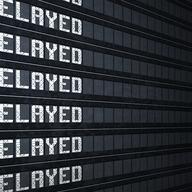
It’s a problem we deal with every day, whether we’re squished on the subway, waiting for buses and trains to arrive, stuck in traffic, or delayed at the airport. Our transportation infrastructure isn’t just failing to keep up; in some cases it’s falling apart.
New York's three major airports were the third worst, fourth worst and seventh worst among large airports nationally last year in terms of on-time arrivals. The number of subway trains delayed due to overcrowding has more than doubled in the past three years. And we all heard about the repeated problems on NJ Transit and Amtrak trains in July because of corroded electrical wires in the cross-Hudson River tunnel.
In the first of five stories in WNYC's series "Running Late," we ask: What would it cost to fix all of our transportation infrastructure?
“We’re looking at a ballpark of about 400 billion with a 'B',” said Gerry Bogacz, planning director at the New York Metropolitan Transportation Council, a consortium of local governments.
Bogacz crunched the numbers for what the New York City area, the Northern New Jersey region and the Port Authority are expected to spend on roads, bridges, tunnels, buses and trains over the next 25 years. But Bogacz says that $400 billion is just to maintain the system we have and finish improvements underway. In other words: “We could use even more than that,” he said.
The American Society of Civil Engineers says — in general — the country needs to spend twice as much on transportation infrastructure as we do now to prevent a major loss of income, jobs and gross domestic product. That would mean $800 billion over the next 25 years.
But finding those funds will be difficult. People are reluctant to pay more in taxes, tolls or fares, and politicians avoid raising revenue that could cost them elections. The federal gas tax, which helps pay for transportation projects, hasn’t increased in 22 years. New Jersey’s gas tax hasn’t gone up in 27, even as new fuel efficiency standards mean those taxes are bringing in less revenue than they used to.
Still, experts say it’s not just about spending more; it’s about spending better. Nicole Gelinas, a senior fellow at the conservative Manhattan Institute, says contracting and union rules are too expensive; projects get mired in politics between competing agencies and states and usually miss their deadlines and exceed their budgets.
“We do these projects differently than almost any place in the developed world and it costs us more,” she said. Still, she said, people should prepare to pay up if they want things to improve. “Yes we should do this better. But there is no way to get away with not doing it at all.”
We want to see what your commute looks like. Post your pictues and videos on Twitter or Instagram with the hashtag #RunningLate and tag @WNYC. We'll display them on our Picture Your Commute page and may use them in a video.
CORRECTION: An earlier version of this web story incorrectly stated the rankings for New York ariports. It was updated 2 p.m., Sept. 28.

WNYC is funded by sponsors and member donations