Alex Goldman appears in the following:

Now You Can Check Your Email From the Moon
Friday, May 30, 2014
Scientists bring wifi to the moon, and the speeds aren't that bad.

We're So Excited To Announce A Link To A Blog About Businesses Being Excited About Being Acquired
Thursday, May 29, 2014
We're so excited to announce a link to a blog about businesses being excited about being acquired.

The Mysterious Death of One of the Internet's Most Popular Encryption Tools
Thursday, May 29, 2014
TrueCrypt was abruptly, mysteriously killed yesterday by its developers. Now everyone’s freaking out.

#26 - A Gold Bottle of Champagne The Size of An Adult Human Man
Friday, May 23, 2014

Do Not Track Declared DOA
Thursday, May 22, 2014
A few years ago, there was a strong initiative to create a "Do Not Track" option on the internet, which would keep advertisers from following you from website to website, watching your every browsing and spending move. The hope was that with a single browser option, consumers could block advertisers from following them around the web. On the Media even did a relatively lengthy look at the initiative as proposed by the FTC in 2010.
three and a half years later, the Do Not Track initiative looks like an ambitious, but spectacular failure.

Airbnb is Handing Over User Data To the New York Attorney General.
Wednesday, May 21, 2014
If you have been renting your apartment with impunity on Airbnb and you live in New York, it may be time to reconsider. Airbnb has been engaged for months in a legal and PR war against New York's Attorney General Eric Schneiderman over turning over user data, and it appears that today that fight has ended with Airbnb agreeing to give the Attorney General anonymized user data.

Should We Reset Every Password Every Three Months?
Wednesday, May 21, 2014
So WNYC, our parent company and benevolent overlords, has set its IT policy such that we are required to change our passwords every three months. and it drives us nuts. It feels like our internal communications are low-stakes enough and WNYC is a not particularly valuable target. But considering how frequently passwords are compromised these days, maybe this should be applied to all my online accounts, not just my work account.

Making TwoXChromosomes a Default Subreddit Has Not Gone Over Well With Everyone
Tuesday, May 20, 2014
Yesterday, I ran a Q&A I did with the founder of the woman-focused subreddit TwoXChromosomes. As of a few weeks ago, TwoXChromosomes became a default subreddit, meaning it is one of the subreddits new users are autmatically subscribed to. Pageviews immediately exploded for the forum, as did an influx of harrassment from users not enamored of a forum devoted to womens' perspectives. Though the forum's founder framed the change as one that will eventually be a positive one, when my Q&A was posted to the forum itself, it was met with a very different reception.

Facebook Tries Peer Pressure to Shame Users Into Voting
Tuesday, May 20, 2014
Did you know there was an "I'm a voter" button on Facebook for the 2012 election? Neither did I. But apparently the button is meant as subtle social pressure on your facebook community to get out and vote. Today, Facebook announced that it will be expanding the "I'm a Voter" button to international elections.
Being A Feminist On Reddit - The Defaulting of /r/TwoXChromosomes
Monday, May 19, 2014
On May 7th, reddit, self-proclaimed “Front Page of the Internet,” shuffled its lineup of default subreddits. This means that new users who sign up for reddit accounts will get exposed to a host of new subforums on the site, including Art, OldSchoolCool, and the woman-centric subreddit TwoXChromosomes. As a result of this change, these subreddits will be exposed to millions more people every month. I was curious how the denizens of a feminist subforum like TwoXChromosomes felt about being thrust into the limelight on the a website well known for creepshots and men’s rights activism, so I spoke by Skype to “High Fructose Corn Feces,” the creator of TwoXChromosomes and one of its moderators.

Your Secret Sharing App Will Not Keep Your Secret
Monday, May 19, 2014
Apps like Whisper and Secret allow users to share secrets anonymously. Whisper was famously the home of a post accusing Gwyneth Paltrow of cheating on her husband, Chris Martin, shortly before their separation. But Wired had some legal and security experts look at the terms of service for both Whisper and Secret, and found that the privacy policies of these secrecy apps are not very secret or private:

What Your Web Browsing Habits Say About How You Will Vote
Thursday, May 15, 2014
Listen to podcasts? You're more likely to be liberal and to vote. Play fantasy football? You may or may not vote, but chances are very high that you're Republican. These are just a few of the broad conclusions that were gleaned from volumes of consumer data about browsing habits, political leanings and voter turnouts.
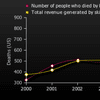
Deaths by Swimming Pool Drowning vs. Nicholas Cage Films and Other Spurious Correlations
Wednesday, May 14, 2014
It is by now an age old adage that "correlation doesn't equal causation," but the internet just loves stories that make spurious correlations. Just yesterday there was an article floating around from Time magazine about a study that showed bullies have a lower risk of chronic diseases, with the headline "Bullying Is Good For Your Health." Wouldn't it be nice if there was a website that put lie to this idea of correlation/causation by taking it to ridiculous extremes? Enter Spurious Correlations.

Search Results Can Influence Elections
Tuesday, May 13, 2014
Google search results haven't been a neutral, accurate reflection of the web for a long time. Whether it's SEO or Google's own algorithm tweaks to favor in-house services, or even Google bombing like "Santorum," Google's search results have a profound power to influence, and as such there exists a powerful incentive to manipulate those results. If those examples weren't enough for you, consider a recent study that shows search results can influence elections.
EA is Shutting Down The Virtual Worlds of Dozens of its Old Games
Tuesday, May 13, 2014
Game studio Electronic Arts has announced that it is going to take the virtual worlds of over 50 games offline at the end of the month after its hosting service, GameSpy, announced it was shutting down. It's as if millions of voices suddenly cried out in terror and were suddenly silenced.

Now You Can Ignore People on Twitter the Same Way You Do On Facebook
Monday, May 12, 2014
They've finally decided to add a feature that has been present on apps such as Tweetdeck for a while - an option to "mute" people you follow.

#25 - Monsters
Thursday, May 08, 2014

Why Crowdfund a Sequel to a 20-Year-Old Video Game Everyone Hated?
Thursday, May 08, 2014
If you were a gamer at the dawn of the console wars era, then you probably remember Shaq Fu. It was essentially a Shaquille O'Neal branded Mortal Kombat, except it was also unplayable and ugly. Even Electronic Arts, the company behind the game has called it an abomination. So, naturally, the internet has decided that 20 years on, we need a sequel.

The Numbers Behind "The Skip"
Wednesday, May 07, 2014
Paul Lamere is a blogger who writes about music and technology. So it makes sense he'd write about Spotify. His latest article is about "the skip," the practice of skipping songs when listening to spotify, and it's so granular that gets more and more fascinating as it goes along.

The wikiHow Guide to Stopping a Wedding
Wednesday, May 07, 2014
wikiHow (lowercase 'w' is deliberate) wants to be the Wikipedia of how-to guides. And, as of a couple years ago, it had over 150,000 articles and north of 35 million visitors a month. But just like Wikipedia or any other wiki-based community, there will always be a problem of quality control. Take, for example, today's amazing deep internet find, the wikiHow article on how to stop a wedding.

