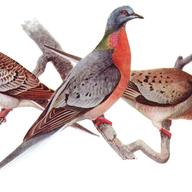
‘The World Has Suffered Many Losses through Time’: Environmental Conservation and The Passenger Pigeon, December 1931
Most of us are familiar with the sad story of the passenger pigeon: the North American bird whose immense numbers (believed to have been up to forty percent of the wild bird population) and intensely social habits (being unable to thrive or breed successfully in small groups) prevented its recovery from the indiscriminate hunting practices of the 1800s. As the large forests which had sustained and housed the passenger pigeon were converted to farmland, man and bird were put in close proximity and closer competition with one another. Farmers, irate over complete crop losses to the avian hordes, retaliated in wholesale destruction of passenger pigeon breeding colonies. As a result, pigeon meat was cheap and common fare in the late 1800s, and pigeon feather beds and bedding were popular home furnishings.

By 1900, the species had all but vanished, leaving in its place a lesson in conservation for future generations. John R. Saunders, the Adult Education Director for the American Natural History Museum presents here on the fate of the passenger pigeon and the plight of similarly endangered animals.

WNYC is funded by sponsors and member donations