
What If We All Agree to Not Over Think The Dress?
"What is this dress, is it a trick being played on us by cool teens?"
This was how my friend Beejoli said hello when I picked up her call last night. Thirty seconds earlier I had tweeted about The Dress (and the llamas, but that's for another day).
Maybe I have gone soft, but I was skeptical about the llamas and the magic, color-changing dress and both were way better than expected.
— Meredith Haggerty (@manymanywords) February 27, 2015
If you haven't yet heard about The Dress, the explanation is deceptively simple for something that is causing such a ruckus: there is a picture of a random, two-color dress on the Internet and people cannot agree on what those two colors are. And that's all it is. And it's great.
We all came to The Dress because a Tumblr user by the name of swiked posted an image of it along with the caption: "guys please help me - is this dress white and gold, or blue and black? Me and my friends can’t agree and we are freaking the fuck out." The post was picked up by Buzzfeed and Internet joined swiked and her friends in freaking the fuck out.
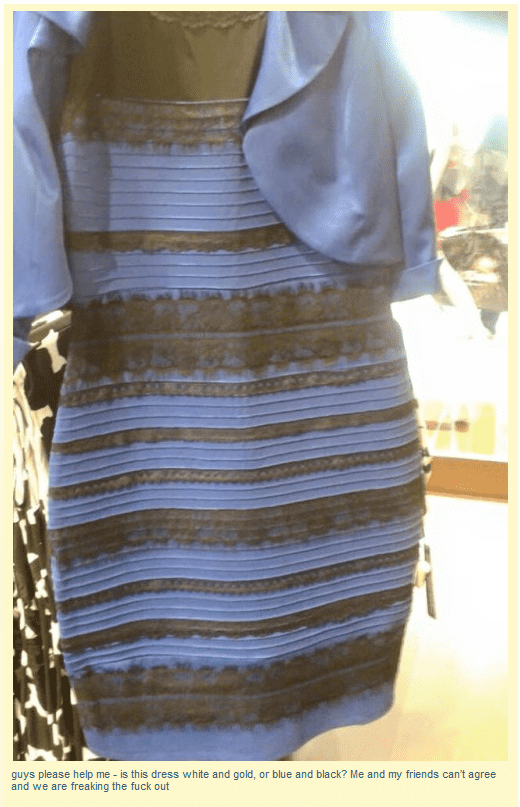
Like I swore to Beejoli, it isn't a trick or a joke or an elaborate way to make people feel left out. Some people genuinely and truly see the dress as black and blue, while others would swear on their eyes that it's white and gold. It's a visual trick. If you magic eye at it hard enough, it's possible to switch sides and see all the colors. Everyone who sees color has an opinion on or reaction to The Dress, and learning that someone else disagrees is initially disorienting and strange and kind of amazing: people really do see things differently. It's fun to remember, and if we let it, it can just be a nice, fun thing.
Of course, as with any viral hit, everyone is picking up The Dress and saying something about it. Senators. The ACLU. Brands on brands on brands. Pizza. Pizza. Pizza. I don't know if you noticed, but I'm writing about it right now. But what if we all agree to stop, and not try to make The Dress a metaphor or devote more of the news cycle to it than it merits? What if we just all said, "hey, I enjoyed that," and moved on into our weekends and our 3D lives? We can laugh at a white and gold joke and still not beat it to death. We don't need to rob all the joy from it, so let's not.
In the storied days before the Internet, there were only a handful of things that everyone could look at simultaneously, the way we are looking at The Dress. Because there were so few things, more people participated in them. There were only a few television networks, and everyone watched Johnny Carson and Walter Cronkite. I mean, not literally everyone, but go with me. We had shared experiences. And even though everyone was all looking at the same thing, we didn't have the same think piece culture that we have today. We didn't have takes or reactions the way we have them now. In The Dress, we have something that we don't have to comment on or extrapolate from, we don't have to make it larger or longer or bigger or more meaningful. We have something that can just be. Let it.

WNYC is funded by sponsors and member donations