Two Very Different Shows, One Common Theme – New York
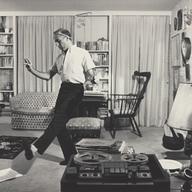
The New York Public Library show “Voice of My City: Jerome Robbins and New York” is an intimate portrait of the choreographer and director Jerome Robbins and uses generous amounts of film throughout. The first thing you see when you enter the exhibit is a home movie of Robbins dancing around with his parents on a Weehawken rooftop; behind them is New York City, the city where Robbins would grow and thrive. Right off the bat, this silent film provides an immediate sense of the man and his world.
The exhibit is organized around the theme of Robbins’ complicated identities as a ballet and Broadway man, a Jew, a gay man, an outsider and an insider, and someone fascinated by youth culture and by the life of the city.
Scattered throughout are films, diaries, photos, letters, drawings, paintings. One section is devoted his first ballet, “Fancy Free” from 1944, a collaboration with Leonard Bernstein. It’s success led directly to Robbin’s first Broadway commission, “On The Town,” in 1945. The ballet, about 3 sailors on shore leave in New York City was inspired by a Paul Cadmus painting, but also by the city itself. It creates a strong sense of place — New York during World War II — that resonates even today: During Fleet Week, you see sailors in their uniforms walking around town, and they always seem to be in groups of three. The work also reveals Robbins’s keen sense of theater from the start — it’s a dance play.
What is most striking about the show are those aspects of Robbin’s character that were less well-known: His stunning abilities as a draughtsman, his incredible self-portraits, watercolors. Robbins was known to be very controlling, but it is amazing to see the amount of preparation he went through for his ballets and Broadway productions: notations, drawings, filming people in the street as he did to assist in the creation of “West Side Story.” In one corner of the exhibit are his incredible accordion diaries, works of art in themselves.
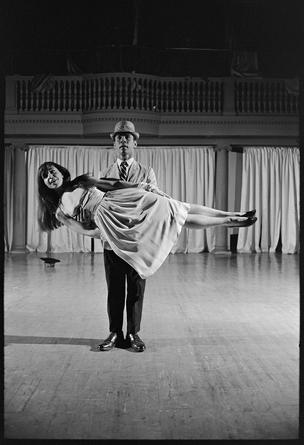
At MoMA, there is a very different show, “Judson Dance Theater: The Work is Never Done,” that is a survey of a collective of highly individual artists rather than a deep dive into one man. It’s also the portrait of a moment in time in the early sixties in New York City, when visual artists and musicians and dancers were all living in the Village and seeing and talking about each other’s work. It was an exciting time politically and artistically, and that ferment led to a radical reimagining of the definition of dance: Is it movement set to music? Emotion? Improvisation? Virtuosity? Each choreographer—and the list includes Yvonne Rainer, Deborah Hay, Steve Paxton, Lucinda Childs, and many others— came up with a different response.
While the Judson Dance Theater itself spanned a short period of time, it had a deep and lasting effect on dance. As with the revolution in art known as Conceptual art, this question—what is dance? — is ever evolving.
One common thread between the two exhibits is the artists’ relationship to New York City. Robbins is an artist looking in and finding his identity within that world. The other is a movement that happened because of the proximity of a group of artists in a place, Greenwich Village, at a particular time, the 60s.

WNYC is funded by sponsors and member donations