Twice Kidnapped, Photographer Returns To War Zone: 'It's What I Do'
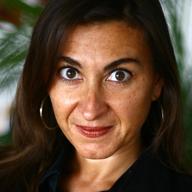
In March 2011, photojournalist Lynsey Addario was kidnapped in Libya while covering the fighting between dictator Moammar Gadhafi's troops and rebel forces. She was with Anthony Shadid, Tyler Hicks and Stephen Farrell in Ajdabiya — they were all on assignment for The New York Times.
Looking back, Addario says she had a premonition something bad would happen.
"I just was scared that day; I can't really describe it," Addario tells Fresh Air's Terry Gross. "I was kind of paralyzed by my own fear and the fighting was coming closer and closer and we all ... had a feeling that the city would fall."
That day, Addario and her colleagues were driving in the same car and they couldn't agree on how long it would be safe to stay out working.
"It was clear that we had different opinions," Addario says. "In those moments, I'm very aware of my gender. And I'm sure my colleagues were not. I'm sure the last thing they were thinking about is, 'Oh, we've got a girl in the car.' And I always was because it's such a man's world that I work in — and so I was ready to leave and I didn't want to say anything."
Two of the four wanted to keep going, so they kept on working. And it turns out, they stayed too long. Their car was ransacked and they were tied up and carried off by pro-Gadhafi forces, who handed them over to the Libyan government. She and her colleagues were held for about a week before they were released.
Addario writes about her experience in Libya in her new memoir It's What I Do: A Photographer's Life of Love and War. She also gives insight into her work as a conflict photographer in other places such as Afghanistan, Iraq and Congo — and about its impact on her personal life.
"I really felt like every moment we survived Libya was a gift," she says.
Interview Highlights
On her fear of being raped while being held in Libya
I had spent years covering war and I had spent years meeting with women who had been raped as a weapon of war, so, for me, it was always in the back of my head. ...
I thought of it in the moment that I was tied up and [was] literally being carried off alone by two men — one man who had my ankles and one man who had the top of my body. I had no idea where they were taking me. So, for me, it was, "OK, now they're carrying me off to rape me." And I didn't know what was going to happen — and so the entire time we were hostage that was a major fear.
On what she said to the men who sexually assaulted her
For a journalist who covers the Muslim world, we have responsibilities to be familiar with that culture and to know how to respond to that. So for example, I know that Muslim men put their sisters and their mothers on a pedestal, and it's important for me to say, "Look, don't you have a sister? Don't you understand I am like your sister? Don't touch me."
In Libya, for example, when I was being groped repeatedly and there was one moment when ... all four of us [Shadid, Farrell, Hicks] were thrown into the back of a tank and we each had soldiers sort of spooning us — Steve Farrell was having a rifle sort of shoved between his legs and Tyler and Anthony were both getting beaten and I was being groped over and over and this man kept putting his hands over my mouth and touching me. And I said to him, instead of screaming, I said to him, "I have a husband. I belong to someone else; you are not my husband. Please don't touch me." And I think it's important to tap into that and to explain, "Look, I'm familiar with Islam, I understand, women should not be with two men at once — and I belong to someone else."
On how much she values her work and cameras even when her life is at risk
It kind of seems like the last thing I have. It seems like, yeah, of course I think my work is important or I wouldn't risk my life for it. But I also feel like in those moments, if nothing else, my work will stand. And even if I am no longer here, here's this body of work I've created and I hope that that endures. So that was something that was important to me.
I remember the moment in which we were taken hostage in Libya. And we were asked to lie face down on the ground and they started putting our arms behind our backs and started tying us up. And we were each begging for our lives because they were deciding whether to execute us and they had guns to our heads and I remember thinking, "What am I doing here? How much do I really care about Libya?" And then I thought, "Will I ever get my cameras back?" which is the most ridiculous thought, of course, when you're about to die. Who cares if I get my cameras back? But for me, that was how my brain worked.
On calling The New York Times while being held by the Libyan government
Anthony, very intelligently, took the remote control as they were not paying attention ... and he changed the TV that was showing Libyan propaganda ... and he put on CNN. And at that exact moment our photos were on CNN and [it] said, "The Libyan government cannot ascertain the whereabouts of these four journalists." And literally we're sitting with the Libyan government.
And I started crying and I was like, inconsolable. I said, "Don't you have families? How can you do this to us? Just let us call our families and at least say we're alive." ... So then 12 hours later it was the middle of the night and they woke us up and said, "OK, you each get one phone call." And I literally woke up and thought, "God, I can't remember my husband's number to save my life." ... I remembered my mother's number but I thought there's no way she's going to find her phone in her purse and I'm going to waste my one phone call and she's not going to pick up, and my dad never answers the phone ... and all the men remembered their wives' numbers and they turned to me and were like, "OK, you call The New York Times."
On how her experience in Libya changed how she covers war
There was never a question in my mind as to whether I would give it up. I didn't think I would stop going — I just thought I had to figure out how to modify how I would cover war. First of all, I've now been kidnapped twice [she was first kidnapped in Falluja, Iraq, in 2004] and I think once you get to the point where you've been kidnapped three times, one almost looks irresponsible. And I didn't want to put that family through that, obviously, I now have a son.
So I wanted to continue doing my work, but I had to figure out how. So what I have basically come up with is that I still go to Afghanistan and Iraq and South Sudan and many of these places that are rife with war, but I don't go directly go to the front line. I try to stay back; I try and cover civilians; I try and cover refugees. So I'm trying to cover the issues and humanitarian crises but without putting myself directly in the line of fire.


WNYC is funded by sponsors and member donations