At Trans-Pecos, Musical Life After Brooklyn
Priced out of Manhattan, a wave of clubs and musicians settled across the river in Williamsburg around the turn of the century. But gentrification followed, and those musicians and venues were pushed steadily east to Greenpoint, Bushwick, and Bed-Stuy, and at that point, you run out of Brooklyn.
Just over the county line in Ridgewood, Queens, the music venue Trans-Pecos pursues a quixotic quest: to offer arts and affordability, without repeating the process of gentrification in its neighborhood. Since December 9, 2013, Trans-Pecos has presented indie and underground bands, and has also reached out to musical communities left behind by the buzzy, indie-rock explosion.
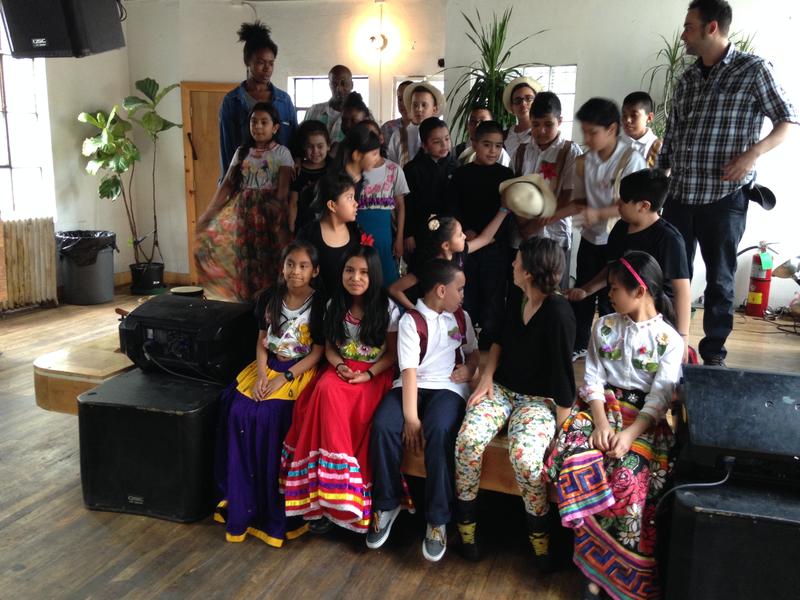
Trans-Pecos is run by two longtime members of the New York music scene: Sam Hillmer, founder of the experimental rock band Zs, and Todd Patrick, who as “Todd P” was a major player in the indie and underground music scene in the ‘00s. Hillmer estimates that the club is open 20 hours a day. It has multiple shows each night, which may bring decidedly different groups to the venue — a gay Latina dance party might be followed by a noise rock concert and then a late night DJ spinning Jamaican dancehall. But during the days, Trans-Pecos houses local after-school groups, a program for developmentally-disabled adults who are interested in music-making, and more.
Looking back at his Todd P days of doing semi-legal and outright illegal shows in Brooklyn, Patrick points out that those events were largely tolerated — but if the clientele had been young black or Hispanic men rather than Williamsburg hipsters, they would have been shut down.
“Going legal,” he said, has given the club the opportunity to reach out beyond their “culturally privileged zone.”
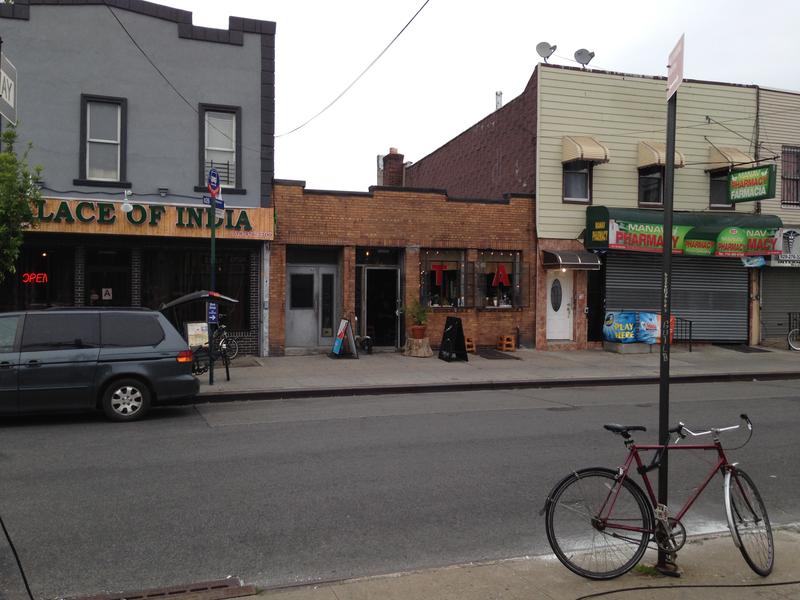
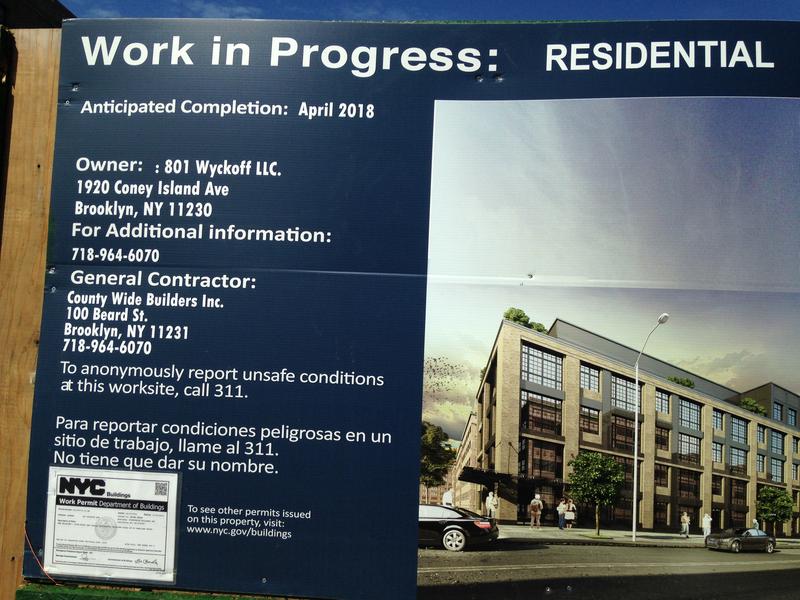
For residents of Manhattan and so-called “Brownstone Brooklyn,” Ridgewood may seem remote. But looked at on a map of the city, it is actually quite centrally located, and is served by both the L and M trains. And unlike Williamsburg and Bushwick, which had large areas of empty or underused industrial space that was ripe for reclaiming, Ridgewood is clearly a residential neighborhood. Wyckoff Avenue, where Trans-Pecos is situated, is full of auto body shops, laundromats, bodegas, and barber shops. Still, the warning signs are there: just a block from the club, a large apartment building is going up. The neighborhood has been profiled by several newspapers, and “NPR has done a couple of stories” about it, as Patrick slyly reminds us. But the creep of gentrification, he said, is everywhere; “you can’t run from it.”
So what can you do? Trans-Pecos, which does not raise grant money for its community programs but which rents out the front of its space to a café and a space behind the club to a wood shop, offers a different model.
“Regular people with a regular amount of money can do something that matters culturally,” Hillmer said, “and you can sleep at night knowing that you do.”

WNYC is funded by sponsors and member donations