Supporting Venezuelans from New York with Aid and Activism
Ana Bortot, 44, used to own a bakery and rent commercial space in her hometown of Valencia, in Venezuela, about two hours from the capital Caracas. But about two years ago, because of hyperinflation, lack of security and difficulty accessing food and medicine, she immigrated with her husband and two children to New York.
But other loved ones, including her mother, sister and nephew, couldn’t come. Here in New York, she works as a cabin cleaner at an airport. She declined to say which one for fear that it could harm her family.
"I had a guilty feeling... I felt I was doing nothing, that I had the chance to leave and my family was in need," she said.
The humanitarian crisis in Venezuela has worsened in the last few months amid a power struggle between two men who say they are the country's president: Nicolás Maduro, from the leftist Partido Socialista Unido de Venezuela (United Socialist Party of Venezuela), who has been in power since 2013 and controls most of the country’s assets and the military; and Juan Guaidó, the leader of the National Assembly, who is recognized as president by more than 50 countries. Blackouts happen more often and longer. Food, water and medicine are scarce. High inflation has reduced Venezuelans’ purchasing power.
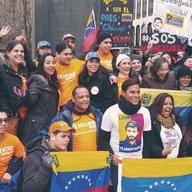
On a recent Saturday afternoon, Bortot went to a classroom at Fordham University in Manhattan along with about 30 other people to hear a lecture from José Manuel Bolívar, national coordinator for ideology and doctrine at Voluntad Popular, or the People's Will party, which has been active in New York for about 6 months. He discussed the next steps the party is planning in Venezuela to keep protests going, and put pressure on U.S. members of Congress to approve measures against Maduro’s administration.
"The diaspora has been key in bringing this message and explaining to the United States, to European countries, to Latin American countries on the different ways we are trying to bring about democracy in Venezuela," Bolívar said.
Since Bortot joined the People’s Will party in New York, she feels she can contribute to her home country. In December, she started her first campaign to send 140 boxes of donations of medicine to Venezuela.
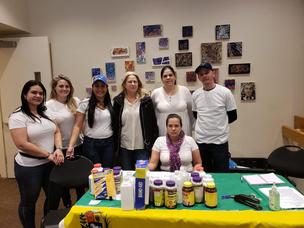
More than 3 million Venezuelans have left the country since 2015, according to the UN refugee agency (UNHCR) and the UN migration agency (IOM). In 2018, the agencies estimate 5,000 people left Venezuela every day. According to the Department of Homeland Security, Venezuela surpassed China in 2017 in number of asylum requests in the United States, reaching 27,634 cases. In 2018, Venezuela was again on the top of the list with 26,402 applications. But it doesn’t mean all of them were approved. The number of Venezuelans who have come to New York is unclear.
Gloria Senhouse, 48, is a Venezuelan native who has lived in New York for about two decades. She said she has seen growth in the People’s Will party in New York since Guaidó became interim president. Her mother, uncles and cousins are still in Venezuela, and she sees the party as an avenue to support government change. But she acknowledged it’s a challenge to keep them hopeful.
“They don't have power, they don't have water, they don't have gas to cook, but we need to help them to know that they are not alone.”

WNYC is funded by sponsors and member donations