Stonewall Remembered
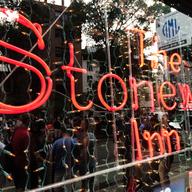
New York, NY — This week, President Obama designated a new national monument around the Stonewall Inn in New York City's Greenwich Village. It was at that gay bar that a police raid in 1969 provoked three nights of riots that are credited with galvanizing the modern gay rights movement. We thought we'd dip into the WNYC archive for a look back at that historic night. WNYC's Soterios Johnson produced this report in 2004 for Stonewall's 35th anniversary...
SMITH: We could see this crowd -- humongous, angry. We saw people lighting things. People tried to make Molotov cocktails.
REPORTER: Journalist Howard Smith is one of many sources cited by author David Carter, in what’s been called the definitive history of the Stonewall Riots. In his new book, Carter has uncovered the real reason the Stonewall Inn was raided that summer night in 1969 -- information not widely known until now.
CARTER: Interpol had discovered illegal bonds in Europe and an NYPD investigation found that these bonds had been stolen from depository houses because some of the people working in those houses were homosexual and were being blackmailed by the Mafia. And this led directly back to the Stonewall Inn.
REPORTER: Interpol? The Mafia? Well, the Stonewall was owned by the Mafia back then, as were most gay bars in 1960's New York. The State Liquor Authority had essentially made gay bars illegal and, Carter says, the Mafia saw an opportunity to corner a market. They set up shop and paid off local precinct cops to look the other way. The Mafia also made a tidy profit blackmailing some of the bar's wealthier patrons by threatening to expose that they were gay. Author David Carter...
CARTER: Homosexual sex was illegal in every state but Illinois. The penalties one could get were extremely severe. You know, running up to life in prison. Often 5 or 10, 20 years in prison for having sex in your own home with another consenting adult.
LANIGAN-SCHMIDT: The Stonewall was a dancing bar, meaning you could dance with people and not get stopped.
REPORTER: Tommy Lanigan-Schmidt was 21 years old at the time and was a regular at the Stonewall.
LANIGAN-SCHMIDT: At the other bars, if you danced a slow dance with someone, they would curse you out, treat you very badly. And so, since the Stonewall had two good jukeboxes in there, and since you could dance slow, because slow dancing back then was a big thing, for me that was the main reason people liked it so much, because you felt like a human being for the first time in your life.
BRYAN: It was kind of a trashy dive, but it was the best we had.
REPORTER: Robert Bryan was another regular who had moved to New York City from Virginia the year before...
BRYAN: It was the main gay bar in the city. So you had kind of a diverse cross-section of people there -- young, flamboyant, fun, out for a good time.
LANIGAN-SCHMIDT: The door. The guy would slide a little thing open and he’d decide whether he was gonna let you in. His name was, I think, Johnny Shades.
REPORTER: Gay bars in New York were routinely raided. In fact the Stonewall had been raided just four days before...
CARTER: Usually it was pretty ritualized, it was such a common event. In the Village, it was the 6th precinct, and they were very much on the take. It was a whole comedy, because at least for the Stonewall, they always told them before they raided.
REPORTER: Seymour Pine, Deputy Inspector of the NYPD's Morals Squad, which was not associated with the local precinct, was in charge of the raid that night...
PINE: We decided we would do this in complete secrecy, so that there was no chance of any collusion between the precinct men and the people who operated the bar.
REPORTER: On the night of June 27th, Deputy Inspector Pine sent four undercovers into the Stonewall, two men and two women, and waited across the street. He says the two men exited the bar on time, but the women didn't...
PINE: We were waiting for a signal to “Let’s go,” you know, and it didn’t come. The girls were having too good a time, I guess...
REPORTER: So, Pine says, when they couldn't wait any longer, he moved in...
PINE: All it ever took before, was going in and saying, "The place is being raided! Everybody out! And have your ID's, you know, ready at the door. " And they would show you something and you'd let them out. Except the transvestites. I mean, those you took. That night for some particular reason, they resisted. We never had resistance before.
REPORTER: Author David Carter...
CARTER: That night they were like "don't you touch me," "get your hands off me." A lot of the bar patrons were giving lip. Otherwise, initially it was going pretty normally.
REPORTER: Howard Smith was a reporter for the Village Voice, which was a few doors down form the Stonewall. His office overlooked Christopher Street.
SMITH: Suddenly I saw 25, 30 people at first, it looked like, in front of the Stonewall. I couldn't tell yet. And I went back to trying to write, looked again and suddenly there were 50 or 100 people, so I put on my press card and raced downstairs.
CARTER: People congregated on the street, which is not a typical thing for them to do in such numbers. People began mouthing off at the cops, you know, using camp humor to make fun of them.
BRYAN: I was on Christopher Street, with a friend in front of his building and somebody came running down the street and said “Go up to Sheridan Square, there's something happening in front of the Stonewall!” And so we just took off.
REPORTER: Journalist Howard Smith…
SMITH: The guy that was in charge was in plainclothes, and he kinda looked like a nice guy, so I walked up. I said “Hi, I'm a reporter, what's going on?” And I guessed right. He was very nice. He said, “Who do you report for?” And I said, “The Village Voice.” And he said, “Oh, ‘The Voice.’” And we started chatting, in between him trying to manage what was going on.
REPORTER: Robert Bryan…
BRYAN: Needless to say there were a lot of people standing around and there was a lot of excitement. There was a small police van. And there were some drag queens in there. People started jumping on that and bouncing it up and down. And, how it happened, I don't know, but eventually they got out.
SMITH: It started to get wilder and bigger. By the seconds it grew bigger.
PINE: It was suddenly like an army in front of us. You'd push three people here and five people would come around the side of 'em. They were mad that night.
CARTER: The turning point really came when a lesbian was being escorted from the bar by the cops, fighting them on the way out. And she was thrown into a police car, got out and tried to fight her way back in to the Stonewall Inn. This happened two more times, and she ended up being rather harshly brutalized by the police there, hit in the head with a billy-club. And it was her anger that really set the crowd on fire.
SMITH: All of a sudden a stone hit the bldg. People started yelling in the crowd a lot. Yelling “Gay Power!”
BRYAN: I just remember that people started pulling up the stones from around the parking meters, and throwing them -- including me! (laughs) Of course all the windows were immediately broken. I mean, we weren't really thinking consciously about what we were doing. We were just reacting completely emotionally and just really frustrated and letting it all out, finally.
PINE: They were screaming. They were throwing bottles. And they were throwing coins. And that's where this guy flipped this coin and got a cop in the eye.
SMITH: When that cop got hit everyone went crazy, all the police went crazy because they thought, you know, that was above and beyond, because the cop was bleeding.
PINE: It was just a horde of people out there. There were some vehicles out there and people were on top of them. They were on stoops of buildings.
SMITH: And at that point, Deputy Inspector Pine said, “We're going to barricade ourselves inside -- it’s gotten too dangerous -- until reinforcements come.” He says, “We phoned for it, I don't know where they are, but it's not safe out here. And you can stay out, or come in.” So as a very opportunistic reporter, I thought, “Oh, I don’t think I've ever been invited in by the police,” so I said “I can come in?” And he said “Sure, you seem like a nice enough guy.” So in I went.
PINE: Well, there were tables there. And chairs and stuff that we put up against the windows.
CARTER: And that essentially said to the crowd outside, "You're in charge." And then it was just a dam-burst of anger. And I think it was not just the anger of that night. It was the anger of all the humiliations over the years from various city administrations and slights of all kinds reached a boiling point.
REPORTER: Deputy Inspector Pine...
PINE: I assumed -- I knew the police station wasn't far away and I know that if they received my signal, they will come to our assistance. And that’s when my partner Charlie was able to find a way out for one of the police women.
BRYAN: I remember some of the people pulling up one of the parking meters and using it as a battering ram. They were trying to break the door down.
SMITH: The thumping and shaking of the building was getting stronger and stronger.
PINE I mean, there were so many people there, and they were so out of control, that if they had gotten to us, we would have been just stampeded completely. They would have killed us just with running over us.
REPORTER: Journalist Howard Smith…
SMITH: He went around to every single cop repeatedly -- he wanted them to have their guns out -- but he went to each cop and he said if anybody fires their weapon without me directly ordering each one of you to do it by name, you'll be walking a beat, a lonely beat on Staten Island for the rest of your police career. Nobody fires unless I give the word.
PINE: It was a very horrible feeling because I knew from experience that if one shot went off, everybody would start firing.
REPORTER: Finally, the policewoman who was pushed out of the Stonewall's back window had reached a nearby firehouse and got word out for more police. The rioting continued for several hours that night. The crowd overturned a car, set more fires and broke store windows. Witnesses say the riot police beat whoever they could get their hands on -- even people who had nothing to do with the riot, who just showed up to see what was happening. Robert Bryan...
BRYAN: At one point in the proceedings, there were completely armed riot police with shields, helmets, clubs. And they were in formation. And they were moving down the street in line. And opposite them in line were a line of queens from the Stonewall who were doing a perfect Rockettes kick. And they were chanting “We’re the Stonewall girls, we wear our hair in curls,” etc. etc. And they just kept on with this kick and I couldn't believe it because they didn’t stop until the police were like seven feet from them when they finally turned and ran. I mean it was amazingly brave.
REPORTER: Journalist Howard Smith...
SMITH: I knew it was important in a cultural sense within, probably within a month, because I could see the difference in the militancy of people from the gay community.
REPORTER: Over the years, many myths were spun out of the Stonewall Riots, none bigger than the notion that they were sparked by the death of gay icon Judy Garland. Her funeral had been held on the Upper East Side, just hours earlier. But, Carter says in his 10 years of research, he found no credible connection. But, Carter says the legacy of the riots are undeniable...
CARTER: They led directly to what we call today the gay liberation movement. And it's because of the gay liberation movement, that the movement finally became a mass movement and spread and was able to effect political change.
UPDATE:
David Carter is author of “Stonewall: The Riots That Sparked the Gay Revolution.”
Deputy Inspector Pine apologized for the raid in 2004, six years before he died at age 91. He once told Carter “If what I did helped gay people, then I’m glad.”
The Stonewall National Monument is the first official National Park Service unit dedicated to telling the story of LGBT Americans. It covers nearly 8 acres in the Village, encompassing the bar, Christopher Park across the street, and the surrounding streets and sidewalks that were the site of the uprising.

WNYC is funded by sponsors and member donations