Saying Goodbye to 'Bobby': RFK's Funeral at St. Patrick's
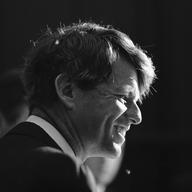
On June 8th, 1968, thousands of mourners filled St. Patrick's Cathedral in Manhattan to honor the life of Robert F. Kennedy. The senator from New York, a champion of progressive ideals, had been shot in Los Angeles three days earlier after winning the Democratic primary in California.
"My brother need not be idealized, or enlarged in death beyond what he was in life," his younger brother Teddy said in the eulogy. "He should simply be remembered as a good and decent man who saw wrong and tried to right it; who saw suffering and tried to heal it; who saw war and tried to stop it."
It was precisely what Bobby Kennedy sought to achieve in his life that made his death so tragic to Americans across the country. A politician who was converted to the fight for civil rights late in his career, Kennedy spent his time as New York's senator touring the country to bring awareness to poverty and inequality, particularly in communities of color.
"My grandmother has a picture of the Kennedy brothers on her wall," said filmmaker Dawn Porter, director of the Netflix documentary series Bobby Kennedy For President. "I always grew up understanding that the Kennedy's were very, very, important to black people."
In New York, Kennedy brought his fight for racial and economic equality to the Brooklyn, where he picked Franklin A. Thomas to run the Bedford-Stuyvesant Restoration Corporation.
"In my dealings with him, he was straight up, straight at you and clear," Thomas says in the documentary. "He was tough as nails."
Pushed by progressives to run for president against incumbent Lyndon B. Johnson, Kennedy's campaign was picking up speed when he won the Democratic primary in California. Hours after the victory, the 42-year-old was shot and wounded in the kitchen of the Ambassador Hotel in Los Angeles. He died the next day, on June 6th, 1968.
Just five years after the assassination of his brother, President John F. Kennedy, Bobby's death shook the nation. Kennedy's casket traveled across the country by train, bringing scores of Americans to the railroad tracks to pay their respects as the deceased senator passed. During the public viewing at St. Patrick's Cathedral, The New York Times described the collective grief as "deep... and often overwhelming. [The viewers'] faces were drawn, their eyes were wet and the sobbing was often uncontrollable."
Though his influence as a crusader for peace and equality reached across the country and around the world, RFK left a unique legacy in New York.
"We typically think of the Kennedy's as a Massachusetts's family, but Kennedy was the senator from New York and he never forgot that," said Porter.