Review: Photo Center Moves to the Bowery, But Has No Room for Pictures of Bums
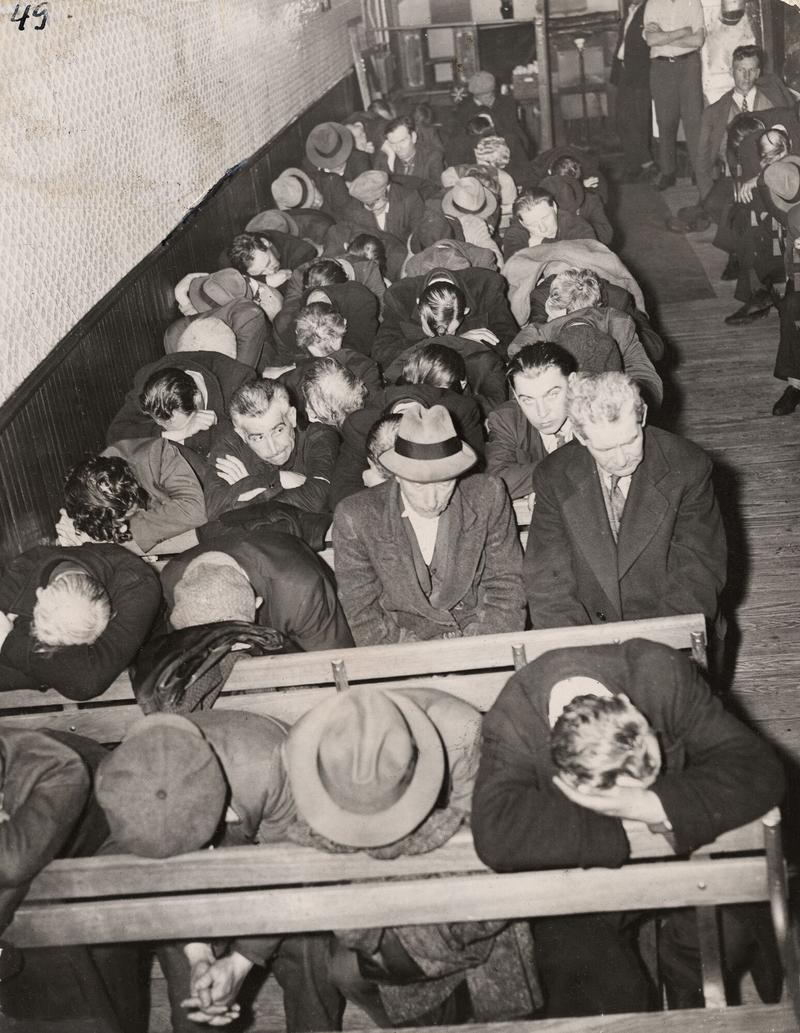
The International Center of Photography, which is known affectionately among New Yorkers as the ICP, has just acquired a new home on the Bowery. The good news is that it has organized an exhibition called “Weegee’s Bowery,” in honor of the newspaper photographer who trained his lens on bums and drunkards in the years following the Great Depression.
The bad news is that the show has been shipped to Mana Contemporary in Jersey City, along with the rest of the ICP’s extensive permanent holdings.
[Click on “Listen” for Solomon’s review of the show with WNYC’s Soterios Johnson.]
These days, the Bowery less resembles Skid Row than Gallery Row, and it is good to have yet another museum (in addition to the New Museum) anchoring that eastern outpost of the art scene. But the ICP’s new home – which occupies the ground floor and basement at 250 Bowery – is not the most inviting space. For starters, there is the problem of the inaugural show. In the place of Weegee, the museum has installed “Public, Private, Secret,” a straining-to-be-cool, theory-laden jumble that tries to explain the not small subject of the digitally-determined present.
It brings together 150 works by 50 artists (and non-artists) that range from accomplished images by “older” artists (Cindy Sherman, Nan Goldin, Vik Muniz, Sophie Calle, Martha Rosler); to art videos of varying quality; to seven square screens dispersed throughout the exhibition and programmed to flash live images from the Internet relating to specific themes, such as “Hotness” and “Celebrity.”
Clearly, we are seeing the 2.0 version of the ICP, which seems eager to break from its low-tech past. The museum was founded in 1974 by Cornell Capa, a Hungarian émigré who viewed photography as an instrument of social justice. He tended to favor images driven by documentarian impulses, including those of his brilliant older brother, the war photographer Robert Capa.
Since then, photography has changed dramatically, and snapping pictures has replaced baseball as America’s favorite pastime. The omnipresence of smartphones has given rise to at least two major schools of photography, leading at one extreme to the froth and narcissism of the selfie and, at the other, to photography-as-surveillance.
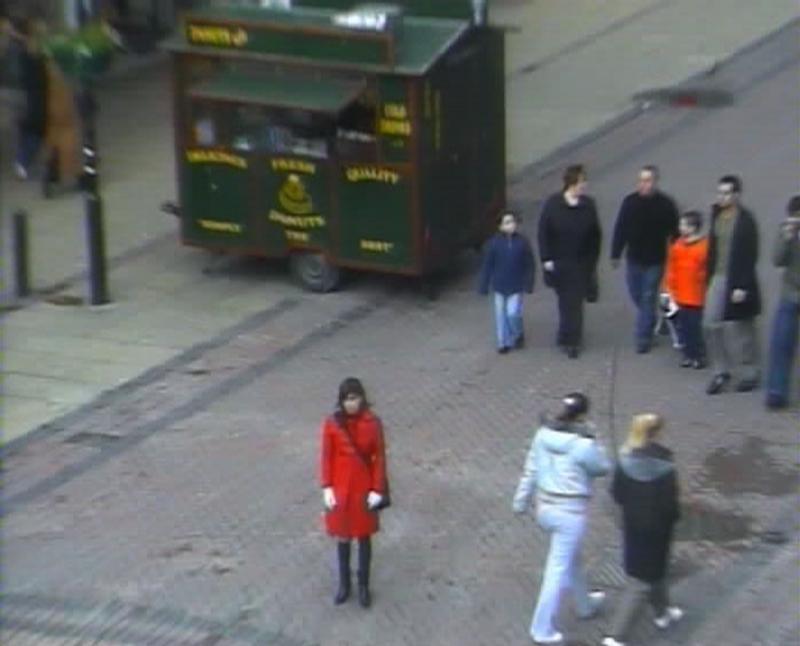
The surveillance-themed part of the ICP show is probably the most coherent. It includes an unsettling photograph of Jackie Kennedy shown from the back, her hair windswept as she runs through Central Park to escape Ron Galella’s ever-prying paparazzo lens. The notion of the camera as an invasive instrument acquires an edge of political menace in the work of several younger artists, mostly notably Zach Blas, whose fascinating video, “Facial Weaponization Suite,” explains how facial recognition apps can violate your civil rights. The piece comes with a hot-pink blob of plastic molded from the features of dozens of people – a one-size-fits-all mask intended to thwart attempts at racial or sexual profiling.
Unfortunately, the show’s design is busy and confusing. Rare photographs are made to mingle with cheapo reproductions, posters and back issues of magazines, all of it set in a hall of mirrors. Many of the photographs are hung on mirrored walls, so you can watch yourself watching and thereby explore the theme of voyeurism. Or rather, feel like you’re cramped in a Macy’s dressing room. In the end, the stronger art in the show gets lost amid the chaos of the installation, and we emerge from the museum feeling no more enlightened than we do after…just another afternoon in front of the screen.
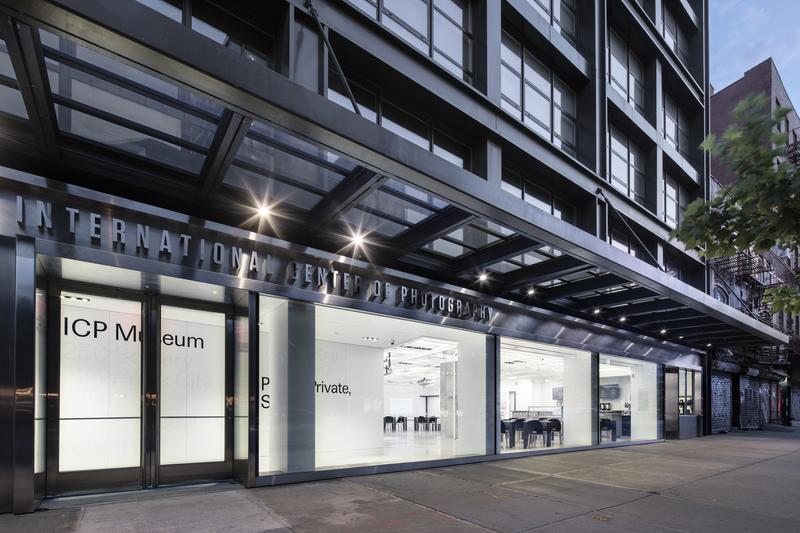
Editor's note: An earlier version of this story listed the location incorrectly. It is 250 Bowery.

WNYC is funded by sponsors and member donations