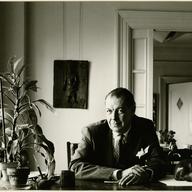
Rene D'Harnoncourt
As one of the most influential artists of the 20th century, Pablo Picasso is probably best known for his iconic paintings. It is in his sculpture however, that we may find the most evidence of his artistic process and development. In Head of a Woman (Fernande), (1909), for example, one can easily identify the beginnings of Cubism in its shifting masses and multiple perspectives. Picasso often used sculpture as a way to develop new ideas in between his other major projects, and perhaps it is because of this that he kept his sculpture close at hand and hidden away from public view for the greater part of his life and career. In fact, it was not until the exhibitions in Paris, London and New York in 1966 and 1967 that Picasso's sculpture was first revealed en masse to public audiences.
The 1967 exhibition at MoMA was one of d'Harnoncourt's largest, with 230 pieces taking up 15,000 square feet and weighing in at a total of over 2.5 tons. The various intricacies of the installation are discussed, from acquisition, approaches to arrangement and labeling, to the individual pieces and the artist himself. At the 5:45 mark, listen as D'Harnoncourt recounts his experience of meeting Pablo Picasso in his ceramics workshop in Vallauris, France.
WNYC archives id: 8652