'Randomness' at the Border: A Columbia Law Professor Visits Migrants in Tijuana
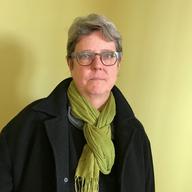
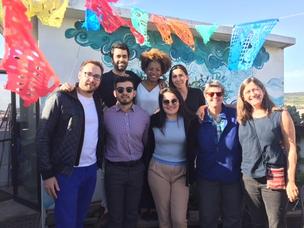
In March, Columbia Law Professor Katherine Franke took six of her students to Tijuana so they could assist migrants preparing to approach the border. They spent 10 days with the legal services group Al Otro Lado and for a first-hand look at a problem that may seem far away for many New Yorkers.
First, she said she was surprised to see the "metered" system used at the Tijuana border by Customs and Border Protection. The agency will only take a limited number of migrants each day. As a result, those waiting to cross into San Diego maintain a list of names.
"It's a little composition notebook where every morning the new migrants who have come to Tijuana get on line, and then wait to write their names in the book," she said. "And then they get a number."
In the meantime, she said the migrants stay in shelters or camp outside.
Franke was surprised by the diversity of migrants and asylum seekers. She said she met people from not only Latin America but from Iran, Afghanistan, Russia and Cameroon — which is on the verge of a civil war.
"The last day I was there, I was talking to a group of men from Cameroon who had been in Tijuana for well over two months," she recalled. They were waiting for their number to be called to cross the border. She asked them about their journeys. Like other migrants from across the Atlantic, they had flown to Ecuador in order to travel north.
"One of them was an engineer, another was a doctor, well-educated people, they said you have absolutely no idea the horrors of walking through the jungle from Ecuador up through Central America into Mexico. Stepping over bodies in the jungle."
Franke and her law students were briefing migrants about what to expect when they finally enter a processing center run by Customs and Border Protection (CBP). Immigrants call these centers hieleras, Spanish for iceboxes, because they're so cold. Those seeking asylum are given credible fear interviews. If they pass, they're given an immigration court date. But Franke said there's no single path out of the processing center.
"If there’s anything that characterizes what the US government is doing it's randomness," she stated. "Some people are brought into the hielera and then discharged that day with either an ankle bracelet or just dumped in a park in San Diego. Other people are kept for weeks. Other people are sent to detention centers in other states."
An Immigration and Customs Enforcement spokeswoman said the agency determines who to release and who to detain on "a case-by-case basis, in accordance with U.S. law and Department of Homeland Security (DHS) policy, considering the merits and factors of each case while adhering to current agency priorities, guidelines and legal mandates."
But some migrants are now being told to wait in Mexico. It's a new policy that's just been expanded, in which they're given an immigration court date but they cannot enter the U.S. before then.
Franke said she spoke to a number of people in Tijuana who had been told to stay on that side of the border until their cases were ready to be heard in a U.S. immigration court. She said they were terrified because Tijuana is dangerous for migrants, "the shelters are all full and the shelters themselves are quite dangerous."
As crowded as it is in Tijuana, the situation is even worse around the busier El Paso port of entry, where many people circumvent that official crossing and are apprehended nearby. Migrants were held under a bridge last month because CBP didn't have enough space to process them. By WNYC's count, a total of 17,308 people without proper documents were apprehended near or at the San Diego port of entry between October and the end of February. More than twice as many – 46,897 – were apprehended near or at the El Paso port of entry in that same period.
In Texas last week, CBP Commissioner Kevin McAleen said his agency is at the breaking point. He blamed those taking advantage of U.S. immigration policies. "Migrants and smugglers know that they will be released and allowed to stay in the US indefinitely pending immigration proceedings that can be many years out," he said.
But Franke said she met migrants in Tijuana with genuine fear who deserve to have their asylum cases heard. She was especially moved by meeting a trans woman from El Salvador who claimed to have been sold by the police to human traffickers. She said the whole 10-day trip affected her students.
"I don’t have any doubt that they will be avid immigrant rights advocates and advocates for many years based on this experience."

WNYC is funded by sponsors and member donations