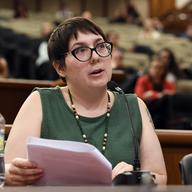
NYS Lawmakers Take on Sexual Harassment in Public Hearing
During the first hearing on sexual harassment in New York’s government in 27 years, state lawmakers closely scrutinized Gov. Andrew Cuomo’s policies and victims told harrowing stories.
Survivors who were sexually harassed by senators and assemblymembers spoke before the hearing, saying they’re relieved there is finally a public forum to talk about improving the state’s anti sexual harassment laws.
One of them is Eliyanna Kaiser, who worked for former Assemblymember Micah Kellner. Kellner, who did not seek re-election in 2014, was admonished twice by the Assembly Speaker for sexual harassment and stripped of his committee post.
Kaiser is now a member of the Sexual Harassment Working Group, which was formed last year by several women who have reported being victims of sexual harassment by state lawmakers.
“Two hundred and sixty-five days after we began pushing for hearings, we’re getting them,” Kaiser said.
They are the first hearings in New York State on the matter since 1992.
Kaiser and the others in the working group criticized how the state’s current sexual harassment prevention laws were drafted in private by the governor and three male legislative leaders — one of whom was himself accused of sexual harassment.
“Four men in a room hung a 'mission accomplished' sign last year on legislation that was rammed through the budget process, without meaningfully consulting with key experts and those of us who have experienced harassment,” Kaiser said.
Former Senate Independent Democratic Conference Leader Jeff Klein is accused of forcibly kissing one of the women in the working group, a charge Klein denies.
Klein lost his Senate seat in a primary, and the woman who replaced him, Sen. Alessandra Biaggi, co chaired the hearing. She says sexual harassment in the workplace has been kept in the dark for too long.
“This will be a place to speak the truth,” Biaggi said.
Survivors Chloe Rivera and Leah Hebert, who worked for former Assemblyman Vito Lopez, testified about repeated harassment. Both feared to speak up against the then-powerful Assemblyman. Hebert says it traumatized her.
“I was a shell of my former self, both physically and emotionally,” said Hebert. “I suffer from regular panic attacks and suicidal thoughts.”
Heber said that despite repeated conversations with then-Assembly Speaker Sheldon Silver’s office and recorded evidence, the Assembly did not investigate their claims.
Both eventually signed a non-disclosure agreement, which says they would be punished with a $20,000 fine if they ever said anything negative about their former boss.
Lopez was later censured and no longer permitted to have interns in his office. He died in 2015.
Silver is facing a prison term on unrelated corruption charges.
Stunned lawmakers, including Senator John Liu, assured the women that they were heard. “Your testimony was courageous and it was compelling,” Liu said, his voice shaking with anger. “It will be consequential.”
Cuomo’s Labor Commissioner, Roberta Reardon, testified about the new regulations written by her agency after the agreement. She said they are a “game changer” because they require every employer in New York State to have a policy to prevent sexual harassment in their workplace, and every employee must be given that policy and receive yearly interactive training.
“We launched an extensive public review,” said Reardon, who called it a “model policy. ”
But questioning from legislators revealed significant gaps — for example, there was only a short public comment period of two weeks in August. But Reardon also told lawmakers that while the Department of Labor devised the rules, the agency does not have the power to make sure that the regulations are carried out. Legislators say that is something that needs to be corrected.
Reardon said that if they devise new laws to strengthen enforcement or make other changes, her agency would be happy to carry them out.
Among changes lawmakers are considering are extending the statute of limitations to file a sexual harassment complaint from one year to three years, and amending the definition of what constitutes harassment so that victims do not have to wait until they are subject to "pervasive" harassment before they can file a complaint. They’d also like tomake the Assembly and Senate fully accountable when one of their members sexually harasses an employee.

WNYC is funded by sponsors and member donations