NYPD Launches First Phase of Body Camera Pilot
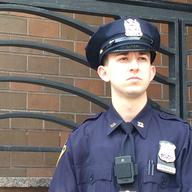
The New York City Police Department officially launched its court-ordered body camera pilot program Thursday after nearly four years of delay.
Mayor de Blasio and Police commissioner James O'Neill made the announcement at the 34th precinct, which includes Washington Heights and Inwood, where 60 officers will wear the new cameras. Precincts in Brooklyn will be added to the program in June, with further expansion through the fall.
Body cameras were originally ordered in 2013 by a federal judge, who ruled the city's use of the police tactic known as "stop and frisk" was unconstitutional.
The first phase will include more than a thousand officers wearing cameras by the end of the year. The city plans to roll out body cameras to all 22,0000 patrol officers by the end of 2019.
Police reform advocates attempted to block the start of the pilot because of concerns about when the cameras will be used, and how the footage will be accessed.
Mayor de Blasio said the city will make improvements to the program as it rolls out.
“Anybody who thinks they have all the perfect answers about how this is going to play out needs to recognize something of this magnitude will be a work in progress. We'll learn along the way the things that we can make better,” said de Blasio.
NYPD Assistant Commissioner Nancy Hoppock, who works in the Risk Management Bureau, said officers are trained, “when in doubt, you turn it on.”
She said the NYPD’s body camera policy requires officers to turn them on in a wide range of circumstances: “any summons, any arrest, any use of force, an interior patrol, if I am walking up to you, and I have any level of suspicion whatsoever of criminality directed at you, it is on.”
“What we are leaving out is,” Hoppock said, “you see our officers are equipped with the antidote for a heroin overdose, do we want to mandate that they record that? That is an interaction with the public.”
Citing his decades-long career with the NYPD, O'Neill said he was skeptical about body cameras until he did his research.
“I'm totally convinced now this is the way forward. I truly believe these cameras have a great potential to de-escalate and that the footage captured will overwhelmingly benefit all involved,” said O’Neill.
The city's body camera program is under the supervision of a federal monitor.

WNYC is funded by sponsors and member donations