Voter Turnout Was Better Than Last Midterms, but That's Not Saying Much
Despite the long lines and frustrations that voters experiences, Tuesday's turnout in New York City was neither record-breaking nor impressive.
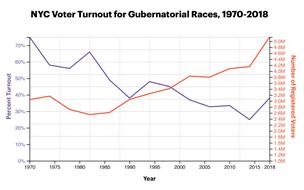
About 37 percent or 1.9 million of New York City's registered voters cast ballots, according to the preliminary tallies from the City's Board of Elections. That's about 916,000 more than in the 2014 midterm elections, but still far fewer than 2016, when 2.8 million people voted in the presidential election when Donald Trump defeated Hillary Clinton.
The city has seen poor voter turnout in midterm elections (when gubernatorial elections also take place) going back more than a decade, according historic data from the Board of Elections—though the number of registered voters has steadily climbed. Back in the 1970s, when the city elections board began keeping track, over 70 percent of registered voters cast ballots.
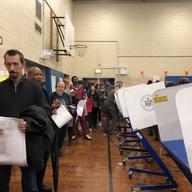
While voters described clogged polling places and lines that led out the door and around the block, those issues had more to do with technical issues on the part of the city's Board of Elections, rather than the actual number of voters who showed up. The Board of Elections ascribed the jammed machines to the fact the ballot stretched onto two double-sided pages that needed to be fed separately into the scanner.
Also it appears the city's campaign to get New Yorkers to "flip the ballot," fell flat, with more than 500,000 voters — a whopping 26 percent — who showed up did not weigh in on ballot proposals on the back of the ballot's second sheet.
Voters who did weigh in on the ballot measures supported them by a wide margin and they all passed, paving the way for three adjustments to the city's constitution and campaign finance system.
At a press conference Wednesday, Mayor Bill de Blasio called the ballot results "a powerful message sent by the people of this city that we need to change that we need to keep improving our democracy."
"It's going to help efforts in the state ... but also around country to see that the biggest city in America just took a big step toward getting big money out of politics and rewarding low dollar community donations," he said.
The first proposal will decrease the maximum amount individuals may donate to campaigns for city offices, and increase the amount of matching funds available to candidates. The second question creates a mayoral commission to improve civic engagement. The last proposal will phase in term limits for community board members who can currently serve indefinitely.

WNYC is funded by sponsors and member donations