MTA's New Plan Wins Praise, but has Many Unknowns
New York City Transit President Andy Byford's plan to quickly modernize the system was met with praise at Wednesday's MTA board meeting.
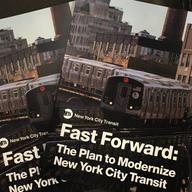
Unlike the Subway Action Plan, which was created to stabilize the system, Byford's "Fast Forward" plan seeks to modernize the signals, subway cars, and bus fleet, and make the entire system accessible in ten years.
"This is the first major ray of hope we've had, which is transforming the system," said Mitchell Moss, director of the NYU Rudin Center for Transportation. "Not repairs one by one but a total transformation."
He added: "this is New York City. This is too important to let it deteriorate."
The MTA's failure to install elevators when making major station renovations has resulted in several lawsuits. Accessibility advocates praised Byford's plan, which calls for installing elevators at 50 new stations in the first five years.
Usually, said Gabriela Amaria with the Brooklyn Center for Independence of the Disabled, "paratransit is talked about for two minutes and they move on to something else. This time we're included in a way that I've never heard in the eight years that I've been advocating. And (while) I'm encouraged by the plan, I'm worried about the funding, I'm worried about the schedule...that's always going to be an issue."
So is everyone else.
Notably missing from the plan is a formal price tag (although reports put it in the $19 billion to $37 billion range) and a start time, although Byford said work could begin as soon as 2019 or 2020 — but not without a dedicated stream of revenue.
Byford says he doesn’t think just one funding stream, like congestion pricing, could pay for his plan: “No single funding source is going to fix this...I think it’s going to be a package of measures. They must be “imaginative, sustainable, predictable and affordable.”
— Vincent Barone (@vinbarone) May 24, 2018
New York City Mayor Bill De Blasio and New York Governor Andrew Cuomo, who routinely spar with each other over transit funding, remained true to form.
“As much as I’m really happy to see a plan that actually gets at the essentials and puts a real price tag on it," said de Blasio, "it’s still the MTA and we’ve seen what happened with East Side Access, and we have to hold their feet to the fire that this plan is implemented than what we’ve seen in the past. The real answer to the MTA’s situation is a long term funding stream and we as a city as a state keep putting this off we should stop putting it off, it’s time to decide.”
Governor Cuomo, when asked about the plan on Wednesday, said he hadn't reviewed it yet. But. "I said to the chairman the plan has to be realistic, feasible and expeditious," he said. "And on the technology, I want to get the best technology minds in this country to look at the technology in the subway. That’s what it really comes down to – the technology on the signal system. If we are developing self-driving cars, there has to be technology that can help us do the signal system in New York."
"The funds would come from the city and the state," he added. "I’m not wed to that amount of money at all. As I said, I haven’t seen the plan. I heard the city say they wouldn’t put in any funding – I read. If that’s the case, then the real problem is you’re not going to be able to do anything significant to fix the subways.”
If and when Byford's plan gets funded, one necessary ingredient will be patience from riders. Byford is planning to do signal replacements by closing lines on evenings and weekends.

WNYC is funded by sponsors and member donations