Mayor La Guardia on Harlem Riot
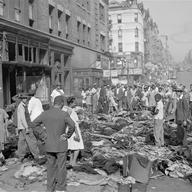
The riot reportedly began the day before when a white policeman shot and wounded an African-American soldier who the officer charged with interfering in the arrest of a black woman in the lobby of a hotel on West 126th Street.
False rumors that the soldier had been killed spread rapidly and provoked an outburst of window smashing, fires, overturning of cars, and attacks on police. Property damage was estimated at $5 million. 500 people were arrested for rioting, looting and assault. Five people were killed and 400 were wounded. The rioting was noted, at the time, as the most violent disturbance in Harlem's history.
A curfew was imposed and 8,000 National Guardsmen were ordered on standby. Leaders of the NAACP, National Urban League and Councilman Rev. Adam Clayton Powell, Jr., said the disturbance was not a race riot but "outbreaks of hoodlumism." They added that poor economic conditions were the underlying cause of the explosive situation.
Councilman Powell blamed the riot on, "blind smoldering and unorganized resentment against Jim Crow treatment of Negro men in the armed forces and the unusual high rents and cost of living forced upon the Negroes of Harlem."
The progressive tabloid PM reported on how the media handled the riot August 3, 1943. Here is an excerpt with an overview of what WNYC Station Director Morris Novik was tasked with:
"...The News Editor of WOR, John D. Whitmore, first verified the news with police, then telephoned Morris Novik, chairman of the New York Radio Civilian Defense Committee, and a radio representative of La Guardia. Novik immediately arranged for the Mayor to make his public statement over WOR, WJZ and WABC at 1:05 a.m.
"Novik then ordered WNYC's three sound trucks to the scene along with two Police Department trucks. These, staffed with sound crews, routed out of bed, toured the area slowly, broadcasting appeals by the Mayor and Negro leaders to the people of Harlem to return to their homes and clear the streets. Meanwhile, emergency telephone wires for broadcasting were installed in the West 123rd Street station.
"At a dawn telephone conference Novik arranged with network news chiefs for the Mayor to address the city at 7:50 a.m. from the Harlem police precinct on all available stations and again at 9:50 from City Hall. The second broadcast was recorded and rebroadcast at other times throughout the day by other stations...
Audio courtesy of the NYC Municipal Archives WNYC Collection
WNYC archives id: 5755
Municipal archives id: LT4029