Justice and Journalism Thirty Years After the Central Park Jogger Case
Spurred on by salacious media coverage and a slanted police narrative, the gruesome crime of April 19th, 1989, swept New York City into a fearsome frenzy.
That night, a young white woman was brutally raped and left for dead in the northern part of Central Park. Over the following days and weeks, the police and the press claimed that five young African American and Latino teenagers were to blame. Mayor Koch labeled them "monsters."
"The coverage itself was pretty much hysterical," said LynNell Hancock, who was then a local education reporter, and is now a professor of journalism at Columbia University who has written about the case. "The headlines just kept coming."
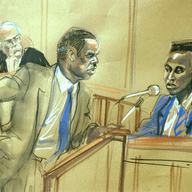
The defendants, ranging in age from 14 to 16, came to be known as The Central Park Five. Antron McCray, Yusef Salaam, Kharey Wise, Kevin Richardson and Raymond Santana were convicted in 1990 for their supposed role in the attack on the woman, who later identified herself as Trisha Meili. Police obtained partial and conflicting confessions from the boys after hours of questioning, but they failed to match them to the scene through D.N.A. evidence. The teens who confessed later recanted.
“People who have been wrongfully convicted, one out of four of those people confessed,” said Paul Butler, professor of law at Georgetown Law. “They told a lie in order to get the police [to stop] doing what the police were doing which is usually applying enormous psychological, emotional coercion.”
All five teens spent years in prison before another man admitted to the crime in 2002, overturning their convictions. Matias Reyes was serving prison time for serial rape and murder and his D.N.A. matched a sample taken from the crime scene.
McCray, Salaam, Wise, Richardson, and Santana eventually settled a lawsuit against New York City for $41 million, a resolution that was cheered by the men, their families, and their supporters.
“Y’all don’t really understand what we went through. Y’all tried to dehumanize us as human beings,” Richardson told reporters after the settlement in 2014. “But we still here. We’re strong.”
The conclusion of the case and the widespread revelation of wrongful conviction has continued to haunt members of media and law enforcement.
“Everybody got it wrong. Everybody from the prosecutors, every mainstream newspaper," said Hancock.
“There was some private mea culpa, a lot of people very quietly saying ‘What did we do wrong? What if those boys had been white?’” said Hancock. “What a horrifying thing to think that we would have covered it differently.”
But in the decades since the attack and racist media firestorm, a full-fledged reckoning and deeper institutional changes have failed to take hold, said Hancock and Butler.
Mainstream newsrooms continue to hire and retain more white people than people of color, and particularly struggle to promote people of color to their editorial mastheads, said Hancock.
“That dial has not moved very far at all,” she said.
Police and prosecutors arrest and sentence people of color at higher rates than white people, despite reforms to make police investigations and trials more fair and transparent.
“We haven’t made the kind of progress that we hope to have made,” said Butler. “And we can be sure that those five children were not the last people to be wrongfully accused. And there are many more people like that sitting in U.S. prisons today.”
To hear the full conversation between Jami Floyd, Paul Butler, and LynNell Hancock, click the 'Play' button above.

WNYC is funded by sponsors and member donations