Josephine Baker's Subversive 'Rainbow Tribe'
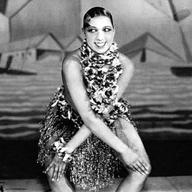
American-born singer and actress Josephine Baker rose to fame as a risqué hot jazz act in 1920s Paris -- and it's this period of her life that she's best known for today. Performing in her trademark banana skirt (and sometimes not much else), Baker became enormously famous -- acting as a muse for artists and writers, like Langston Hughes and Pablo Picasso.
However, Baker's life was filled with unexpected twists and turns: during World War II, she gathered intelligence for the French Resistance and was eventually awarded a French War Cross. In the 1950s and '60s, she became a figure in the American civil rights movement.
But there's one part of Baker’s story that most people have never heard. In 1953, Baker adopted twelve children from around the world in a quixotic attempt to assemble a family with children from all races -- and quite literally put them on display.
This chapter of her life is explored in Josephine Baker And The Rainbow Tribe, a book by Matthew Pratt Guterl, professor of Africana Studies and American Studies at Brown University. He joins us to speak about the "rainbow tribe" she attempted to create, and his personal view on the matter as an adopted child himself.
Interview Highlights:
Guterl on Josephine's intentions behind her rainbow tribe, which consisted of twelve adopted children:
"As carefully and as deliberately as she can, she's looking for balance in representation across the spectrum of colors and races and peoples. And she wants a family that serves a deeply symbolic purpose in the context of conversations about decolonization, civil rights, and human rights."
Guterl explains that some of the adopted children were assigned cultural identities:
"There were several attempted adoptions that never really came to pass. One was her effort to secure an Israeli child, where she failed primarily because the state of Israel desperately needed human capital... so she adopted a child from France and assigned him a Jewish identity. She also wanted to adopt a Native American child and that too fell by the wayside, but she did find a child that was indigenous, though to South America, and included him in the family too."
Guterl on Les Milandes, the estate that Baker transformed into a theme park:
"It's a big old castle that baker painstakingly restored in the 1940s and that she turned into a theme park with amusement park rides, polo courts, tennis courts, canoe rides, and a series of bars and hotels. And in the middle of this, there was the domestic site of the castle itself... and the family was raised there.
The star attractions [of the theme park] are the children themselves. What is being advertised here is a vision of the future, and Baker encourages her public in France, and globally, to come visit... to see what the future might look like to watch these children to play together out in the public air."
Hear Josephine Baker's early hit "J'ai Deux Amours" below: