How to Spot a Blackberry Shrub in a Woodland Near You
Marielle Anzelone is an urban ecologist and the founder of NYC Wildflower Week. For three weeks this spring, she's be speaking with WNYC's Richard Hake about what's blooming in our region. Hear last week's recommendation here.
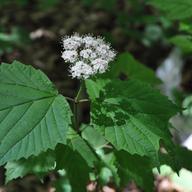
The star of the woods this week is maple-leaved viburnum (Viburnum acerifolium). This native species is common in shady, upland forests of the New York City metro area. Now in peak bloom, you’ll see tiny white flowers clustered together on shrubs that are about head-high.
Another helpful way to identify this species is by looking at the leaves. They should be opposite, rather than alternate, on the stem, with maple–like lobes, toothed around the margins. These shrubs are a host food plant for the caterpillars of spring azure butterflies. Butterfly larvae tend to have very specific food requirements (whereas most of the adults do not), making the preservation of native plants a critical environmental concern.
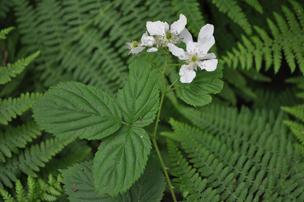
Sunnier trail edges have an abundance of common blackberry shrubs (Rubus allegheniensis). These plants have white, five-petaled flowers that grow along prickly, arching canes. In a few weeks, flowers that were pollinated will form edible blackberry fruits. Botanically speaking, they are not technically berries, but aggregates of drupes, as each tiny sac contains a seed. No matter the name, the result is delicious to eat.
To find these wildflowers in a woodland near you this weekend, try visiting Inwood Hill Park in Manhattan, Cunningham Park in Queens, or Seton Falls Park in the Bronx.

WNYC is funded by sponsors and member donations