False Emergency Alerts: Could It Happen Here?
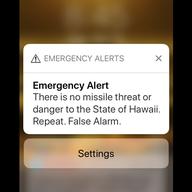
Like radio and television before them, smartphones have become the technology of choice for governments to warn the public of dangerous situations. But after an emergency worker in Hawaii falsely warned the entire state that it was under attack by a ballistic missile, it's clear there a few kinks to work out.
New York City and state officials say they employ numerous safeguards that were not in use in Hawaii, when, during a routine test, the worker accidentally chose the wrong option from a drop-down menu on a computer screen. According to Ben Krakauer, an assistant commissioner at the New York City Office of Emergency Management, the city tests its system weekly on a separate computer program from the one that broadcasts the alerts.
But those are only internal tests. Rand Corporation security researcher Dan Gonzales, who studied the system when it first launched, says that without full-blown tests, officials might miss any issues in getting the alerts to the public.
"If a message were delayed by 20 minutes, the public would have much less time to react and seek shelter," Gonzales said.
On the other hand, New York City has had enough real-life alerts to make officials comfortable with how its system works, most recently, after the Chelsea Bombing in 2016. The city Office of Emergency Management sent out several alerts at that time, including one the NYPD requested to track down the suspect's name. Krakauer said the entire process from start to buzz took about 10 minutes.
"The on-duty public warning specialist took that information, distilled it into a 90 character-or-less message, sent it to NYPD for approval, received that approval, and then sent that message out to the public," Krakauer said.

WNYC is funded by sponsors and member donations