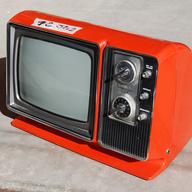
Like a fish trying to imagine what reality would be like without water
Technology has led children to be narcissistic, distracted, and unable to focus.1, 2, 3 Those are all criticisms of the 21st century’s connected digital world. But before the age of smartphones, YouTube, text messaging, and social media, the same claims were made about television.
On the eve of TV-Turnoff Week 1996, On the Media delved into the consequences of America’s addiction to television. Alex S. Jones hosted a panel that consisted of Henry Lebalme, executive director of TV-Free America, the group behind TV-Turnoff Week (now Campaign for a Commercial-Free Childhood); Todd Gitlin, professor of journalism, sociology, and communications at Columbia University; and Michael Kettenring, a veteran television news executive.
By 1996 television was a mature medium that had long been in the majority of American households: Ninety percent of U.S. households had a television in 1960, and by 1996 that number was near total saturation.4 Lebalme quoted statistics from Nielsen Media Research reporting that the average American was watching four hours of television a day, which translated to 60 full days per year and nine years of solid TV viewing by the time a person turned 65. He thought TV viewing had replaced healthier activities like conversation, family interaction, and physical exercise.
Kettering, the television executive, pointed out that, when used properly, the medium did have positive aspects: "More than ever in the history of humankind we are an informed nation and for the first time... peoples across the globe have an opportunity to reach each other, reach out to each other, learn about each other...we really do have the power to build a global village." He added that, unfortunately, "Television in general has made us a materialistic culture, desensitized us, made us unprincipled, passive-aggressive, kept us adolescent...We almost literally have become a country of empty suits."
Kettering also wondered about the changes in students that Gitlin might ascribe to the influence of television. Gitlin said many of his students’ attitudes followed the guidelines of "...don’t tell us anything too complicated. Don’t make us read anything too complicated. Don’t make us write an essay. We want to do multiple choice. Don’t make me sit and respond to an argument. Let me come up with a snappy rebuttal."
How much had television overwhelmed American society? Gitlin mused: "It’s incredibly hard to imagine what America would be without television. It’s sort of like fish trying to imagine what reality would be like without water."
As society’s addiction has turned to immersion in digital devices in the 21st century, TV-Turnoff Week has become Screen-Free Week, celebrated April 29-May 5, 2019. You might find it ironic that the event has a website: screenfree.org.
1 Taylor, Jim. "Are Media Creating a Generation of Narcissists?" Psychology Today, 23 October, 2012.
2Taylor, Jim. "How Technology is Changing the Way Children Think and Focus". Psychology Today, 4 December, 2012.
3Taylor, Jim. "Mama, Don’t Let Your Babies Grow Up to Be Multitaskers". Psychology Today, 19 December, 2012.
4 Gorman, Bill. "US Television Households by Season". TV By the Numbers, 28 August, 2007.

WNYC is funded by sponsors and member donations