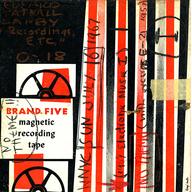
Electronic Music - Part 1 of 3 - Musique Concrète
"Yes, electronic music is just plain booming these days! Everywhere, all over the place — in universities, in theaters, in rock music and heavens knows where else."
When this episode of Recordings, E.T.C. originally aired in 1967, electronic music had become an inescapable presence in the artistic landscape. Host Ed Canby poses the question of whether this form of sonic expression is a "dreadful engine of musical destruction" or a "boon to music's future?" In the course of this three-part survey, Canby separates the early history of electronic tape music into two distinct categories: 'musique concrete' (manipulation of found sounds) and pure electric abstraction (sounds generated from purely electronic sources). This first episode is devoted to the initial, experimental phase where sounds of the real world were recorded and manipulated using a variety of mechanical and electronic trickery.
By the 1940s, the production of electronic music was largely relegated to university-based research centers with expensive and cumbersome machinery — well outside the budget and expertise of the average musician. However, as portable recorders and magnetic tape began to be marketed to the typical consumer, many amateur hobbyists began to experiment with the medium's endless potential for creating new forms of sonic expression.
By playing some of his own tape experiments from 1955 and 1957, Canby demonstrates many of the common effects and tricks used in electronic music production like echo, pitch manipulation, reverberation, splice editing, and tape reversal. Canby reminds his listeners that these sounds, regardless of how inhuman or machine-made they appear, are in fact, rooted in real experience. He goes on to say, "No matter how symbolic we get, how far-fetched we may become in what we do with the real sound, if there is at base some real connection with human or other known sounds, then you see there is a kind of a human artistic strand, you might say, a relationship, a connection in thought and feeling that goes back to the original sound no matter how doctored it may be."
WNYC archives id: 58736

WNYC is funded by sponsors and member donations