For the Gateway Train Tunnel Project, It's the Beginning of the Beginning
It's been called the "Achilles' heel" of the Northeast Corridor, a "notorious bottleneck," and a "single point of failure."
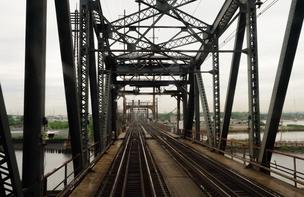
The Portal North Bridge is the most important 107-year-old swing span bridge that you have (probably) never heard about, connecting hundreds of trains from New York City to points further south, and vice versa, every day.
One three-hour outage on this Hackensack River crossing this March resulted in 112 cancelled NJ Transit and Amtrak trains affecting 66,000 commuters.
Now, finally, work on a replacement is underway.
Officially, the new bridge is part of the first phase of the $30 billion Gateway Project. Plans call for a new bridge that doesn't need to swing open. Once that's completed and rail traffic is running on the Portal North Bridge, a second bridge, Portal South Bridge will be built in the existing bridge's footprint, bringing the total number of tracks available, to four. The broader Gateway project would also double rail capacity between New York and New Jersey by building a second tunnel under the Hudson, and expand Penn Station to allow for more trains.
The broader Gateway project would also double rail capacity between New York and New Jersey by building a second tunnel under the Hudson, and expand Penn Station to allow for more trains.
But Amtrak and NJ Transit aren't waiting for the full $30 billion to come through. Though both New York and New Jersey have committed to covering half of the bill, the federal government has yet to fully commit to covering the other half.
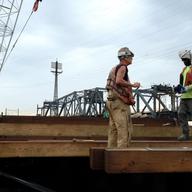
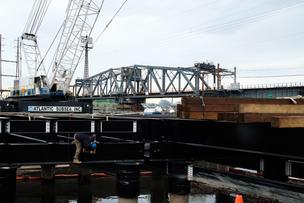
NJ Transit and Amtrak are beginning to build a pier in the river, the first step of the process, with funding from a $16 million TIGER grant and a $4 million match from NJ Transit. Eventually the new bridge will have a mile-long lead up to the Hackensack River and will run parallel to the New Jersey Turnpike. The full cost of the bridge is currently set at $1.5 billion.
The existing Portal Bridge opened in 1910, and still opens about 100 times a year to let tug boats and barges through. It gets stuck open about 15% of the time, especially in winter when the lubricant freezes.
"The issue here is basically when it goes to close a lot of times it doesn't close properly," Craig Schulz, a spokesman for the Gateway Project, who also works for Amtrak, said. "Sometimes it's just a matter of it just doesn't lock in and there have been times when they've had to come out here with a sledge hammer and bang the rail into place so it seats and locks properly. That's kind of where we are."
Currently there's a speed restriction over the Portal Bridge of about 60 mph, but once the new bridge is up and running, Schulz said NJ Transit will be able to run at about 10 percent more capacity.
Editors note: This story was updated at 10:54am 5/31/18 to reflect a spelling correction and clarify that a second bridge must be built to expand the number of tracks.

WNYC is funded by sponsors and member donations