De Blasio Outlines Budget — But More Than a Billion Dollars in Federal, State Cuts Looming
New York City Mayor Bill de Blasio presented an almost $89 billion preliminary budget for fiscal year 2019 on Thursday – $4 billion more than his preliminary budget last year. Since becoming mayor, de Blasio’s preliminary budgets have grown by nearly 20 percent.
This latest proposal comes as the city faces increasing economic pressures from the state and federal government — all while de Blasio pledges to make New York the “fairest” big city in America.
De Blasio said the city may lose $1.5 billion in federal and state funding cuts, including $400 million in federal funding for the city’s hospital system. The city is in jeopardy of losing $750 million from state funding, including cuts to child welfare services, special education, juvenile justice and rental subsidies for working families in shelters. A spokesman for the state budget office disputes that the city is facing state cuts.
Left out of the proposal was any additional funding to address the city’s crumbling transit system. Invoking one of his favorite talking points of the past year, the mayor laid the blame for the MTA’s failures with Albany.
“The state has a responsibility to the MTA,” de Blasio said. “If the state does the revenue plan right, which they could in this session, that solves the problem and you don't talk about city revenue at that point.”
The MTA's Jon Weinstein told WNYC in response, "The subway is the lifeblood of New York City and it's a shame the mayor continues to show a complete unwillingness to help fix it."
The mayor will head to Albany on Monday to testify before the state legislature about the city’s budget priorities, including an ongoing conversation about MTA funds.
The mayor framed new spending in his preliminary budget as modest, targeted investments that expand on some of his key initiatives like pre-kindergarten and 3-K, an early education program for the city’s 3 year olds. It also includes proposed investments to address issues that have dogged the administration in recent weeks.
The mayor wants to allocate $200 million in its capital budget and $13 million in the expense budget to address issues faced by NYCHA residents — specifically for repairing boilers at a number of developments. That’s in direct response to failures this winter that lead to no heat or hot water for residents.
The city also wants to boost capital funds to the Department of Homeless Services, up to almost $160 million. He said there are up-front costs to his plan to build 90 new shelters while continuing to phase out cluster sites and hotels. The city’s shelter population continues to exceed 60,000 people each night.
The growth in the budget is largely personnel related, the mayor said. That includes labor settlements and the city’s growing workforce, including 2,000 more police officers, pre-k and 3K teachers, sanitation workers and building inspectors. “We think they've had a very positive impact on the city,” said de Blasio.
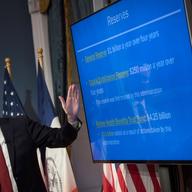
The city has consistently set aside $5.5 billion in its reserve funds, including $1 billion in the general reserve, $250 million in the capital stabilization fund, and $4.25 billion in the retiree health benefits trust fund. But budget watchers say the city should be growing these reserves, given all the economic uncertainty.
“Before the going gets tough, the mayor should get going by limiting spending growth, bolstering the savings plan and adding to reserves,” Carol Kellerman of the Citizens Budget Commission said in a statement.
In the coming weeks, the City Council will hold budget hearings with each agency. It will be the first budget process led by new City Council Speaker Corey Johnson. He said he plans to attend most of the budget hearing and he expects agency leaders to come to the Council prepared to answer detailed budget questions. And if they’re not ready, he’s willing to adjourn a hearing for an hour and wait.
“They have to have answers,” Johnson said, adding, “There cannot be an answer, ‘We’re gonna get back to you in a week. We’ll send you a letter.’ They need answers at the hearing right then and there.”

WNYC is funded by sponsors and member donations