Uncertain About Their Own Futures, DACA Teachers Find Special Connection with Students
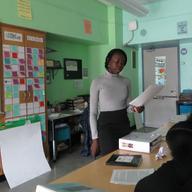
When Astou asked her seventh grade students to write personal essays, she modeled the assignment with a personal story of her own.
As debate raged in Washington over the future of DACA, Astou, a writing teacher, stood in front of her classroom at a South Bronx charter school and told her students that she was only able to teach because of Deferred Action for Childhood Arrivals — the Obama-era program that extends deportation protection and work permits to undocumented people.
“I can’t imagine being a teacher in the classroom having lived my life the way that it has went and to ignore these issues when they come up,” she said.
Astou, who asked that her last name be withheld because she has undocumented family members, said she “came out” to her students about her immigration status because she sees informing young people about the world around them as fundamental to her role as an educator.
Talking to them about immigration was especially important to her because she knows she isn’t so different from a lot of her students. Astou came to the U.S. from Senegal when she was seven and grew up 10 blocks away from where she teaches. Now, the 25-year-old is one of nearly 9,000 teachers with DACA across the country — without the program, many of them would be barred from professional work.
Growing up, Astou had always coveted education as her ticket out of the shadows. Then, as she told her students, Astou found out that undocumented people (including DACA recipients) aren’t eligible for financial aid. She went to talk to the high school guidance counselor about scholarships, but remembers being told, “There are no scholarships for you.”
Eventually, Astou enrolled in Hunter College — and received a DACA permit soon after. That allowed her to get a job and pay tuition.
Although she managed to become a teacher, her future is once again uncertain as federal courts weigh in on the legality of the DACA program. Astou says she felt “exposed” sharing it with her students. Like many undocumented people, she had always known to keep her immigration status a secret.
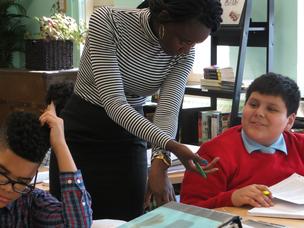
Her students were stunned by her openness. “We’ve never had a teacher who uses DACA or at least ever told us,” said Luis, one of her students. “She knows how difficult times are going around with the new government and the president, so she is a person that can relate to similar stuff [as me].”
New York needs teachers who can relate to their students, according to MaryEllen Elia, a Commissioner with the Board of Regents that oversees the New York State Department of Education. There are an estimated 53,000 undocumented people under the age of 16 in New York. The Board decided to extend teaching certificates to DACA recipients in 2016, in part, to help address limited racial diversity among educators.
“One of the areas that we’re really targeting to recruit into our classrooms are minority teachers who actually can, in many ways, identify with the students that they’ll be teaching, and we think that’s a great benefit,” Elia said.
In announcing the end of DACA in September, Attorney General Jeff Sessions said the program has “denied jobs to hundreds of thousands of Americans by allowing those same jobs to go to illegal aliens.”
Elia says that’s not the case for New York teachers, since there’s a growing teaching shortage in a several different subject areas. “The bottom line,” she said, “Is that these are positions that we have that we can’t fill.”
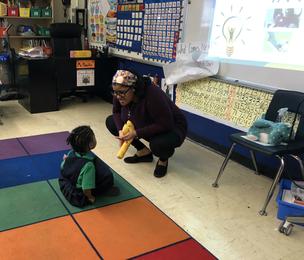
Five and six-year-olds may not be able to jump into the immigration debate, but they’re still affected by it, says Ainslya, a DACA recipient and kindergarten teacher in Brooklyn, who asked that her last name not be used.
“I know what that felt like when my mom wasn’t sure whether or not she would be here tomorrow — my mom is still in that position — and I know how that impacts me when I’m trying to think through lessons and it takes me a moment.”
On the day that the Trump administration announced the end of DACA, Ainslya said she couldn’t get through her lessons.
“I had to put myself together and face my kids, but I kept crying,” she said. “And my kids saw me cry and that’s not something that I think my kids should be comforting me in those instances. I’m supposed to be there and be strong and convince them that the world is safe.”
Ainslya said her job is to get her students to believe they can grow up to do anything. Being unsure about whether or not she’ll be able to keep her job because of where she was born makes that harder to do.

WNYC is funded by sponsors and member donations