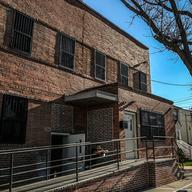
Cuomo's Cuts Hit 'Close to Home'
In 2012, a family court judge sent Jeremy Taveras to a newly opened group home in Queens as an ‘alternative to incarceration.’ When he arrived, he was shocked at how humane it was compared to the large, prison-like juvenile detention facilities upstate where the 16-year-old had spent most of the previous three years.
“The first few days I was in ‘jail mode, because of how they treated me before [at the state facilities], but when I realized how they treated you differently, how it seemed like they really care about me and my issues, it really turned me around,” Taveras said.
It's a positive note for a program called Close to Home whose early years were marred by problems. In 2012-2013, its first full year of operation, children in these “non-secure” homes for juvenile delinquents went AWOL more than 1,100 times. One of them, from Staten Island, killed a man in Queens. The next year, there were almost 200 arrests in the network of 30 homes. There were hundreds of documented fights among residents that culminated in staff members using restraints. And in 2015, three escaped youths from Brooklyn made their way to Chinatown, where they sexually assaulted a woman.
The city’s Administration for Childrens Services, which runs the joint city-state program with private contractors, says it has fixed many of the systemic problems. Far fewer detainees go AWOL. Re-arrests after discharge are down. And educational scores and graduation rates are up.
But now the city is facing a new problem with Close to Home. Governor Cuomo wants to withdraw its state funding. His proposed 2019 budget would force the city to pick up the Albany’s piece, which would be $30 million or more.
“We are unable to continue the same level of fiscal support to the city that we have had in the past,” Sheila Poole, the acting Commissioner of the Office of Children’s and Family Services, testified at budget hearings in January. Brooklyn Assemblywoman Helene Weinstein, chair of the Ways and Means Committee, was one of several skeptical legislators.
“It’s not just ‘not the same level,’ ” Weinstein said. “It’s a total elimination of funding.”
The Democrat-led Assembly has proposed restoring budget funding. A spokesman for the Republican-led Senate did not return requests for comment.
The state is adamant that Close to Home is a local New York City program, and that with the state facing a multi-billion-dollar budget deficit, it is something the city should finance. Not surprisingly, the city disagrees.
“Any young person who makes a mistake elsewhere in the state of New York — it could be in Yonkers — and if they’re under 16, the state is willing to put 50 percent of the resources needed to have that person turn their life around," said Felipe Franco, the ACS deputy commissioner for Youth and Family Justice and formerly one of the state officials who helped found the program. "But if a kid is in the north Bronx, five miles away, now they’re saying they don’t have to pay.”
Vincent Schiraldi helped create Close to Home when he was probation commissioner in the final years of the Bloomberg administration. He had hoped the program would eventually spread to other cities like Buffalo, Rochester and Syracuse.
“If it makes sense for the kids of New York City not to be in these rural prisons in the middle of nowhere, far from their families, why wouldn’t that be true of these other cities?” said Schiraldi, who is now co-director of the Columbia University Justice Lab. But he ran into resistance from his counterparts in those places, who feared that the state could co-fund it one year and then drop funding the next — exactly what's happening now.
“They call this ‘re-alignment,’ when you go from a state program to a local one,” he said. “And this is what everyone’s always worried about with realignment.”
Close to Home has been shrinking for years, as youth arrests decline and more and more of those who do go into the family court system get diverted to non-detention programs. But the overall population served by the juvenile justice system is poised to expand. Under 'Raise the Age' legislation last year, 16- and 17-year-old law-breakers who previously were handled by adult criminal courts will now largely be treated as children.
As a result, the city projects Close to Home serving twice as many people in the coming years. The state has allocated $100 million in the coming fiscal year for localities to take on these teenagers — but none of that money is earmarked for New York City.
"We were pleased to provide support for [Close to Home] at the state level," a state Budget office spokesman said. "There is no threat that the program will discontinue ... it's only a matter of who bears the responsibility of funding."

WNYC is funded by sponsors and member donations