The Cost of Affordable Health Care in East Harlem
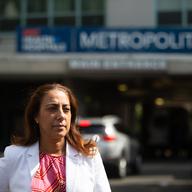
Metropolitan Hospital Center in East Harlem is the go-to center for many neighborhood residents seeking affordable health care. Alina Moran said it’s always been that way. “My parents migrated here from Puerto Rico. They chose to come and use a safety net hospital because they didn’t have access to insurance,” she said. Moran was born at Metropolitan and now, as the hospital's CEO, she manages a wide range of services from births to geriatric care. “We are here to serve all patients regardless of their ability to pay.”
Metropolitan is one of 11 hospitals that make up the city's public system known as NYC Health & Hospitals. It is the largest municipal hospital system in the country, and it has been in fiscal distress for years. One reason: many of the patients are uninsured or under-insured. At Metropolitan, Moran said 30 percent of patients don't have insurance and another 60 percent have Medicaid which doesn’t cover the full cost of care. Moran said that makes it hard to balance her books: She’s facing a $40 million budget gap this year. “We are always challenged with trying to meet the needs of our patients,” she said.
All New York hospitals are required to care for people who need it, and the city, state, and federal government provide substantial financial assistance to help pay for services. The city in particular contributes billions of dollars in support. But critics would like to see a change in how the state distributes $3.6 billion in federal Medicaid aid for the program Disproportionate Share Hospitals, or DSH, which refers to hospitals with a disproportionate share of low-income patients.
NYC Health & Hospitals gets about $1.4 billion of those funds each year, with Metropolitan receiving about $55 million.
Critics see two problems:
1. Indigent Care: The Community Service Society of New York has focused on one stream of funds within DSH that's specifically designated for "indigent care." The state distributes this money to virtually all of its hospitals. But Elisabeth Benjamin, vice president of health initiatives at the nonprofit, argues this money should be directed to "true" safety net hospitals, like Metropolitan. "Right now our indigent care dollars are not being allocated in a rational and fair way and we need to change that," she said.
2. Looming cuts: The Affordable Care Act has been successful in increasing the number of people who have insurance across the country. As a result, the federal government is planning to reduce how much it spends on DSH funds to cover care for the uninsured. But New York City’s public hospitals still serve a large share of uninsured or underinsured patients and because of how the state’s formula works, those hospitals will also be the first to lose funds. "New York City Health and Hospitals would be in the position to bare the vast majority if not the entirety of the DSH cuts," said Patrick Orecki, who focuses on health policy at the Citizens Budget Commission. Congress has postponed these cuts three times. Now, they’re scheduled to go into effect in Fiscal Year 2020. The CBC, the Community Service Society and other groups have called on the state to find a new way to distribute its dollars. Governor Cuomo recently announced a working group to study the issue.
In the meantime, Mayor de Blasio has announced a plan to transform the public hospital system and stabilize its finances. NYC Health & Hospital's new CEO Mitchell Katz is implementing changes to increase revenue and cut costs across the system which includes hiring more primary care physicians and improving billing.
At Metropolitan, Alina Moran said she's attempting to save money by increasing overall efficiency and by reducing non-clinical positions through attrition. She hopes she can do it all without affecting patient care. “I think access to health care is a human right and I think that people have to have access to those services,” she said.

WNYC is funded by sponsors and member donations