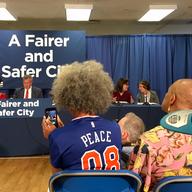
Cheers and Skepticism Greet NYPD's New Marijuana Enforcement Policy
The NYPD's new marijuana enforcement policy means those caught smoking in public are supposed to be given summonses that carry fines -- in other words, they'll be given a ticket. The city predicts police will make 10,000 fewer arrests each year.
"Every time there's one fewer arrest inherently it means someone's life is not affected as negatively," Mayor Bill de Blasio said at a press conference on Tuesday. "And we know overwhelmingly those arrests are people of color, particularly young men of color."
Data analyzed by WNYC showed 86 percent of those arrested for misdemeanor possession and smoking in 2017 were black and Latino. And while the sheer number of arrests had declined since Mayor de Blasio took office in 2014, they have stabilized at about 18,000 per year.
Summonses are only issued now for those caught in possession of small amounts of pot, not to those who smoke the drug openly. But the smokers will also qualify for summonses by September 1st.
In East Harlem, Andre Concepcion welcomed the new policy. He said he was almost arrested for smoking pot in past.
"They tried to lock me up, but I'd rather them give you ticket than lock you up," he said. "It's not...bad, it's not even a drug. It's a plant."
However, those who don't go to summons court to pay their fines could still face arrest.
The mayor and Police Commissioner James O'Neill made their announcement at the Thomas Jefferson public housing complex in East Harlem. They were joined by other elected officials, including City Councilman Donovan Richards, who ridiculed the NYPD's explanation earlier this year that arrests are driven by complaints to 311 and 911.
"Today marks the first step in rectifying decades of targeted enforcement of low-level marijuana offenses which were being carried out with nothing less than racial bias," said Richards, who chairs the council's Committee on Public Safety. "Let's also be clear that there's no amount of action we can take today that will undo the permanent damage done to individuals' lives who were disqualified for housing, college grants, or even a job simply because they were in possession, or lit up weed in certain ZIP codes of New York City."
Iesha Sekou, CEO of Street Corner Resources, works with young people who have been arrested for drugs. She welcomed the change but also had concerns, "because we know that some of [officers'] discretion created stop and frisk, and who was arrested and who wasn't," she said. "If the officer's having a good day or bad day and how they determine what's criminal and what's not."
In some cases the new policy is very clear: those without an ID or an open warrant will still be arrested. If a pot smoker's behavior is "an immediate threat to public safety, such as operating a motor vehicle, you are subject to an arrest," said Chief of Patrol Rodney Harrison. Those with a history of violent crime may also be arrested.
City Councilman Rory Lancman, who chairs the Committee on Justice, predicts those exceptions could have significant effects. "Given the discriminatory and disproportional nature of our criminal justice system, you're going to more likely pull in more black and Latino people," he said, because whites don't have as many prior arrests. "It's just math."
The NYPD said it will issue quarterly reports on the demographics of arrests and summonses for marijuana smoking, to ensure enforcement is appropriate.
Manhattan District Attorney Cyrus Vance agreed with Lancman, and said too many people will still get arrested because the police can make exceptions from the summons policy for anyone still on probation and people with prior arrests. He predicted an "unintended consequence of further solidifying racial inequities." He supports outright legalization. Gov. Andrew Cuomo's health commissioner does, too, but Gothamist reports legalization is unlikely this year. Mayor de Blasio said he's "not there yet" when asked directly if he supports legalizing pot.
Most of the city's other four district attorneys support the NYPD's new policy, though the Staten Island District Attorney, Michael McMahon, said he thought people who smoke marijuana in public should still be arrested.
The policy will benefit immigrant New Yorkers because unlike an arrest, a summons doesn't require taking fingerprints - which get sent to the Department of Homeland Security and can trigger a deportation order.

WNYC is funded by sponsors and member donations