Cafeteria Rangers Are Learning How to Reduce School Waste
"I like it because we're helping the universe and we're being responsible."
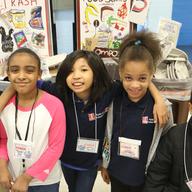
It's a tall order for a Friday, but Damien Otero, a third grader at PS 188 on the Lower East Side, speaks with conviction as he points to the composting bin in his school cafeteria. Otero is a Cafeteria Ranger, one of several lunchroom leaders who helps their fellow students throw their trash away into the appropriate sorted bin.
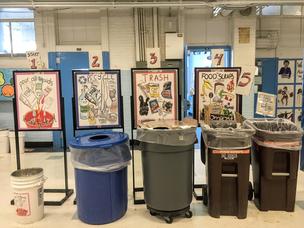
The program was started by Cafeteria Culture, an environmental education nonprofit that partners with the NYC Department of Education and other groups to teach kids how their actions are impacting the environment. Executive Director Debby Lee Cohen says they've run the Rangers program in over 20 schools and have developed free, downloadable guides for other schools who want to start their own.
"Our model really is to innovate, pilot, and then share it for free, so schools that don’t have resources can take advantage of it," said Cohen.
It's not as simple as setting up a five-bin station in any cafeteria. Cafeteria Culture outreach director Rhonda Keyser said when they first arrive at a school, they start by teaching the students Garbology 101, which Keyser described as "the journey of our garbage and the environmental injustice along the way." The kids also learn about the importance of sorting waste correctly, so that recyclables end up in a recycling center and organic waste can be turned into compost.
Seventh grader Jhan Brito has been a Cafeteria Ranger for two weeks. He explained how sorting garbage leads to less waste ending up in landfills. Plus, there are benefits to sorting out organic waste.
"Compost is like basically your own dirt, but it has nutrients and it makes the flowers better, the grass better," said Brito. "It makes growing processes better."
Marilyn Otero, a sixth grader, has started noticing environmentally negligent behavior outside of her school, as well.
"When I walk outside, I see there’s a whole bunch of bottles and plastic bags everywhere in the streets. When it rains, it pushes all that trash down that drain, and that’s how it ends up in the pipes and water," Otero said. "People litter a lot."
Otero says her family is going to start recycling at home, now that she's learned about sorting waste at school.
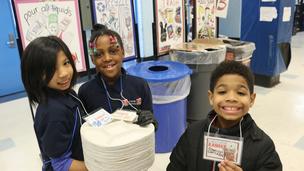
Outreach Director Rhonda Keyser says the idea isn't for Cafeteria Culture to oversee schools' sorting programs forever; the organization aims to create a culture of caring among the students so they continue to lead the way in lunchroom waste management. And even the youngest students can get involved.
"Everybody thinks that kindergartners are gonna be too little for it," said Keyser. "But that’s exactly developmentally what they’re doing, they’re learning to sort at that age. They're the best sorters in the school!"

WNYC is funded by sponsors and member donations