As humans drastically change the planet, animals are rapidly evolving to survive
Part 1 of the TED Radio Hour episode Abandoned Places.
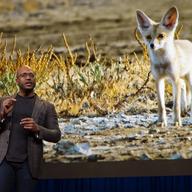
We think of evolution as a slow process playing out over millennia. But evolutionary biologist Shane Campbell-Staton says nature is rapidly changing to keep up with the world humanity has built.
About Shane Campbell-Staton
Shane Campbell-Staton is an assistant professor of ecology and evolutionary biology at Princeton University. He studies a wide array of animals adapting to life on a planet dominated by humans — from lizards evolving to survive scorching city heat to tuskless African elephants thriving during a time of rampant poaching. In 2022, he was named a Pew Biomedical Scholar for his team's research on the evolution of cancer resilience in gray wolves within the Chernobyl Exclusion Zone. His work has been featured in several media outlets, including The New York Times, The Atlantic, Scientific American, Sports Illustrated and The Daily Show with Trevor Noah.
Most recently, Shane Campbell-Staton can be seen on PBS as host of a six-part documentary series, Human Footprint, where he examines how humans have transformed the planet.
On this segment, we also hear from integrative biologist, Cara Love. Love is a NSF postdoctoral research fellow with the Campbell-Staton Group. Her research combines ecology, ecotoxicology, immunology, and evolutionary medicine to address how wildlife health and population dynamics are affected by chronic exposure to anthropogenic stress.
This segment of TED Radio Hour was produced by Harsha Nahata and edited by Sanaz Meshkinpour and Rachel Faulkner White. You can follow us on Facebook @TEDRadioHour and email us at TEDRadioHour@npr.org.
9(MDEwODYxNTQyMDEzNjAxODk2Nzc2NzNmYQ001))

WNYC is funded by sponsors and member donations