That's Not Pneumonia. That's the Country's First Female Doctor.
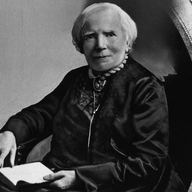
Elizabeth Blackwell wrote in her autobiography that the first time she examined a patient as a doctor, she found a clear-cut case of ordinary pneumonia. Still, she diplomatically asked a male colleague to consult on the diagnosis. He checked the patient, grew agitated, and told Blackwell it was "a most extraordinary case." He then added that he'd "never seen anything like it!" It took her a minute to realize the man meant not the pneumonia but herself: "a lady physician!"
The story convinces Dr. Judy Tung, the current chairwoman of medicine at New York-Presbyterian Lower Manhattan Hospital, that Blackwell had "a spine of steel" while making her way as a medical pioneer in 19th century New York. "She clearly had a sense of purpose that allowed her to persevere and let incidents like that slide off her back," Tung said.
Blackwell's run-in with her male colleague occurred in 1852, three years after she'd earned her medical degree from Geneva Medical College in upstate New York — now Hobart College.
Five years later, she bought a brick rowhouse at Bleecker and Crosby Streets in a formerly fancy neighborhood then filling up with the immigrant poor. The New York Infirmary for Women and Children was the first hospital in America run by and for women. It was attached to a medical college for women that, in another first, Blackwell had also founded. She allowed some of the students to live in attic bedrooms above the hospital.
All of it was free.
For these and other accomplishments, the Greenwich Village Society for Historical Preservation will soon grant Elizabeth Blackwell historic preservation's great prize: a bronze plaque. It comes more than a century after her death in 1910, and will be attached to the Crosby Street side of her former hospital, which today is a small apartment building with an old school bar on the ground floor.
Andrew Berman, the preservation group's executive director, last week stood outside the building and explained why it's fitting to honor her now. "This just sort of felt right," he said. "There's so much conversation about the role of women in society, around self-determination and health care, so Elizabeth Blackwell kind of spoke to us as an incredibly relevant figure."
The unveiling of her plaque, with party to follow, is scheduled for May 14.

WNYC is funded by sponsors and member donations