Ancient Subway Infrastructure Still Chugging Along
New York, NY —
» NYC Subway Turns 100 on NPR.org
Before the first New York City subway train took its historic ride in 1904, engineers and electricians had to plan the inner workings of the new transit system. The infrastructure they designed a hundred years ago has been upgraded with the arrival of new technologies. But it's still working pretty much as it was originally planned. Beth Fertig of member station WNYC has more.
The New York Subway was designed at the turn of the century, when electric power was in its infancy. Thomas Edison and George Westinghouse were feuding over which form of transmission would become the standard. Subway trains were built to run on a third rail powered by Edison 's direct current technology. But just as they were coming online, Westinghouse had proven that alternating current was more efficient for mass transit. So with miles of track ready to go, the trains needed some way of converting AC to DC.
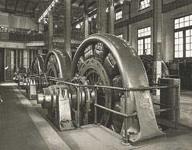
The solution was a machine called a rotary converter. A mechanical rotating device so powerful its vibrations would shudder nearby buildings. This one's no longer in service but it's still standing in a midtown substation. Robert Lobenstein made a recording of it for transit buffs like himself. He's is in charge of power operations for the New York City Transit Authority.
LOBENSTEIN: This is one of our original rotary converters that went online in 1904.
It looks like something out of the film "Metropolis." A round, steel structure about ten feet high and painted dark green.
LOBENSTEIN: We have some machines at one time that stood 30-40 feet tall and it would tower over the operators.
Most of these old machines have been destroyed. But the Transit Authority has kept this substation intact as a piece of history. Upstairs, there's an old fashioned control panel. It's made of black marble with a row of meters and knife switches.
LOBENSTEIN: It brings you back to an era when you were a real power man. You'd stand in front of the switchboard, slam the switches in. You'd have power in your hands. Now we have a little push button, click. And that's it.
The transit system still relies on a network of substations for converting AC power to DC for the third rail. But the modern machines are electronic and much quieter, making just a steady hum.
The subway system has gone through many generations of technology in the last century. But the system is so large that most changes are gradual. The last few rotary converters were taken off line in 1999. And there are other kinds of machines tucked away that are still operating just as they've been for decades.
In a tunnel in Queens , there are two pumps that were built in the 1930s. The subway system is constantly battling water because it's deep underground. A flash flood can literally stop the trains. This pump room is about the size of a freight elevator. Visitors aren't allowed in here for security reasons. So maintenance supervisor John Swist gives a recorded tour. The pumps have long pipes that dip down into the sump room below where water collects.
SWIST: And it acts as a straw and it will suck the water up through the pump and then it will push it out through the sewer system in the street.
Most of the older pumps have been replaced with newer models that have twice the capacity. But they're still working. The subway system was built at a time when people expected to make their equipment last.
At the northern tip of Manhattan , there's an overhaul shop which was built in the 1920s. The red brick building is the length of two football fields. This shop handles cars that were manufactured between the 1960s and the 1980s. Jim Davitt is in charge of the operation.
DAVITT: We can't get our stuff off the shelf, we can't call Home Depot or a hardware store and get the kind of things we need.
Most of the repairs are made with state of the art equipment. But the building still has its original blacksmith shop where workers slice small pieces of steel in a tall, black machine called a Buffalo.
Today, the transit authority is phasing in sleek new cars with electronic voice announcements and digital displays. It's also testing out a new computerized control system for its trains. But Davitt says he still marvels at the things that pass through his shop.
DAVITT: You see some of the old work ethic and combined with new technology and it's a synergy and it's just unbelievable.
With proper maintenance, Davitt says the subway system could easily last another hundred years. For NPR News, I'm Beth Fertig in New York.

WNYC is funded by sponsors and member donations


