NYC May Take Back Seat to Europe's Embrace of Bike Culture
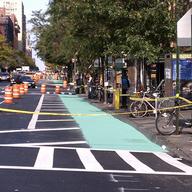
New York City has added 250 miles of bike lanes since 2006 in an effort, according to Mayor Michael Bloomberg, to improve traffic, air quality and ultimately public health. But as polls show support for bike lanes, opposition has been loud — and vehement — around the city.
In Europe, biking culture has taken hold of many cities. Eighteen percent of Danish commuters bike to work, for example. Busy thoroughfares have bike lanes separated by a curb and traffic lights just for bikes. The lanes get a steady flow of cyclists -- young, old, women, white collar workers in suits -- and the story is the same in Holland and Germany.
"It's a really good feeling," said Lars Villemoes, who was attending a dinner party in Denmark's second largest city, Aarhus, in which all guests cycle to work and do most errands by bike. "I love it in the morning. I go faster every morning, and I love it when I see the line of cars and I just go past them, that's such a good feeling."
Several factors could play into this culture. Denmark has a 186 percent sales tax on cars, and gas taxes are also much higher, speed limits are lower and parking cars in a central city is an expensive and often impossible proposition.
"It simply is not true that European cities, and Europeans, were always bike friendly and walking friendly," said John Pucher, a professor of urban planning at Rutgers University.
"It's become more and more bike-oriented and walking-oriented and transit-oriented over the past three or four decades," he said, "and they have implemented a whole package of self reinforcing policies that have enabled this."
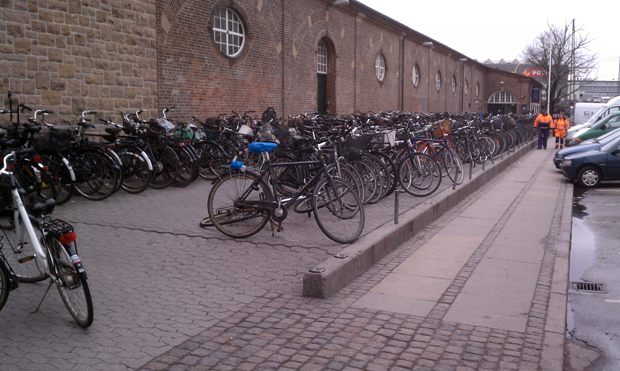
(PHOTO RIGHT: Bike lanes outside of a Copenhagen train station)
But here in New York, the 250 miles of new bike lanes have caused tons of drama. Hours of community board meetings, City Council hearings, even police precinct open houses have all been devoted to what is a surprisingly polarizing topic.
"New York City is going to be a tougher nut to crack," Hunter College professor William Milczarski said. "Eight million people, people set in their ways, special interest groups — everybody has an axe to grind it seems."
His research shows that pedestrians, drivers and bikers all behave badly — and all feel their rights are being trampled. His study found 1/3 of cyclists run red lights, and smaller numbers ride the wrong way on streets or cycle on sidewalks. But, he also found that on a 10-minute ride, the chance of a cyclist encountering a bike lane blocked by a car or a pedestrian is 60 percent . Milczarski said it’s about all contested space.
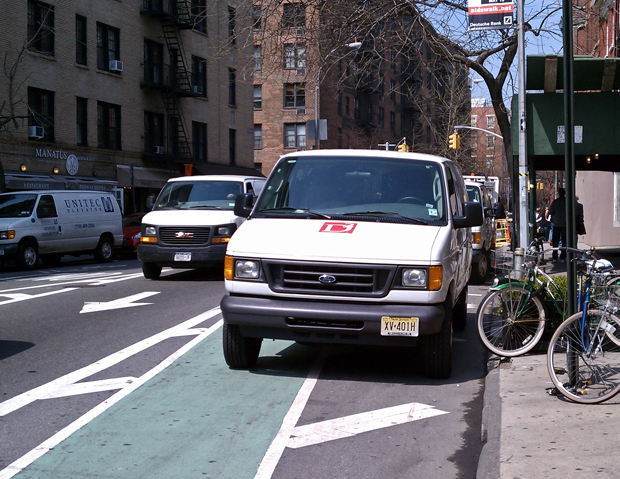
Van parked illegally (Kate Hinds/WNYC)
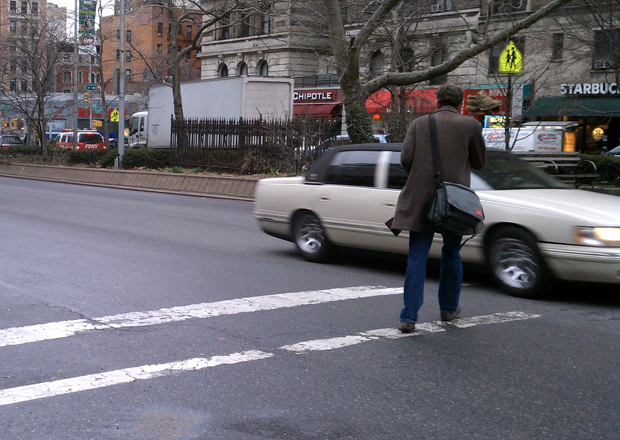
Pedestrian crossing illegally (Kate Hinds/WNYC)
"When we have this area below 60th Street, and 3.6 million people come into that space every day -- it's a very crowded area. To make it work, it's going to take a period of adjustment."
All the experts we talked to said there’s another problem in the United States: education.
A German driver's license requires practical, theoretical and first aid classes, and drivers must demonstrate that they're looking out for cyclists. But in New York? Ken Brown, a spokesman at the New York State DMV, said the law requires that the 20 questions on the driver's test include seven on alcohol or drug use and at least one each on road rage, work zone safety and emergency vehicles.
So there is no consistent one or two questions on the test about bikes? "No," he said. "It's not one of the mandated questions that has to be required on the test."
Better education for everyone would go a long way, according to Sam Schwartz (PHOTO RIGHT), who runs an engineering firm and writes the New York Daily News’s Gridlock Sam column. In the 1980s, he was Mayor Ed Koch’s traffic commissioner.
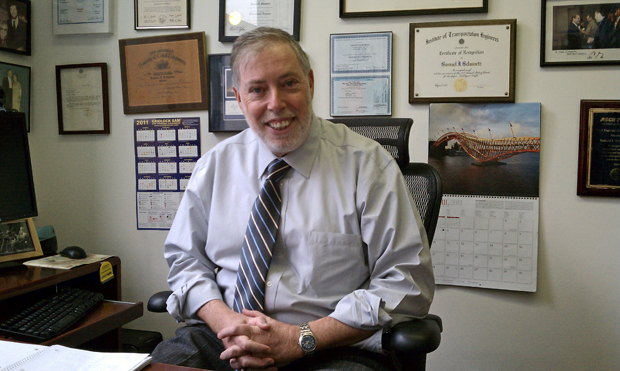
"I, as a city official, never worked on a project -- even when I thought the project benefited everyone -- in which some group didn't come out and oppose the project," he said.
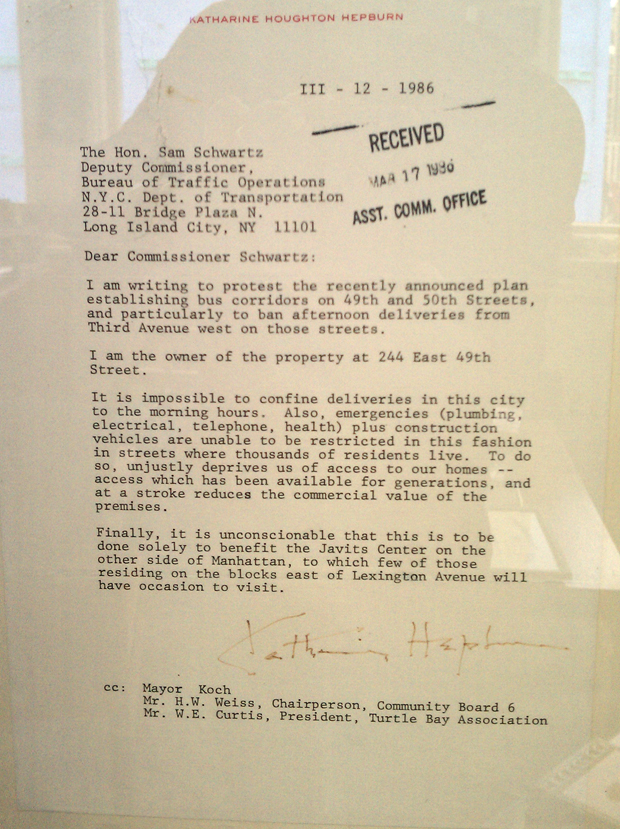
Exhibit A: This framed letter on his office wall. Schwartz reads: "'Dear Commissioner Schwartz: I am writing to protest the recently announced plan establishing bus corridors on 49th and 50th streets. Signed Katharine Hepburn.'"
He said there's only one way to see if these plans will work out better for motorists, cyclists and pedestrians.
"If the mayor has backbone, let him support what's going on right now and let's see what happens over the years," he said. "The problem gets to be when suddenly you have flip flops on issues and we never get to see if they work or not."
In 1980, Mayor Ed Koch built two bike lanes, and a month later, the man famous for asking "How’m I doin?" ripped them out. This time around, the Bloomberg Administration said it's sticking with its plan to build a network of bike lanes that stretches across the whole city.

WNYC is funded by sponsors and member donations