Nell Greenfieldboyce appears in the following:
U.N. Holds Climate Talks In New York Ahead Of Paris Meeting
Monday, June 29, 2015

The United Nations is having a high-level climate meeting ahead of the end-of-year meeting in Paris that will hopefully result in a major new agreement to rein in greenhouse gases.
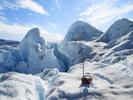
Study Reveals What Happens During A 'Glacial Earthquake'
Thursday, June 25, 2015
Scientists have figured out how massive chunks of ice trigger these seismically detectable events when they break off a glacier. The findings could help researchers track ice loss from glaciers.
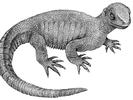
How The Turtle Got Its Shell
Wednesday, June 24, 2015
The ribs of a 240 million-year-old fossil hold clues to how the first turtle shell evolved. And its skull shape seems closer to that of lizards and snakes than to an ancestor of dinosaurs and birds.
Instead Of Replacing Missing Body Parts, Moon Jellies Recycle
Monday, June 15, 2015
If a starfish loses a limb, a new arm buds and grows in its place. But young moon jellies have a different strategy for self-repair: Existing limbs rearrange themselves to regain symmetry.
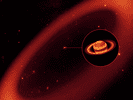
Saturn's Dark And Mysterious Outer Ring Is Even Bigger Than Expected
Wednesday, June 10, 2015
Scientists say the Phoebe ring is "more than 200 times as big across as Saturn itself." They used a special infrared space telescope to get the best look yet at the massive ring of black dust.
How Many Viruses Have Infected You?
Thursday, June 04, 2015
Most tests for viruses aim to detect only one or two. But researchers can now check a drop of blood for antibodies to hundreds of viruses, tracing the history of a lifetime of infections, old and new.

Editing The Climate Talkers: Punctuation's Effect On Earth's Fate
Monday, June 01, 2015
The littlest things — punctuation, precise word choice and grammar — can hold tremendous power in worldwide climate negotiations. This year in Europe, editors get a chance to help make history.
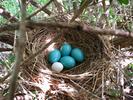
Higher-Tech Fake Eggs Offer Better Clues To Wild-Bird Behavior
Tuesday, May 26, 2015
Faux eggs made with 3-D printers are better than sculpted versions, researchers say, because it's easier to systematically vary their size, weight and other features. Next goal: 3-D fragile shells.
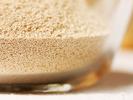
You And Yeast Have More In Common Than You Might Think
Thursday, May 21, 2015
Genetically, at least, not that much has changed in the billion years since you two last shared a relative. Roughly half the 500 genes yeast need for life are interchangeable with the human versions.
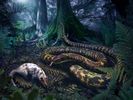
Earth's First Snake Likely Evolved On Land, Not In Water
Tuesday, May 19, 2015
Genetic sleuthing and comparisons of recently discovered fossils with living snakes point to a "protosnake" ancestor that likely had tiny hind legs and lived about 120 million years ago.
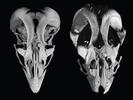
How Bird Beaks Got Their Start As Dinosaur Snouts
Tuesday, May 12, 2015
Hoping to help trace the history of how velociraptors evolved into birds, researchers at Harvard and Yale may have tracked a key beak transformation to two genes.
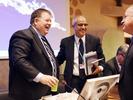
Two Guys In Paris Aim To Charm The World Into Climate Action
Monday, May 11, 2015
It's a nightmarish job: No exercise or fresh air and little food and sleep for days at a time, all in an effort to persuade 200 countries to save Earth's climate and the planet. Can they do it?
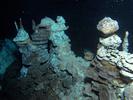
Missing Link Microbes May Help Explain How Single Cells Became Us
Wednesday, May 06, 2015
Near a field of deep sea vents between Norway and Greenland, scientists discovered the DNA of microbes that seem to be primitive archaea, but with a lot more genes — typical of complicated creatures.
When Did Humans Start Shaping Earth's Fate? An Epoch Debate
Monday, April 06, 2015
Some scientists suggest calling the era we live in the Anthropocene, to denote the time when humans came to dominate Earth's fate. But did it start with farming, the atom bomb or other event?

Ferguson Activists Hope That Momentum Sparks A National Movement
Monday, April 06, 2015
Leaders of what some call a new civil rights struggle say the protests must lead to long-term strategies. The goal is to sustain a national movement and to get past challenging obstacles.
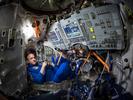
NASA To Study A Twin In Space And His Brother On Earth
Friday, March 27, 2015
During astronaut Scott Kelly's year in space, scientists will compare his physiology with that of his twin brother, Mark, to study the effect of prolonged space flight on the human body.
Scientists Discover A New Form Of Ice — It's Square
Wednesday, March 25, 2015
Researchers were surprised by what they found when they sandwiched a drop of water between two layers of an unusual two-dimensional material called graphene.
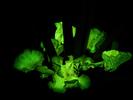
Why Some Mushrooms Glow In The Dark
Saturday, March 21, 2015
A team of scientists recently created some fake, glowing mushrooms and scattered them in a Brazilian forest in hopes of solving an ancient mystery: Why do some fungi emit light?
The question goes back all the way to Aristotle, who is the first person known to have wondered about this, ...
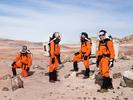
Are Humans Really Headed To Mars Anytime Soon?
Tuesday, March 17, 2015
Public passion is all well and good, but it will take more than big talk to get to Mars by 2025, space specialists say. Even several rockets' worth of cash won't easily solve the technical challenges.
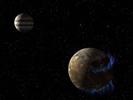
Moon River? No, It's An Ocean On One Of Jupiter's Moons!
Thursday, March 12, 2015
NASA says the biggest moon in our solar system has a salty ocean below its surface.
Researchers had suspected since the 1970s that a moon of Jupiter called Ganymede had an ocean. Now they've confirmed it, scientists announced in a teleconference held by the space agency.
Ganymede was discovered ...

