What New Yorkers Recall About School Integration Efforts of Earlier Era
In the heyday of the civil rights movement in New York City, top education officials tried to do something about school segregation, acknowledging the separate and unequal education offered students across the five boroughs.
They created five elementary school "pairs,” matching up a mostly white school with a mostly black school nearby. There were three pairs in Queens, one in Brooklyn and one in Manhattan. Starting in the fall of 1964, the combined student bodies attended one school for the early grades and attended the other for the older grades. Students who couldn't walk to school were bused.
Each pair involved schools that were less than a mile apart. For three of the pairs, the schools were less than a half-mile apart. Yet, the differences between the schools were vast. City documents showed that in the 1960's most black and Puerto Rican students attended school in severely overcrowded buildings, which meant shortened school days for many children. Resources and teachers were not evenly divided either.
Whether the school pairings worked is hard to say. The plan ended after a number of years, at different times for each pair, partly because of "white flight" to the suburbs and partly because of political opposition.
White parents picketed outside schools and the Board of Education building. They staged a school boycott, and filed lawsuits. New private schools popped up.
"We really and truly don't want to switch our schools. It has nothing to do with color," one white Jackson Heights mother told an ABC reporter.
Editorials published that year in the New York Amsterdam News, a black weekly newspaper based in Harlem, implored New Yorkers to give the pairings a chance. Roy Wilkins, then the executive secretary of the NAACP, came down hard on opposition to the city's desegregation plans in a 1964 opinion piece:
"The very homeowners and parents who now speak emotionally of 'not sacrificing' their children for the sake of integration thought nothing of sacrificing Negro children to the segregationist real estate dealers and boards, to the segregationist mortgage and loan companies, to the segregationist banks, to the segregationist 'civic' and neighborhood associations and to the segregationist school board zoning lines that were the natural result."
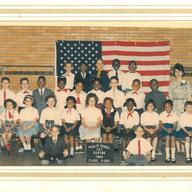
Yet, the pairings were positive for many people. Some white parents supported the plans; children who participated and spoke to WNYC recalled those years as meaningful.
To hear a group of New Yorkers recall their experience participating as students in a school pairing in Queens, click on the player above.

WNYC is funded by sponsors and member donations