Teachers Take Student Data to the Micro-Level in One NYC School
When education leaders in New York talk about data, they’re often referring to big-picture measurements, like city and state tests administered to every student throughout the year. When teachers at School for Global Leaders, a middle school on the Lower East Side, talk about data, they’re thinking about way more.
“I never really thought about how many data points and pieces of data go into really capturing how a student is performing,” said math teacher Magdalen Beiting. She tracks student work throughout the day on a clipboard, and then every night enters that information into a spreadsheet for analysis.
Through the Learning Partners Program, which pairs innovative schools with ones eager to learn, Global Leaders was identified as a leader in how teachers gather and use data almost constantly. Multi-page lesson plans cover everything from who sits where (which often changes daily, in response to how students are behaving and where they are with the material) to the precise number of minutes to be dedicated in a class period to lecturing, individual work, and group practice.
Spend time with a teacher here and you’ll realize the teacher of the future — both in New York City and a growing number of schools across the country — might be part educator, part data scientist.
Teachers call this kind of analysis “formative assessment,” which means they’re tracking what their students are learning while they’re still in the thick of learning it, rather than waiting for a test or final assignment at the end of a unit.
“At that point, it’s just too late,” said Principal Carry Chan.
It’s a model that requires long hours and extra work — most teachers are at work until 5 or 6 every night, and continue planning and grading until close to midnight. But the staff at Global Leaders is young and committed. Chan said she makes sure they have plenty of help: more senior teachers work as coaches for their newer peers, helping them plan lessons, execute them, and change course when needed.
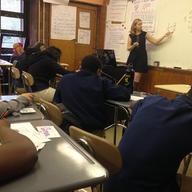
And teachers said they get smart about what data to collect. Math teacher Paige Wehren says she uses tools like exit slips to track day-to-day progress, but also doesn’t go over every assignment. Instead she looks at specific problems, using them as a sort of barometer of student performance.
“Independent work? No, I don’t have time. Homework? No, I can’t check every single question that they did,” Wehren said. “Absolutely not, I’m one person.”

WNYC is funded by sponsors and member donations