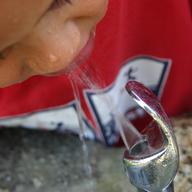
School Districts Resist Lead Testing Requirement
Public school districts are pushing back on a bill in the New York legislature that would force them to test for lead in their drinking water.
The latest version of the bill, sponsored by state Sen. Tom O'Mara (R-Big Flats) and Assemblywoman Donna Lupardo (D-Binghamton), would require all public schools to test for lead. It would also require the results to be posted on the school’s website. State taxpayers would pay for all of the testing and a portion of the remediation costs.
The New York State School Boards Association is not opposed to the bill but is “seeking revisions to it,” according to a representative.
WNYC has been reporting on lead in schools' drinking water this spring as part of a collaboration with WSHU public radio and NBC 4 New York, with a particular focus on Long Island.
The biggest disagreement over the Albany bill is which agency will oversee the testing. The school board association argues that in order to reduce the administrative burden on schools, districts shouldn't need to a new report, nor file the result of lead tests with the state health officials.
Watch NBC 4 New York's story on lead in schools drinking water, part of a collaboration with WNYC and WSHU.
Instead, the association says districts should include the test results in reports they already file with the New York State Education Department. That would likely reduce the frequency of the tests to once every five years, because that is how often districts report on their facilities. The state health department, by contrast, could require more testing depending on the level of health risk.
“Schools don’t want to test because if they knew they would either have to tell people or they would have to hide it,” says Marc Edwards, a water safety professor at Virginia Tech who was key in bringing the Flint, Michigan, contamination to light. “So to some people ignorance is bliss.”
Neither state nor federal law requires school districts to test the quality of their drinking water as long as they rely on a municipal system that does regular monitoring. Some version of the O'Mara-Lupardo bill has been proposed in Albany every year since 2001, but it previously hasn't gotten very far in the legislative process. Out of some 600 school districts in New York, the health department says only 15 districts participate in voluntary lead testing.
Some wealthy schools started testing after the crises in Flint and Newark, New Jersey, gained national attention. More schools began testing this spring after reporters from WNYC, WSHU and NBC 4 New York began asking questions.
Still, some poor districts on Long Island, like Hempstead, Brentwood, or Wyandanch, still haven't begun testing. Instead, they are waiting for funding and guidance from the state.
The Commack School District recently reported lead levels ten times higher than EPA guidance.
Lisa Feit, a parent with two children in Commack public schools, said she has taken her children to get tested for lead poisoning.
“I think most of the people that were upset, were upset that it took the district a while to notify us," she said. "That was the biggest concern at the time. Now that we know about it, we feel better about it because we can handle it better.”
The legislation has broad support in the state Senate, but less stable backing in the Assembly. The bill would have to pass before the current session ends Thursday to have a chance at becoming law, or it will have to be re-introduced next year.

WNYC is funded by sponsors and member donations