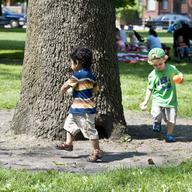
Race, Class, and Child's Play
Tamara Mose, associate professor of sociology at Brooklyn College, and the author of The Playdate: Parents, Children and the New Expectations of Play (NYU Press, 2016), talks about her field studies of NYC playdates as a lens to the changes in parenting and its impact on social class stratification.
If children were asked to pick their friends, I think they would do a better job than parents. -Tamara Mose pic.twitter.com/RDWdx4Pszi
— Brian Lehrer Show (@BrianLehrer) March 25, 2016
@BrianLehrer I grew up in California and "just went out and played". NYC just feels so much more dangerous, so play date feels safer somehow
— Camille Emefa Acey (@kavbojka) March 25, 2016
@BrianLehrer this is much more of a city thing. We moved from Brooklyn to Maplewood NJ. In Brooklyn, arranged play. Here? Kids free-range.
— mihow (@mihow) March 25, 2016
This is real, @BrianLehrer. Parents speak to wanting to avoid the type of (Black) kids on the playgrounds of their gentrifying neighborhood.
— Gail Drakes (@GailDrakes) March 25, 2016
@BrianLehrer @WNYC Playdates disguised as a darwinian exercise.
— Dustin (@dustineichler) March 25, 2016
No one wants to feel that they are part of the problem, but we need to look at the everyday race & class decisions we make,@BrianLehrer.
— Gail Drakes (@GailDrakes) March 25, 2016