Putting Care Back in the ICU
Does a more humane hospital make a safer hospital? That’s a question Johns Hopkins is grappling with — and Dr. Peter Pronovost believes the answer is yes.
Dr. Pronovost is a critical care physician at Johns Hopkins Hospital. He’s known best for innovating an approach to patient safety a decade ago with something really simple: checklists. Preventable death rates at hospitals are high. Infections from central lines, the catheters inserted into major veins to let doctors administer drugs and draw blood more easily, are estimated to account for more than 60,000 deaths per year — about as many as breast and prostate cancer deaths combined. Dr. Pronovost created a checklist of five simple precautions to follow — such as washing hands, draping the patient in a sterile sheet — and brought the infections rate down to almost zero.
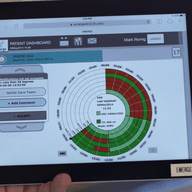
Now, Dr. Pronovost wants to tackle all preventable risks in the hospital, such as ventilator-related infections, blood clots, and delirium. Johns Hopkins is calling this experiment Project Emerge. For the past year and a half, doctors and nurses in an intensive care unit at the hospital have been using a tablet app that automatically runs a patient’s medical records through different electronic checklists — and then flags any risk. The goal is to make it impossible to miss a dangerous mistake.
Project Emerge does something else too — it makes humane care a top priority. The system flags “disrespect of a patient” or a “mismatch of goals” for a patient’s care. Johns Hopkins is testing the theory that safety and empathy go hand in hand — and whether they can engineer more humane care in the hospital.