Website Gives Misleading Numbers On Puerto Rico Recovery (en Español)
(Artículo en Español debajo)
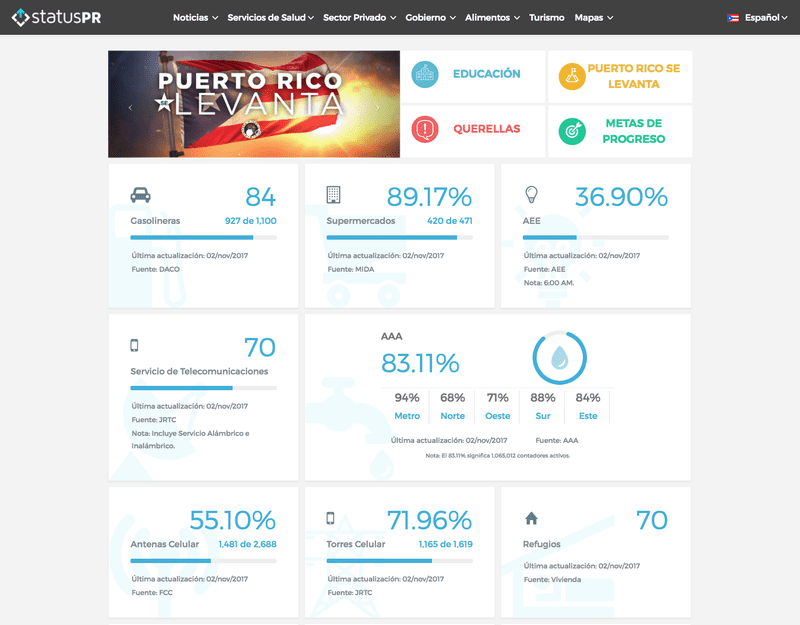
Ever since Hurricane Maria tore across Puerto Rico on Sept. 20, the island’s government has struggled to accurately measure the devastation and recovery effort – particularly the repair of the electrical grid. One of the most widely cited sources for this information is status.pr, a website set up after the storm by the Puerto Rican government. The website tracks the recovery of several vital services such as water, power, cell phone service, shelters, ATMs and hospitals.
A complete assessment of these critical services remains elusive, in large part because public officials are still gathering information about the conditions in remote areas of the island. WNYC found much of the information on status.pr to be misleading and inaccurate.
What follows is an contextual analysis of certain aspects of the infrastructure as presented by the status.pr website based on information WNYC gathered from officials on the island.
Electricity
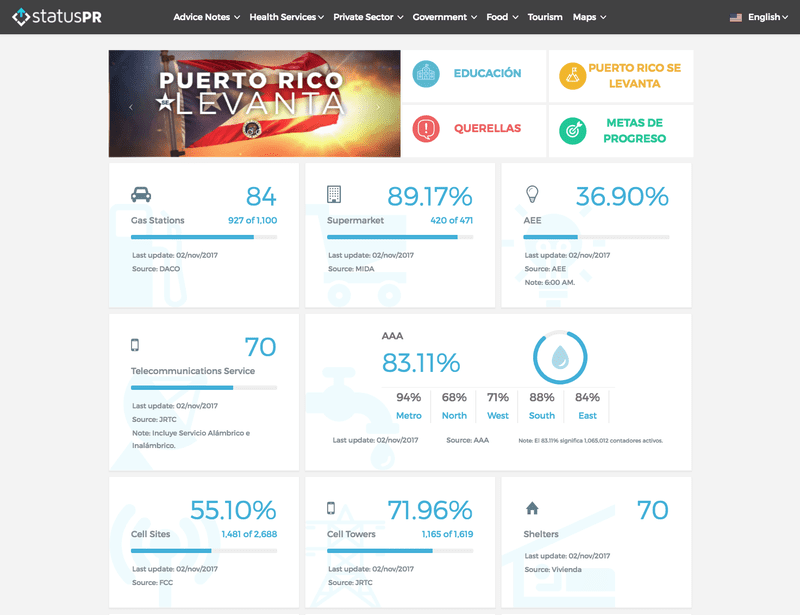
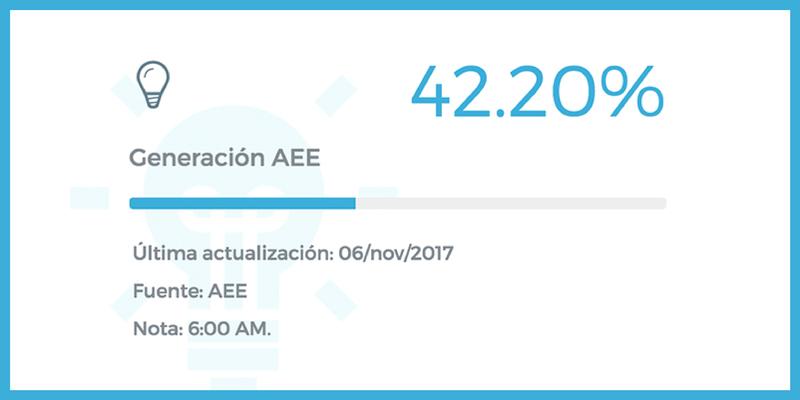
Recent reports from journalists and public officials have stated that 60 percent of residents are still without electricity. The section on status.pr that reflects the state of the electrical grid is labeled “AEE Generation.” AEE stands for “Autoridad de Energía Eléctrica,” the Spanish name for the Puerto Rico Electric Power Authority (PREPA). As of Nov. 8, the number listed on the website was 42.40 percent.
This is misleading. Contrary to how it’s often used by officials and the media, this number does not mean that 42.40 percent of homes or “the island” have had electricity restored. The government is not measuring that right now. According to Ramón Rosario, secretary of public affairs, the number cited reflects “the percentage we are delivering to our customers compared to what was supplied before Hurricane Maria." In other words, it’s a percentage of the total amount of power that was generated by the Puerto Rico Electric Power Authority before the storm.
Government officials have prioritized restoring power to critical infrastructure such as hospitals and water pumps. These facilities use more electricity than residences. As a result, the percentage of total power generated continues to grow while the exact number of homes and businesses without power remains unknown.
As Latino USA has reported, status.pr added the word "generation" to the dashboard, but there’s no further explanation about what this actually means.
Water
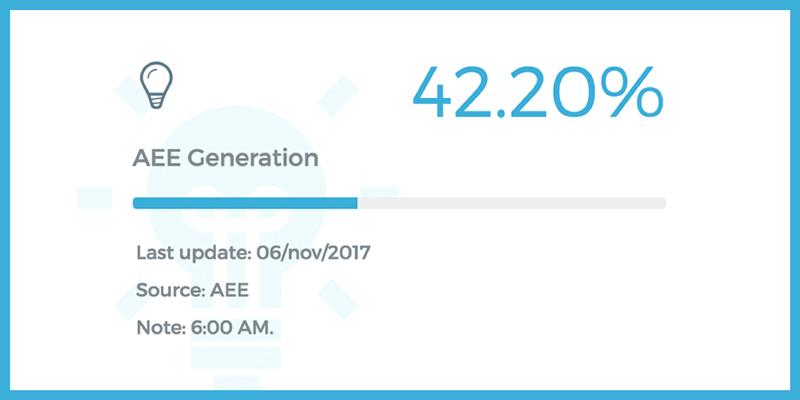
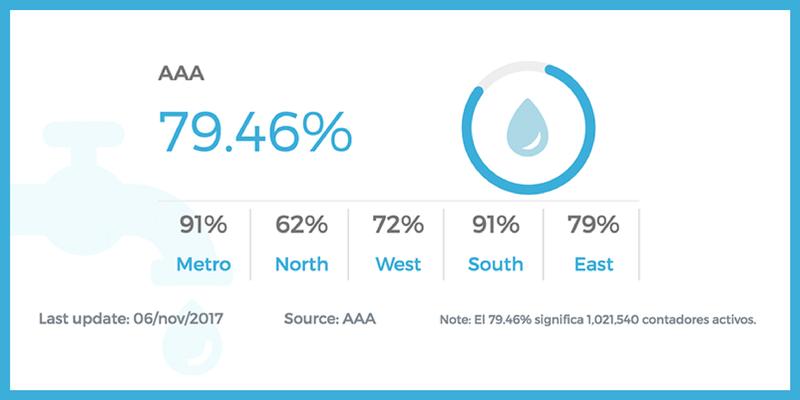
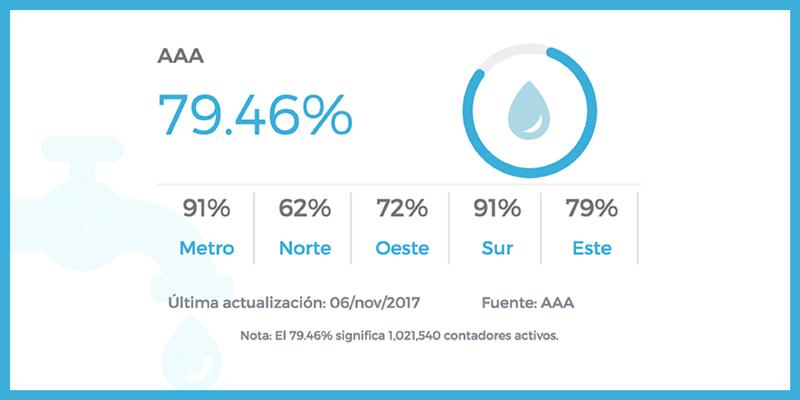
Drinking water has been in short supply in Puerto Rico. As of Nov. 8, the status.pr website says that, based on “active meters,” nearly 84 percent of the island has water. In an email to WNYC, the governor's office responded that water treatment plants and pumping stations have electricity either from the grid or from generators. However, they added: “It is always advised to boil the water at least three minutes prior to consumption.”
Shelterees
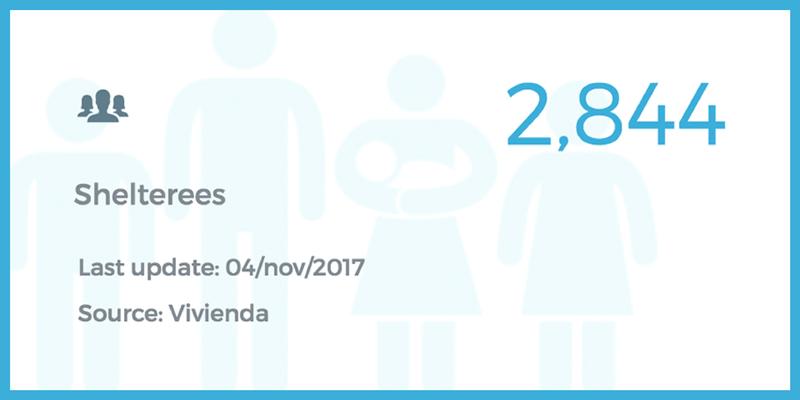
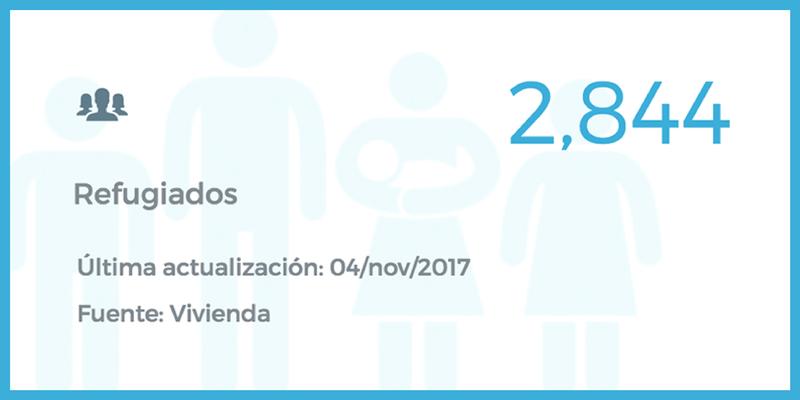
Shelterees refers to the number of people living in 67 official shelters on the island. As of Nov. 8, status.pr says 2,844 people are, by the government's count, living in these shelters. But this isn’t an accurate way to measure all those who have been displaced by the storm. FEMA estimates between 25,000 and 30,000 homes were completely destroyed by the hurricane. An estimate from Moody's puts the number at over 100,000. And according to the Puerto Rican newspaper El Nuevo Dia, as many as 250,000 homes may have been completely destroyed.
Gas Stations
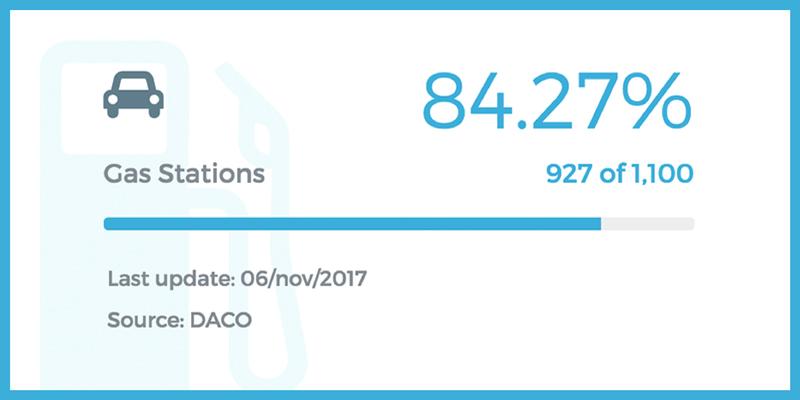
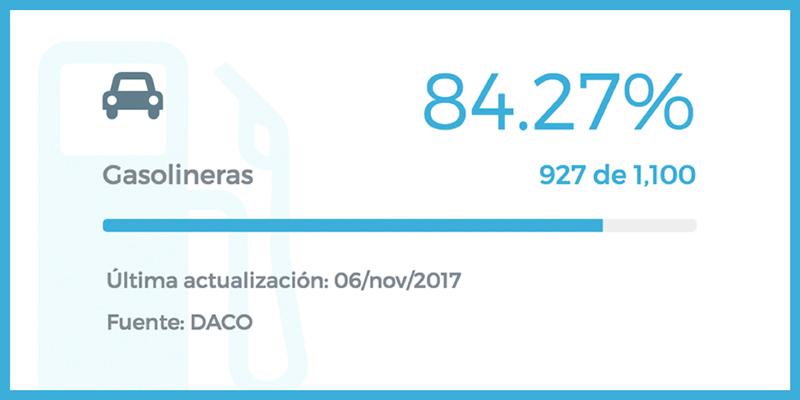
Access to gasoline continues to be a struggle across much of the island, but according to status.pr, approximately 84 percent of the county’s 1,100 gas stations are operational. The website cites the Puerto Rico Department of Consumer Affairs as the source of that number. A closer examination, however, reveals that this number is based on whether gas stations have received a delivery of fuel at least once since Hurricane Maria.
The website also warns of wait times of up to four or five hours. In other words, 84 percent of the territory’s gas stations are far from being fully operational. And with some areas of the island struggling without electricity and blocked roads, gasoline deliveries aren't guaranteed everywhere.
Supermarkets
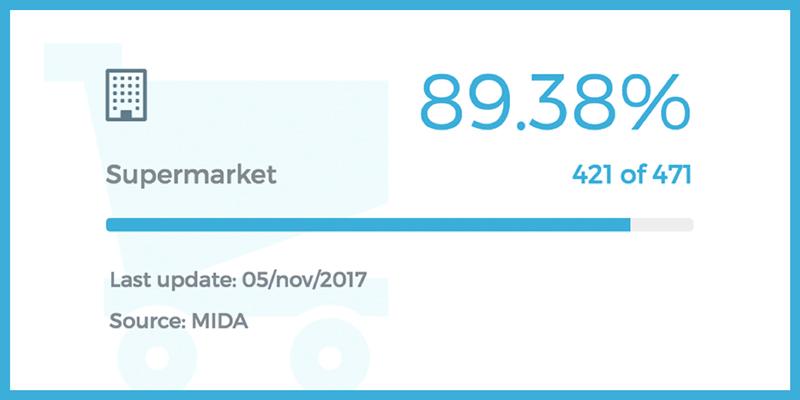
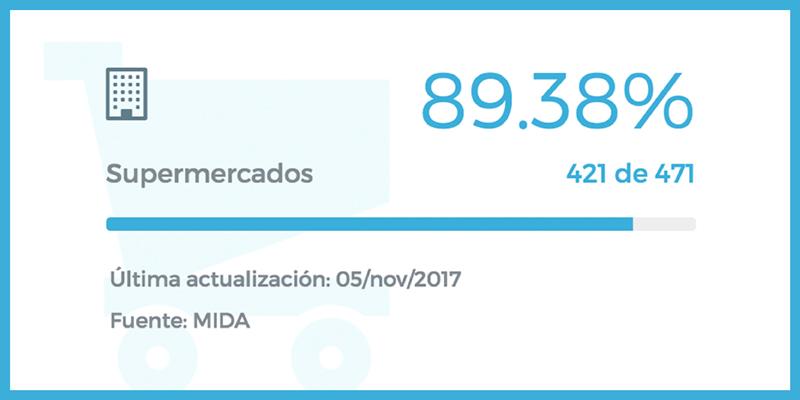
Many supermarkets are only partially open. According to Manuel Reyes, an official from the Chamber of Marketing, Industry and Food Distribution, lines are shorter now at many locations, but demand is still high. Food suppliers are still struggling to get enough goods to the island to meet the need.
ATMs
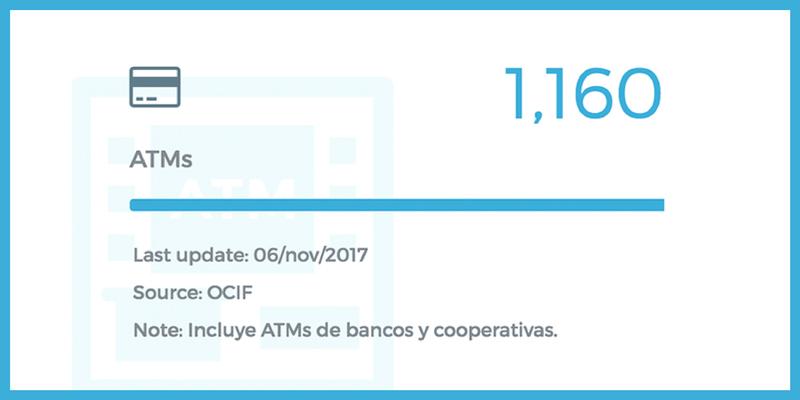
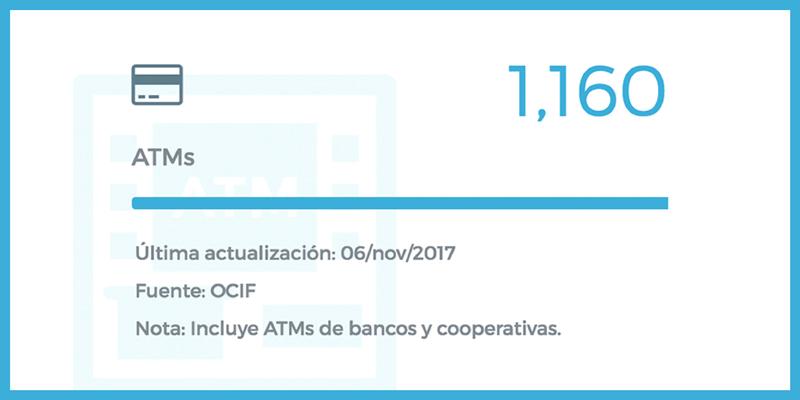
Since many businesses still aren't accepting credit cards, access to cash on the island is critical. The status.pr website simply lists the total number of operating ATM’s based on a count from the Office of the Commissioner of Financial Institutions of Puerto Rico, a division of the territory’s treasury department. According to George Joyner, the office’s commissioner, ATMs included in this figure are connected to bank networks. He says there are regular efforts to keep them stocked with cash. A complete count of machines on the island isn't available, so it’s unclear what percentage of the total number of the island’s ATMs this number represents or where they are.
Desde que el Huracán Maria destrozó Puerto Rico el 20 de Septiembre, el gobierno de la isla ha tenido problemas midiendo el daño y los esfuerzos de recuperación, especialmente en la red eléctrica. Una de las fuentes más citadas para este tipo de información ha sido status.pr, un sitio de web establecido por el gobierno puertorriqueño después del huracán. La página de web sigue el proceso de recuperación de varios recursos vitales como el agua, luz, servicio de celular, albergues, cajeros automáticos y hospitales.
Ha sido difícil evaluar el daño completamente, en parte porque las autoridades siguen recaudando información sobre las condiciones en la isla. WNYC ha encontrado que mucha de la información en status.pr es errónea e inexacta.
WNYC entrevistó a varios funcionarios públicos y recaudó información de forma independiente. Lo que sigue es un análisis de la información en status.pr comparada con nuestra investigación.
ELECTRICIDAD
Reportes recientes por periodistas y funcionarios públicos dicen que 60 por ciento de los residentes siguen sin electricidad. La sección en status.pr que refleja el estado de la red eléctrica se llama "Generación AEE." AEE significa "Autoridad de Energía Eléctrica." Hasta el 8 de Noviembre, el número listado en el sitio era 42.40 por ciento.
Esto es engañoso. Contrario a lo que frecuentemente citan las autoridades y medios, este número no significa que 42.40 por ciento de las viviendas o de la isla tienen electricidad. El gobierno no está midiendo eso actualmente. Según Ramón Rosario, secretario de Asuntos Públicos y Política Pública de Puerto Rico, el número refleja el "porcentaje de electricidad que le estamos brindado a nuestros clientes comparado con lo que suplíamos antes del huracán María." En otras palabras, es un porcentaje de la cantidad total de electricidad que generaba la Autoridad de Energía Eléctrica antes del huracán.
Las autoridades le han dado prioridad a infraestructura crítica como hospitales y bombas de agua. Estos lugares usan más electricidad que los residentes. Como resultado, el porcentaje total de electricidad generada sigue aumentando, mientras que el número exacto de viviendas y negocios sin electricidad sigue sin conocerse.
Según un reportaje de Latino USA, status.pr añadió la palabra "generación" al tablero, pero no hay más explicación de lo que significa.
AGUA
Hay poca agua potable en Puerto Rico. Hasta el 8 de Noviembre, status.pr mostraba que según los "contadores activos," casi 84 por ciento de la isla tiene agua. En un email a WNYC, la oficina del gobernador dijo que las plantas de tratamiento de agua y las estaciones de bombeo tienen electricidad, ya sea mediante la red eléctrica o generadores. Sin embrago, añaden que "Siempre es recomendado hervir el agua al menos tres minutos antes de consumirla."
REFUGIADOS
Los refugiados son el número de personas viviendo en los 67 albergues oficiales de la isla. Hasta el 8 de Noviembre, status.pr mostraba que 2,844 personas estaban viviendo en estos albergues, según cifras oficiales. Pero esta NO es una manera precisa de medir personas desplazadas por el huracán. Una estimación de Moody´s muestra a más de 100,000 personas desplazadas. Y según el periódico puertorriqueño El Nuevo Día, por lo menos 250,000 viviendas han sido completamente destruidas.
GASOLINERAS
En gran parte de la isla sigue siendo difícil obtener acceso a gasolina, pero según status.pr, aproximadamente 84 por ciento de las 1,100 gasolineras están funcionando. La página web cita al Departamento de Asuntos del Consumidor de Puerto Rico como la fuente de ese número. Sin embargo, un análisis más a detalle muestra que este número está basado en gasolineras que han recibido un suministro de combustible al menos UNA vez desde el Huracán María.
La página web también advierte sobre esperas de hasta cuatro o cinco horas. En otras palabras, falta mucho para que 84 por ciento de las gasolineras operen a plena capacidad. Y con carreteras bloqueadas y partes de la isla sin electricidad, no hay garantía de que se suministre gasolina en todas partes.
SUPERMERCADOS
Muchos supermercados sólo están parcialmente abiertos. Según Manuel Reyes, un directivo de la Cámara de Mercadeo, Industria y Distribución de Alimentos, las filas en muchos supermercados son más cortas, pero la demanda continúa siendo alta. Los abastecedores de alimentos todavía tienen dificultades haciendo llegar suficientes víveres a la isla.
ATMs
Ya que muchos negocios siguen sin aceptar tarjetas de crédito, es crítico tener acceso al efectivo en la isla. La página de web simplemente enumera el total de cajeros automáticos que están funcionando en la isla, según cifras de la Oficina de Comisionado de Instituciones Financieras, un departamento de la tesorería. Según George Joyner, comisionado del departamento, los cajeros automáticos incluidos en esta cifra están conectados a sucursales bancarias. Joyner dice que hay esfuerzos continuos por mantener los cajeros abastecidos con efectivo. No existe una lista de TODOS los cajeros en la isla, así que no está claro qué porcentaje del total de cajeros refleja este número, o dónde se encuentran.

WNYC is funded by sponsors and member donations