Opinion: Make School Choice a Reality for All New York City Teens
Starting high school is a major transition for most teens. But even more important is finding the right school. This process for some New York City teenagers is full of choices, with lots of help along the way, but for too many others school choice is a phrase that rings hollow.
While New York has an array of public, private and specialized high schools, students in many of the city’s middle schools – especially those that serve low-income neighborhoods – too frequently do not have access to information about private and parochial schools, or the knowledge to select the best public high schools.
In order to ensure that all families have equal access to knowledge about school selection and an equal opportunity to apply to the schools of their choosing, we must invest more resources in the communities that need it most.
At the Women’s Housing and Economic Development Corporation (WHEDco), helping students and parents make smart decisions about high school selection is a big part of how we build stronger communities in the Bronx. For more than a decade, we have partnered with local middle schools on Project STEP (Students Toward Educational Promise), where we provide students with academic support and one-on-one guidance through the high school application process.
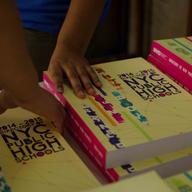
Students are given access to test-prep services if they wish to take the Specialized High Schools Admissions Test, as well as an annual high school fair that introduces them and their parents to private, charter, religious, boarding, and specialized high schools that increase their options.
Having the time and means to engage in the high school admissions process is a luxury not all families can spare. Some face significant barriers, whether it be limited English literacy, the inability to access the Internet at home, less social capital, or a lack of spare time and income. We know that these barriers matter: this year, just 5 percent of the students admitted to specialized high schools were African-American, while 7 percent were Hispanic. Yet, overall, African-American and Latino students account for about 30 percent and 40 percent of public school students, respectively.
The lack of resources is just one piece of the puzzle when it comes to equality in education, but it is something we as a city can address. Community-based organizations can, and do, fill in with resources that expose children to high schools that may otherwise remain unattainable, prepare students to take high school placement tests, and help families make informed choices.
We have seen the results of this investment: over the past two years, 73 percent of Project STEP students were accepted into high-performing high schools. Our students graduate Project STEP confident that they have paved their own path to success.
High school is hard enough as it is. And students of color, especially those from low-income and immigrant backgrounds, like so many of our Bronx students, are underrepresented in the city’s top high schools. It’s important that service providers and educators do what we can so that these students make informed choices based on all the options available to them.

WNYC is funded by sponsors and member donations