Stand And Be Counted
Following the Republican victory in Georgia this week, a look at how gerrymandering makes some political outcomes inevitable—and why the media aren't talking about it. Also, the US Census is on the rocks, and the repercussions could be severe. Plus, how Mexico's most prominent journalists and activists have been targeted by sophisticated government spyware.
1. FairVote's David Daley (@davedaley3) on the vast influence of gerrymandering on American politics.
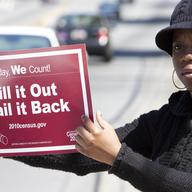
2. Former Census director Kenneth Prewitt on recent shakeups at the Bureau and the implications of a crippled Census.
3. Sociologist Cristina Mora (@GCristinaMora) on how Univision helped create a new Census category for the 1980 survey: "Hispanic."
4. Citizen Lab senior researcher John Scott-Railton (@jsrailton) on the use of spyware against Mexican activists and reporters, and Mexican journalist Salvador Camarena (@SalCamarena) on being targeted firsthand.
Support On the Media by becoming a member today at OntheMedia.org/donate.
WNYC is funded by sponsors and member donations
Top Stories From Gothamist
Rolling back NY's climate law, Gov. Hochul says she's living in 'reality'
New York Gov. Kathy Hochul is poised to win a significant rollback of New York’s landmark 2019 climate law, leaving environmentalists furious with a governor they once considered a major ally in the battle against climate change.
Hochul, a Democrat, spent months urging state lawmakers to scale back New York’s nation-leading climate mandates, which required the state to cut greenhouse-gas emissions 40% by 2030 and 85% in 2050.
As she announced a “general agreement” on a $268 billion state budget last week, the governor said she had gotten much of what she wanted.
“New York has led, and will continue to lead, on clean energy and climate,” Hochul said Thursday. “But reality has been harsh. We cannot meet the current timelines without driving energy costs higher. The facts bear that out, and I cannot let that happen.”
Hochul’s budget deal calls for scaling back the 2019 Climate Leadership and Community Protection Act in two key ways.
First, the 2030 mandate will be eliminated and replaced with a new goal of a 60% emissions cut by 2040, according to the governor’s office. The mandated 85% cut by 2050 will remain in place.
The second rollback is potentially more consequential. Hochul says the state will adopt a new method for calculating the impact of its emissions, assessing their effect over 100 years instead of the current 20 years. The move will instantly put the state far closer to meeting the emissions target without making any meaningful changes.
Environmentalists view the move as a betrayal. It comes less than seven months after Time magazine named Hochul one of the world’s most influential climate leaders of 2025.
“We really do see the governor as having leaned in, in a very undemocratic way, to force the Legislature to change what is the law of New York based in science,” said Stefan Edel, executive director of NY Renews, a coalition of organizations that successfully pushed for the 2019 law.
The governor’s relationship with climate change activists has steadily deteriorated in recent years.
In the early days of Hochul’s term, the activists were pleased with her administration’s embrace of the 2019 law. That included the long-awaited release of a “scoping plan” that laid out a roadmap for meeting the climate goals.
But the Hochul administration then repeatedly delayed regulations to implement the law, which would have created a “cap and invest” program where polluters would be forced to purchase credits from the state if they exceed a limit on emissions. Those delays prompted a lawsuit from environmentalists. A judge ruled against the state, which is now appealing.
Then last year, the Hochul administration approved a key water permit for a natural-gas pipeline off New York City’s coast, which the state had previously blocked.
The governor’s push to roll back the 2019 law was the final straw, Edel said.
[object Object]“I think that what's happened over the last four months is going to permanently impact how people view her,” he said. “If she is a climate leader in this moment, it is in the wrong direction.”
Climate activists are holding out hope that they can thwart Hochul’s plan.
The Legislature would have to approve the plan as part of the state budget. And although legislative leaders have agreed to the broad strokes of the changes, Assembly Speaker Carl Heastie railed against the governor for announcing a budget deal when many aspects of the spending plan remain under negotiation.
“Even on the policies that she put out there today, some of these things are still incomplete,” said Heastie, a Bronx Democrat. “We don't even have final language on [the climate law].”
Hochul, meanwhile, says environmentalists need to live in reality.
The governor’s administration released a memo earlier this year that assessed the potential cost of implementing the cap-and-invest program to meet the 2030 climate mandate, which the state was not on track to achieve. Gasoline would increase by an estimated $2.23 a gallon and some New York City households would pay an additional $2,500 a year in utility costs, according to the memo authored by the New York State Energy Research Development Authority.
Hochul, who is running for re-election this year on a platform of making New York more affordable, said that kind of cost increase isn’t feasible. Environmental organizations say the cost estimates are outlandish and based on an unrealistic version of the cap-and-invest program.
The governor pushed back against the suggestion that she’s no longer a leader on climate change.
“This is what leadership looks like — when you're the one person in the state who looks at the reality of the world as it is, and not looking at it through these rose-colored glasses,” she said Thursday. “So I'm demonstrating the hard leadership that this moment requires.”
Hochul’s administration will be required to finalize regulations by 2028 to put the state on course to meeting the new emission-cutting mandates. Her office says the law will include a range of potential programs the administration can pick from to meet those goals, including a cap-and-invest method.
Business organizations, which include companies that would have been forced to buy credits under the previously proposed cap-and-invest program, say Hochul is making the right decision. That includes the Business Council, the state’s largest business lobbying group.
“We strongly support the reforms that have been reported,” spokesperson Pat Bailey said.
State lawmakers are due to return to the Capitol on Monday to continue negotiating a final state budget.
Rosemary Misdary contributed reporting.
Old bridges above Brooklyn subway tracks are crumbling, with steel like Swiss cheese
Two century-old bridges above a busy Brooklyn subway station have grown so corroded from a lack of maintenance that city officials have begun questioning their structural integrity, engineering records show.
The bridges support the sections of Newkirk and Foster avenues on either side of Newkirk Plaza, which sits above the trench where the B and Q subway lines run. An engineering assessment published by the city last month shows the steel on each crossing is full of holes, and the concrete decks are deteriorating.
Exposed, rusting rebar is in clear view on both bridges. Small, white stalactites are visible on the Newkirk Avenue crossing, a sign that water has seeped through for years.
The city transportation department issued a notice last month calling for a consultant to help devise a plan to fix the crossings. If they were to fall down or become unsafe, it would be a disaster for subway riders in South Brooklyn.
The notice said the bridges were both built in 1907 and “no major rehabilitation took place since then.” Their sorry state highlights a growing challenge for city officials: Much of New York’s infrastructure has outlived its useful life, and repairing it threatens to be highly disruptive for daily commutes.
[object Object]"These bridges date back to 1907 and we look forward to rehabilitating them with generational upgrades to last another 120 years," said DOT spokesperson Scott Gastel "We will make sure all proper mitigations are in place for commuters as we proceed.”
The MTA and city transportation department got into a dispute over a decade ago over who was responsible for fixing the bridges, according to Jerrell Gray, the chair of Brooklyn Community Board 14.
“The community board was advocating for the agencies to settle those jurisdictional issues since 2012,” said Gray. “That was honestly the main driver why those bridges haven't had improvements since they were built… Neither agency wanted to take responsibility.”
The city has since taken responsibility for the bridges. But the MTA is in charge of Newkirk Plaza, which is decked over the subway station and is filled with shops, restaurants and a more than 100-year-old barber shop.
Fixing the bridges comes with a host of challenges that could make the work expensive. The notice posted by the transportation department says a repair job may have to work around a sewer line that runs beneath the subway tracks. And city engineers noted they could not find the original drawings for the Foster Avenue bridge.
[object Object]Commuters have come to accept the state of the bridges, but on a recent visit, commuters didn’t seem particularly worried.
“ I don't love the condition of it, you know?” said Sal Swar, a 26-year-old commuter taking in the station's spalling concrete. “It looks kinda s---ty.”
Max Moston, a 55-year-old musician who lives nearby, said he’s used the station for most of his life.
“ This neighborhood remarkably hasn't changed as much as the rest of New York City has changed. It’s always been a little dilapidated, a little livable,” he said. “This bridge, the homeless guys use it as a bathroom, this stop has always been kind of a little rustic.”
Repairs to the bridges are still years away, and it’s not yet clear how the fix would affect subway service on the B and Q lines. The MTA referred all questions on the bridges to the city transportation department.
Gray, the community board chair, said he hoped the transportation department would also take ownership of Newkirk Plaza. If that happened, he said the space would be eligible for more funding and upgrades through city-run programs.
“ Many local businesses aren't happy with what it is now,” said Gray. “They feel like it's impacting their businesses.”
NY Sen. Schumer says hantavirus outbreak underscores dangers of CDC staffing cuts
U.S. Sen. Chuck Schumer on Sunday criticized the Trump administration’s cuts to federal public health programs, arguing a deadly hantavirus outbreak tied to an international cruise ship highlights the risks of reducing CDC staffing.
The Senate Minority Leader from New York called on the administration to rehire Centers for Disease Control and Prevention cruise ship inspectors and Port Health Station staff laid off during cuts overseen by the Department of Government Efficiency, the cost-cutting initiative established during President Donald Trump’s first year in office by billionaire Elon Musk.
In a letter sent to Health and Human Services Secretary Robert F. Kennedy Jr. and Secretary of State Marco Rubio, Schumer demanded details about the federal response to the outbreak and current CDC staffing levels. He also urged the White House to restore funding for infectious disease research, vaccine programs and viral threat surveillance, and to rejoin the World Health Organization.
"The very CDC inspectors and port health workers we need to track this virus, the people whose entire job is to keep deadly diseases off cruise ships and out of our country, Donald Trump fired them,” Schumer said.
The comments came as passengers aboard the MV Hondius, where an outbreak of the Andes strain of hantavirus has killed three people and sickened at least eight others, started returning to the United States and other countries.
On Friday, the CDC said, “the overall risk to travelers and the American public remains extremely low. Routine travel can continue as normal.” On Sunday, Schumer questioned the agency’s ability to assess the situation after staffing reductions.
“How do they know?” he said. “They have made it impossible to find out. That is not reassurance. That is incompetence.”
The White House did not immediately respond to a request for comment.
Seven Americans have already returned to the United States after leaving the ship, according to the Associated Press. Two New Jersey residents were being monitored earlier this week after they were potentially exposed to the virus through contact with a passenger from the ship, according to the New Jersey Department of Health.
The remaining American passengers began heading home Sunday morning, according to Schumer’s office.
The Trump administration eliminated the CDC’s full-time Vessel Sanitation Program staff last year, according to previous CBS News reporting. The Associated Press also reported the CDC did not escalate its response to the outbreak until late Friday, drawing criticism from some public health experts.
New York City health officials said Friday they had not been notified that any city residents were aboard the MV Hondius, but said they were monitoring the situation and remained in close communication with the World Health Organization.


How to Avoid Sneaky Phishing Scams


Justice for Epstein Victims Through NYS


New Doc Celebrates NYC's Weird and Wild Public Access TV Experiment
WNYC is funded by sponsors and member donations