Nina Simone's Lingering Spell
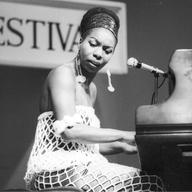
More than halfway into the Netflix documentary What Happened, Miss Simone?, directed by Liz Garbus, we are treated to archival footage of Nina Simone seated at a piano onstage at the 1976 Montreux Jazz Festival performing "Stars" by Janis Ian. The scene is arguably the most autobiographical moment in an unflinchingly honest documentary filled with interviews of Simone and her closest acquaintances, footage from her performances, and excerpts from her diary.
When Simone sings the line "But most have seen it all," her face and eyes remain emotionless, but her voice quavers slightly, betraying the truth embedded in the lyric. As the documentary skillfully unfolds her story, it becomes clear that Simone did see it all -- from fame, fortune and success to racial discrimination, bipolar disorder and domestic abuse.
What Happened, Miss Simone? is one of two documentaries scheduled for release in 2015, in addition to a biopic starring Zoe Saldana. This resurgence in Simone’s legacy may be due in part to the fact that several political and societal themes from the Civil Rights Era are experiencing a renaissance. It might also be that we've finally found the time to which Simone belongs. The emphasis on restoring voting rights and addressing racial inequality, coupled with protest movements -- like Occupy Wall Street, Black Lives Matter and the People's Climate March -- have reawakened the public to the power of social justice movements. Whereas Simone's protest songs and her alliance with the Civil Rights Movement marginalized her during the height of her career, hearing what the artist who gave life to "Strange Fruit" and "Mississippi Goddamn" and "Baltimore" would have to say about the events of today, would be a welcome addition to the current generation of voices.
Artists from Kanye West and Common to John Legend and Lana Del Rey frequently quote Simone, and cover and sample her work. However, too often these contemporary artists reduce Simone's original message instead of enhancing it, like when West sampled "Strange Fruit" on his song "Blood on the Leaves." Only a handful of the artists who cite Simone as an influence have embraced political and social causes to the degree that Simone did.
The closest to emulate her blend of artistry and activism might be John Legend, who recently launched the FREE AMERICA campaign to end mass incarceration and penned the song "Glory" in collaboration with Common for the film Selma. The rest seem to fall short. When West went off-script during a nationally televised fundraiser in the wake of the Hurricane Katrina disaster, and stated that then president George W. Bush "doesn't care about Black people," his remarks -- regardless of the sentiment -- came across as clumsy and ineloquent. In an interview with Matt Lauer on the Today Show, West, himself, admitted that in hindsight he, "would have chosen different words."
The genius of an artist who can replicate "Mississippi, Goddamn" is proving to be rare, and What Happened, Miss Simone? shows us just how rare and genius Simone was. Perhaps the present-day fascination with Simone stems from our desire for an artist who will again articulate a message that powerful and provocative, while at the same time using her talent and artistry to keep us forever captivated by her spell. The torch is waiting to be passed, but until a worthy successor comes along, it remains burning bright in Simone's virtuosic hands.
What Happened, Miss Simone? is available on Netflix on June 26.

WNYC is funded by sponsors and member donations